The expensive part of changing a delivery carrier can happen long before a van arrives. Someone has to rewrite the rules, connect the systems and make sure the warehouse still prints the right label. For a retailer with several countries, warehouses and delivery promises to juggle, a better shipping deal can get stuck behind a software project.
Metapack has spent its working life in that awkward space. The London company sells delivery management software to businesses that need to coordinate carriers and customer expectations. Its corporate overview reports more than a billion parcels sent annually through a network of 350-plus carriers and 4,000-plus services. The parcel belongs to the retailer. The journey depends on a considerable amount of software.
A carrier switch should not need a season
RS Group offers a particularly concrete example. In a June 2026 Metapack customer story, the industrial distributor describes direct SAP carrier integrations that made changes slow and costly. A complex switch could take three to six months. The company reports shipping around a million parcels a month through Metapack.
The adoption process moved from Metapack doing the configuration to joint work, then RS handling it independently. One subsequent change involving 15 French cross-border lanes took five weeks. RS reports approximately 90 percent lower costs for complex carrier integrations. These are customer-reported outcomes for a particular implementation, rather than a forecast for every buyer.
“This made onboarding new carriers and evolving our operating model both complex and inefficient.”
Khris Jones · RS Group, on its previous integrations
The useful lesson is organisational: make changing the carrier an ordinary operating decision. Otherwise, a transport team can negotiate a new service and still spend months waiting to use it.
Lower integration costs reported after adopting Metapack. A customer result, not a platform-wide guarantee.
The label is the last instruction
Delivery Manager handles the practical work of selecting services, creating labels and producing shipment paperwork. Its rules can reflect the warehouse, destination, day and parcel characteristics. Services outside their delivery territory or weight and size limits can be excluded automatically. Costs can incorporate volumetric weight and fuel surcharges. This is where a superficially cheap parcel rate encounters the actual parcel.
The product also creates manifests, the records used to hand consignments over to carriers. Warehouse and order management systems can pass information through an API, a connector or an imported file. Metapack’s documentation names integrations for Blue Yonder, Peoplevox and Manhattan. That makes the company part of the infrastructure between the order and its physical dispatch.
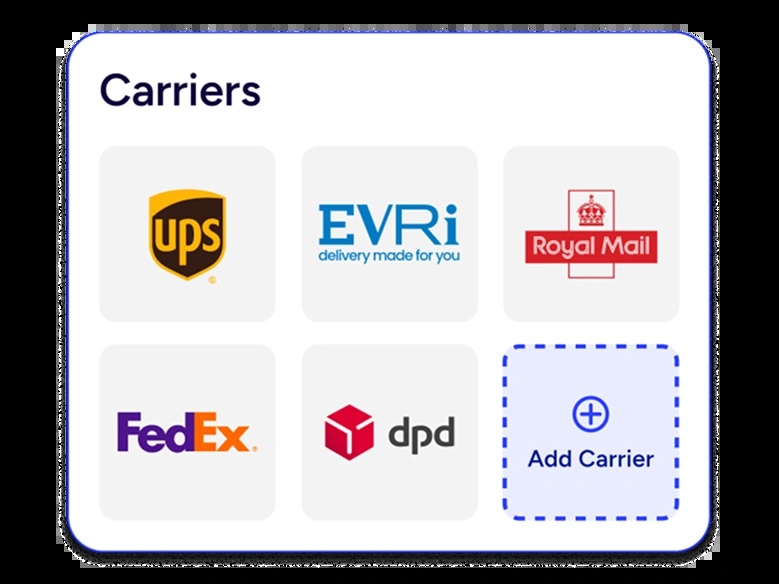
The distinction matters when evaluating the business. Metapack supplies the technology for organising delivery. The carrier supplies the transport. Software can select an eligible service, generate the correct instructions and expose a delay; the physical delivery still depends on people, vehicles and capacity.
The checkout has to know the warehouse’s hours
Delivery Options moves that operational logic into the shop window. It can display validated choices on product pages, in the basket and at checkout, drawing on carrier, warehouse and location information. Countdown timers can communicate the order deadline for a particular service. Pickup points and store collection sit alongside home delivery.
Consider a shopper buying something for the weekend. “Express” leaves room for interpretation. A dated delivery option gives the buyer something concrete to judge. But the promise only makes sense if it reflects when the warehouse can dispatch and which carrier can serve the address. Metapack’s proposition is to connect those decisions before the order is paid for.
- 01PromiseShow eligible choices
- 02AllocateApply parcel and carrier rules
- 03DispatchLabels, documents, manifests
- 04TrackExplain the parcel’s progress
- 05LearnCompare delivery with the promise
Delivery performance feeds the next decision. Editorial schematic of the platform’s workflow.
B&Q demonstrates why the choices cannot be reduced to speed alone. Its Metapack story describes products needing anything from an ordinary parcel service to a two-person delivery team. The platform gives the retailer access to carriers suited to different requirements. A small accessory and a bulky garden purchase may share a shopping basket while needing quite different journeys.
John Lewis supplies the longer view. In its account of a relationship spanning more than 20 years, Metapack describes connecting the retailer’s own fleet to carrier management for Click & Collect, with labelling and tracking designed around the service. Shops become delivery destinations as well as places to browse. The attractive button on the website rests on less visible coordination behind it.
“Where is my order?” is a product brief
After dispatch, Metapack’s Branded Delivery Tracking brings parcel information into a retailer-controlled experience. Tracking pages, an API and notification webhooks let businesses put updates into websites, apps and customer service systems. The tooling supports multi-parcel and cross-border journeys, where a single purchase can otherwise produce several disconnected accounts of what is happening.
WISMO, the industry abbreviation for “Where is my order?”, sounds almost cheerful until it becomes a queue of support tickets. A readable update can answer a question before someone has to ask it. Metapack also lets retailers use tracking pages as a marketing channel. The sensible priority is still the parcel: an offer is unlikely to charm someone whose purchase appears to have vanished.
Returns on Demand API tackles the journey back. Businesses can generate domestic and international return labels and build self-service experiences into their own channels. Reasons, destinations and carrier choices can be configured around the retailer’s operation. The return is another shipment with its own rules, and making it visible helps both the customer waiting for resolution and the team managing incoming stock.
A transport veteran, then a £175 million deal
Founder Patrick Wall incorporated Metapack in November 1999. His background included carrier operations at ICS and work with Hays DX, alongside consulting at McKinsey. It is a useful origin for a business concerned with the details between a checkout and a doorstep. The company’s subject matter was already familiar territory.
Retail experience arrived on the shareholder register too. In 2011, former Tesco chief executive Sir Terry Leahy bought a reported 10 percent stake for approximately £2 million. Index Ventures supplied £20 million in 2013 to support expansion. Those investments preceded the July 2018 agreement under which Stamps.com would acquire Metapack for approximately £175 million.
The company’s recruitment material describes a culture built around five values: transparency, reliability, being unafraid, selflessness and tenacity. Their initials spell TRUST. It also emphasises diverse backgrounds and continuous improvement. These are the employer’s stated ideals; the more tangible working practice appears in customer implementations, where configuration knowledge can move from the supplier to the people running the delivery operation.
Expansion had costs. In a 2018 interview, Wall said periods of losses had typically accompanied acquisitions or entry into new markets. He attributed the subsequent move into profit to revenue growth across the established geographic footprint. His explanation describes the strain of building an international business before its sales fully caught up.
“MetaPack’s European enterprise capability complements Stamps’ USA SME focus.”
Patrick Wall · July 2018
That was Wall’s stated logic for the buyer: complementary customers and geography, alongside an attractive offer for shareholders. The corporate story has since moved again. On June 1, 2026, Auctane and WWEX Group completed their merger, creating ShipStation Global. Metapack sits in that portfolio alongside ShipStation, Stamps.com and other shipping and freight businesses. Thoma Bravo backs the combined group.
July brought two more announcements. Currys selected Metapack to support delivery operations in the UK and Ireland, including checkout choices and shipment visibility. A strategic partnership with OneStock connects that company’s inventory and order-routing capabilities with Metapack’s carrier selection and shipping tools. Both announcements put the delivery promise close to the commercial centre of the shop: what is available, where it can come from and when it can arrive.
The competition is also a maintenance decision
Metapack competes in multi-carrier delivery management, where connecting several carriers is an established product category. nShift, for example, advertises automated carrier selection, compliant labels and tracking across more than 1,000 carriers. A larger directory alone does not settle which product fits. Buyers need the specific services, countries, workflows and integrations their operation uses.
Metapack’s argument combines enterprise shipping execution with the customer-facing stages around it. Its Intelligence Hub adds dashboards, alerts and carrier performance analysis, including comparisons against service commitments. It also advertises natural-language questions about shipping data. The interesting test is whether that information changes an operating decision: which service gets the next parcel, or which recurring delay gets investigated.
The business is sold through an enterprise sales conversation. Its pricing route leads to contact and consultation, while documentation identifies possible charges for developing additional carrier services. For a buyer, the relevant calculation includes the software, implementation work and ongoing transport spend. Savings on changing an integration belong in a different line from savings on postage.
A retailer with a simple, stable carrier arrangement may reasonably find less value in this breadth. Direct integrations or existing warehouse capabilities remain alternatives. The case becomes stronger as countries, delivery services and operational changes multiply. The judgement should follow the work being avoided, including the effort of maintaining connections after the initial launch.
Start with one parcel that works
Metapack’s own documentation offers a refreshingly practical starting point. Configure a warehouse, select a couple of carrier services, enter costs, group the services and establish allocation rules. Test consignments and labels through the interface before pushing bulk work through the API. The sequence makes the delivery behaviour visible while mistakes are still small.
That is a method readers can copy regardless of supplier. Choose a real shipment, define the promise and check every handoff. Add volume after the rules work. Metapack’s opportunity grows with the distance between a retailer’s ambition and the systems capable of fulfilling it. Its most persuasive outcome is a mundane one: a delivery change that no longer requires everyone to clear their calendar.