Melanie Dressel kept making the rounds. As Columbia expanded beyond Tacoma, its chief executive continued an annual practice of visiting the bank’s branches and departments. By 2016, that meant a network stretching across Washington, Oregon and Idaho. Growth gave her more places to visit. She kept going.
There is something pleasingly inconvenient about this approach to management. A branch visit requires a person to leave the office, travel somewhere and hear from people whose working day looks different from her own. A spreadsheet travels rather more efficiently. Dressel wanted to understand what was working for customers and what needed to change. The journey was part of the job.
She had joined Columbia’s founding team in 1993, before the acquisitions, the regional footprint and the national recognition. Her career there would carry her from private banking to the presidency, and then to leadership of the holding company. Yet the habit that helps explain her was a modest one: go and see people.
A temporary job, with a forty-year extension
Dressel was born Melanie Jan LaPlant on September 2, 1952, in Colville, Washington. Her parents were Bob and Phyllis LaPlant. She grew up around the family jewelry store with her sisters, Lynda and Lisa, before graduating from Colville High School and heading west to the University of Washington.
Political science was her subject. Law school was supposed to follow. After graduating in 1974, she took a job as a commercial real estate loan clerk at the Bank of California in Tacoma. Banking was meant to occupy the interval before the next part of her life began. The interval proved unusually durable.
“I just fell in love with banking,” she said. She stayed at the Bank of California for fourteen years, then moved to Puget Sound National Bank, where she directed private banking. Those years preceded the Columbia title and the public reputation. She learned the business by doing it, across jobs that brought her into contact with borrowers and customers.
Her early ambition had been rather more electoral. At six, she told her parish priest she wanted to become president of the United States. A political science degree and plans for law school made a sensible continuation of that childhood declaration. Instead, the presidency she eventually accepted came with branches.
- 1974University of Washington graduate; starts at Bank of California.
- 1993Joins Columbia’s founding team, leading private banking.
- 2000Becomes president and CEO of Columbia Bank.
- 2003Becomes CEO of Columbia Banking System, the parent company.
Building a bigger neighborhood
Columbia began in 1993. Dressel joined as senior vice president and private banking manager, moving to executive vice president of retail banking in 1997. In January 2000 she became president and chief executive of Columbia Bank. In February 2003 she also became chief executive of Columbia Banking System, its parent company.
The distinction matters. A bank and its holding company can share a name, a leader and a public identity while remaining separate organizations. Dressel’s progression involved both. It also involved the less glamorous work of running a branch network before taking responsibility for the whole enterprise. She had managed the parts before managing their combination.
Her stated ambition for Columbia paired regional reach with local banking.
“we want to be a Pacific Northwest regional community bank”
Melanie Dressel · 2011
The phrase contains a practical tension: a regional institution must operate across distance, while community banking depends on attention to particular places and customers.
That year, Columbia acquired eight branches of the former Bank of Whitman. Dressel personally helped with the transition. Returning to Eastern Washington also meant returning to familiar territory: she had grown up in Colville, and visiting Spokane felt like coming home. The expanding map included places connected to her own beginnings.
Following the acquisition, Columbia established an Eastern Washington division and hired a regional manager based in Spokane. Expansion had an organizational shape as well as a geographic one. The new branches needed people, responsibilities and a place within the wider bank. An acquisition announcement could mark a date; making the combination work took longer.
The conversation after the acquisition
In 2014, as Columbia prepared to acquire Intermountain Community Bancorp, Dressel spent nearly a week visiting its North Idaho branches. A trip to Southern Idaho was next. She spoke about the similarity of the two organizations’ cultures and the importance of continuity for customers.
She also acknowledged that the transaction would bring reductions in corporate staffing. That detail belongs beside the language of community. Buying a bank combines workplaces, and combinations carry consequences for the people inside them. Dressel discussed administrative cuts while explaining that customers should, as far as possible, continue working with familiar bankers and lenders.
“We really want to be able to customize services for individuals,” she said. Her concern was that rules encouraging uniform treatment could sit awkwardly with customers whose financial circumstances differed. The argument was specific: personal service required room to respond to the individual in front of the banker.
Columbia’s expansion eventually gave that philosophy a much larger stage. By the end of 2016, the company reported $9.51 billion in assets, $8.06 billion in deposits and $6.21 billion in net loans. Annual net income reached $104.9 million. These were the dimensions of an institution far beyond its Tacoma beginnings.
Bars show deposits and net loans relative to total assets. These are balance-sheet measures, not separate pieces of a whole.
The scale makes the branch visits more interesting. Visiting a small network is one commitment; retaining the practice as the network spreads across three states is another. Dressel had started the visits early in her tenure and continued them through years of acquisitions. The expanding business kept its chief executive on the move.
The cookies were on the schedule, too
The public record of Dressel’s life contains an unusually domestic detail for a bank executive: weekly cookie packages. When her sons were away at college, she sent them. She also flew to California on weekends to watch her son play football for Humboldt State University. Sunday dinners brought the family together.
These routines sit comfortably beside the business itinerary. Her family remembered dinners each night while the boys were growing up, attendance at their activities, and later the Sunday meals she cooked for her husband, sons, daughters-in-law and grandchildren. The family calendar had claims of its own.
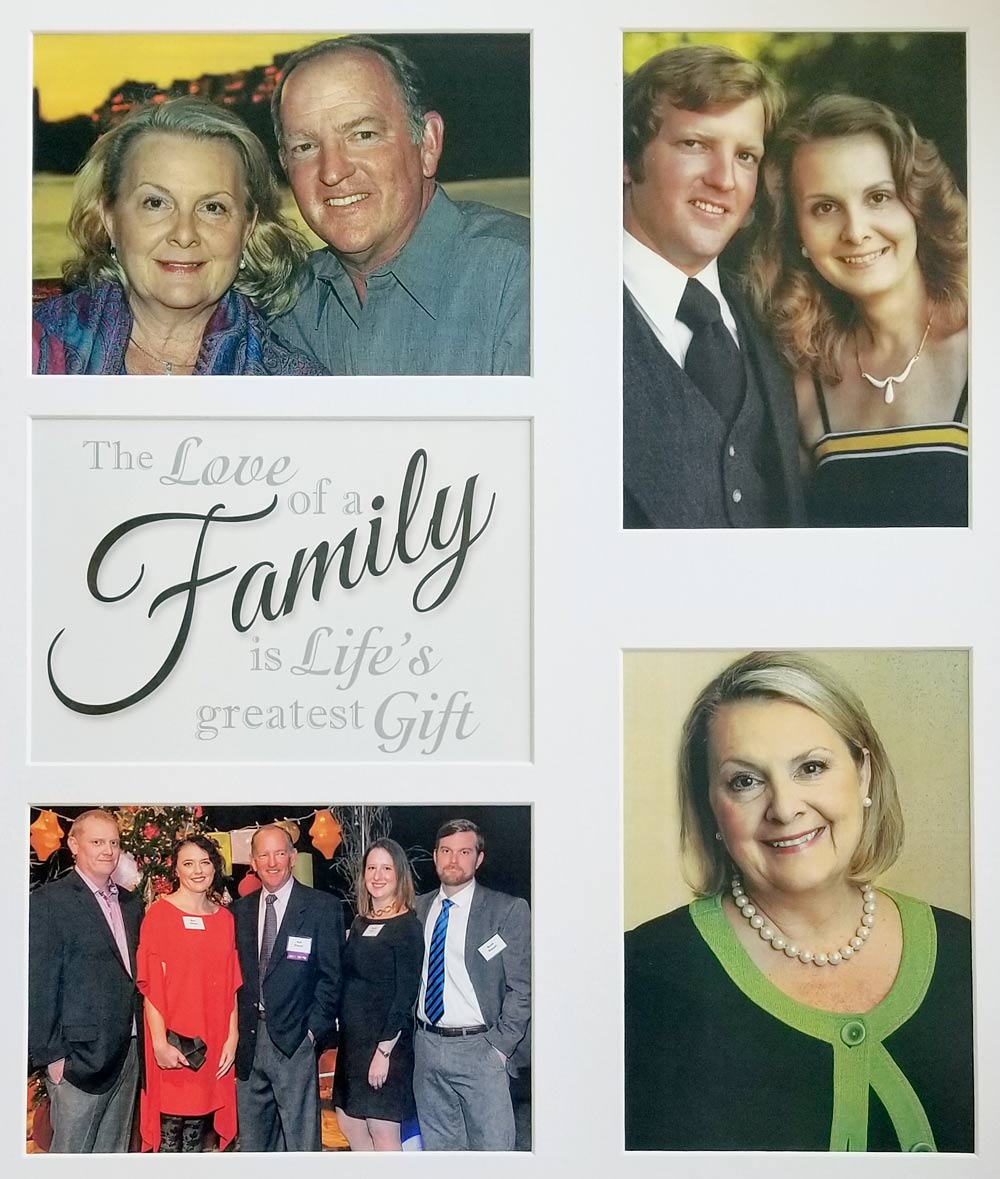
She brought a similar appetite for gathering people to plans for retirement. For twenty-five years, Dressel collected ideas for a house. The home in the film Something’s Got to Give helped sharpen her vision. Her own version, on the Key Peninsula, was intended to accommodate family, friends, fundraising and meetings.
She worked through the plans with architect Justin Zier. After her death, her husband Bob completed the house using the drawings and specifications already prepared. Its name, Windy Bluff, had a certain resistance to estate-agent poetry. Bob had once wondered who would build on such an exposed piece of land. Eventually, he had his answer.
One detail connects the grand house to the everyday office: a tureen associated with the soup Dressel regularly brought to work. A room designed for entertaining and a bowl recognized by colleagues belong to the same account of hospitality. Even a bank executive’s biography occasionally benefits from lunch.
A city beyond the balance sheet
Dressel’s civic work ranged across business, education, history and the arts. She chaired Puget Sound Energy’s board and served with the Washington Roundtable. Her commitments also included the Executive Council for a Greater Tacoma, the Washington Bankers Association and the American Bankers Association.
In Tacoma, she had served as chair of Bellarmine Preparatory School and the Tacoma/Pierce County Chamber of Commerce. The Tacoma Art Museum, United Way of Pierce County and the Children’s Museum were also part of her civic life. These affiliations placed her in rooms concerned with much more than banking.
Recognition followed. American Banker named her a Community Banker of the Year in 2011 and included her seven times among its 25 Most Powerful Women in Banking. Seattle Business recognized her as CEO of the Year in 2013. UW Tacoma’s Milgard School of Business gave her its Lifetime Achievement Award in 2016.
Those honors establish how widely her work was noticed. The institutions attached to her name today show what others chose to continue. Dressel died on February 19, 2017. Her story now includes students she never met and a waterfront park that opened seven years later.
A name you can walk into
At UW Tacoma, the Dressel Scholars Program combines scholarship support with a team of mentors. It is open to eligible juniors and seniors across undergraduate programs, including transfer students. Scholars take part in campus and community events that connect them with civic, business and nonprofit leaders.
The combination is fitting: financial assistance makes participation more possible, while introductions make the surrounding community more accessible. The program carries forward a practical interest in relationships. A student receives support and people to turn to, along with opportunities to become involved.
On Tacoma’s Foss Waterway, Melanie Jan LaPlant Dressel Park opened on April 12, 2024. The former industrial site now includes a play tower, bridge, slide and space beside the water. Dressel had recognized the need for families to have somewhere to play along the waterfront and helped set the project in motion.
In 2026, Columbia Bank became the first sponsor of Parks Tacoma’s Adopt-a-Park program and chose Melanie’s Park. Nearly two dozen employees joined an initial work party in July. The commitment includes recurring volunteer work to care for the place.
There are many ways to remember a chief executive. Here, one involves students meeting mentors. Another involves employees turning up at a waterfront park and getting to work. Dressel spent years going out to see people. The visits continue in a different form.