In 2019, while studying computer science at Carnegie Mellon University, Mehul Agarwal was doing stand-up comedy and entertaining a production problem. What if his jokes could become films without the cost and machinery of a conventional shoot? It was the sort of notion that sits halfway between a bit and a business plan. Six years later, it had acquired a name, a co-founder and a Y Combinator batch.
Koyal, the company Agarwal runs with his sister Gauri, turns scripts or audio into editable video. The user brings a voice, a piece of music or written dialogue. The software draws out emotion, rhythm and narrative intent, then produces scenes with recurring characters, settings and camera logic. A creator can revise the world with ordinary directions: change the mood, move the camera, return to a location, try the scene again.
The seductive pitch is speed. The more interesting idea is where the process begins. Most generative-image systems wait for a visual instruction. Koyal listens. Audio contains timing, emphasis, hesitation, tension and release. A prompt can describe a sad room; a voice can tell you exactly when the room became sad. Agarwal's company is betting that this signal is enough to turn the empty prompt box into something closer to a director's chair.
First, find the joke
Agarwal's public biography reads like someone kept changing the channel and he kept learning the interface. In school in New Delhi, he helped lead a technology club and worked on startup pitches and design. At Carnegie Mellon, he studied computer science, then machine learning. He taught Android development, assisted courses in computer systems and software engineering for startups, and later became lead teaching assistant for Multimodal Machine Learning, guiding master's and doctoral students toward conference-ready research.
The internships were equally promiscuous. At India's identity authority, he worked with Aadhaar authentication. At a research center in New Delhi, he developed browser-based text detection intended to strip identifying information from medical images. At GAN Studio, he explored prosody transfer, voice cloning and lip sync. At Enya, he worked on smart contracts and Ethereum scaling. At Blue River Technology, the subject was computer vision for an automated tractor.
This is either a severe inability to pick a lane or very good training for generative media. Koyal needs speech, vision, identity, performance, product sense and a practical relationship with failure. Every film model eventually produces an extra finger or a wandering face. A stand-up set also fails in public, but without the consolation of a GPU error log.
“The more relatable, the better.”Mehul Agarwal, on the rule behind Zoom Memes
The clearest rehearsal for his founder instincts arrived in March 2020. Agarwal and his friend Shreyan Bakshi were trading a joke in a group chat as universities suddenly moved online. They created a Facebook group called Zoom Memes for Self Quaranteens and shared it with friends. Agarwal later recalled expecting perhaps a hundred people. The next day there were 4,069 members. By the following night, more than 40,000. The community eventually approached 900,000.
He called it lightning in a bottle, which is accurate but incomplete. Lightning still needs somewhere to land. The group had named a collective absurdity at the instant millions of students needed a way to laugh at it. Its appeal crossed campuses because the irritations crossed campuses: the muted professor, the accidental unmute, the tiny self-view that made everyone an unwilling star of their own badly lit broadcast.
The group became more than a feed. Members formed friendships, staged online events, exchanged resources and raised money. Agarwal said its biggest achievement was creating community when everybody lacked one. That observation follows him into Koyal. The technical product is video generation. The emotional product is participation - letting people see their own voice, face or story inside a form previously guarded by budgets and crews.
A sibling studio
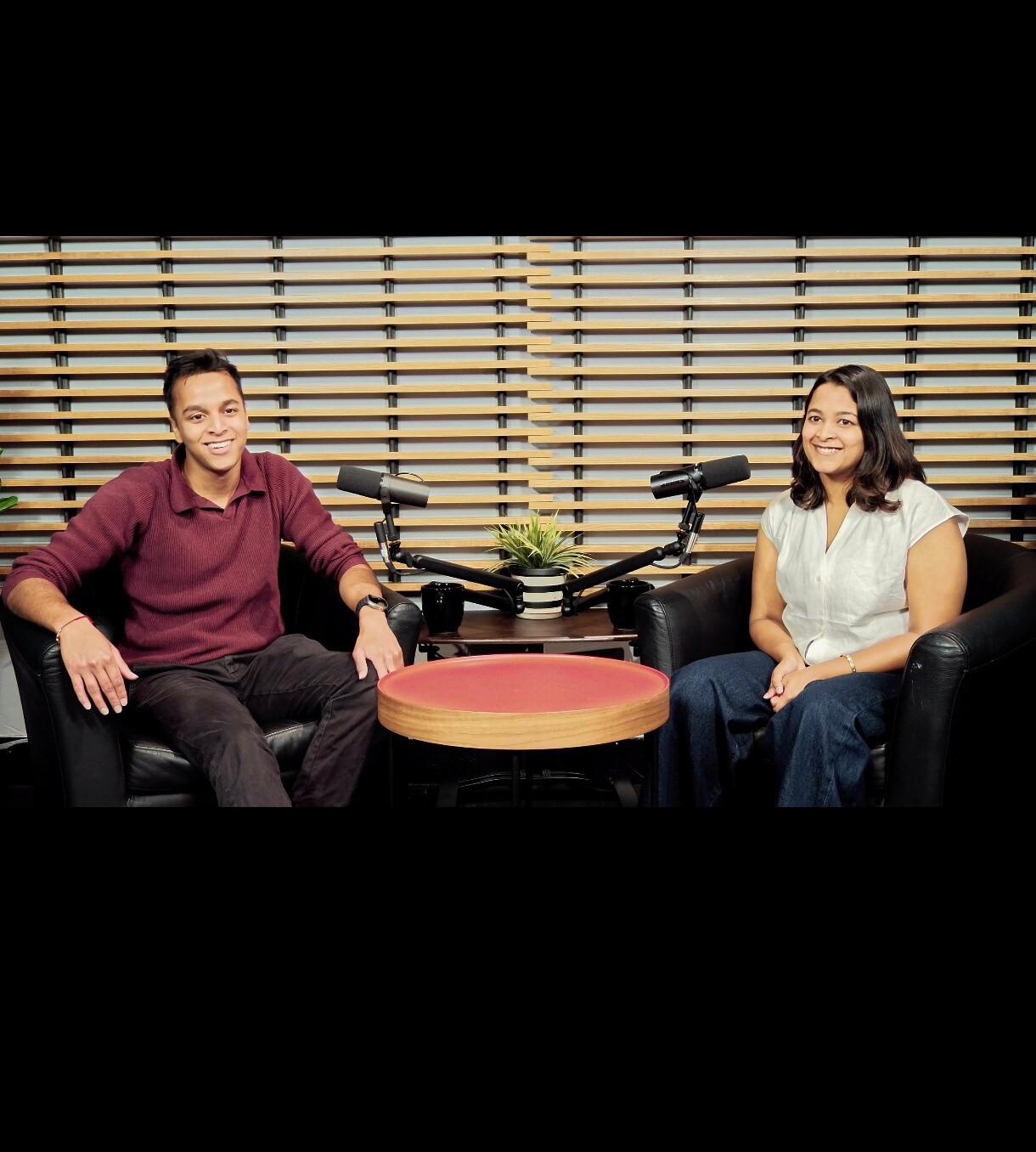
Koyal is a sibling act. Gauri Agarwal, the company's CTO, studied computer science at Carnegie Mellon, continued at the MIT Media Lab and worked at Meta on Instagram video. Mehul brings machine-learning research, product work and the urge to put himself into the demo. Their public examples include a Barbie scene relocated to a castle in Northern Ireland and a Formula One fantasy in which Mehul becomes the driver. If you are going to sell synthetic cinema, it helps to be willing to look a little ridiculous inside it.
Before Koyal, Mehul co-founded Retcon, a generative-AI system for creating and trading 3D game assets. He then worked across machine learning, product and business development at SAI Group and JazzX, where his personal site says he helped build an end-to-end mortgage AI platform. Retcon taught him about generation inside a specialized creative market. The later operating work put models next to customers and revenue. Neither experience offered the romance of a film set, but romance has never shipped an onboarding flow.
The siblings' filmmaking work grew from research. With Santiago Benoit, Andrew Lippman and Jean Oh, they developed a music-to-video pipeline that created personalized visuals from lyrics, rhythm and emotion. The paper appeared in the NeurIPS 2024 Creative AI Track and introduced CHARCHA, a facial identity verification protocol. The acronym expands to Computer Human Assessment for Recreating Characters with Human Actions. It is a long name for a short principle: your face should not enter somebody else's movie without your permission.
The audio-first directing loop
Conceptual workflow, not a performance benchmark. Koyal extracts narrative signals, generates a visual sequence, then gives the creator controls to revise it.The safeguard matters because personalization is the product's party trick and its moral hazard. Koyal can place a user into a film, but it asks that person to complete a verification sequence first. Generated media has made consent sound like an abstract ethics seminar. CHARCHA tries to make it a button, a check and a barrier in the actual workflow. That does not settle every question around AI cinema. It does turn one principle into product behavior.
The film is the SaaS
Koyal launched publicly in September 2025 and joined Y Combinator's Fall 2025 batch. By then, the team said it had run paid pilots with music labels, podcasts and production companies, including work with Universal Music and T-Series, and supported videos connected with A.R. Rahman, Ricky Kej and Shankar Mahadevan. It also made launch videos for other YC companies. Agarwal has described the strongest early applications as music videos, advertisements and educational videos - categories where audio often exists before the visuals and the economic pain is easy to understand.
Traditional production can demand locations, actors, cameras, crews and weeks of editing. Koyal moves much of that expense into software, though it does not pretend the first output is sacred. Users can storyboard, regenerate and direct. This distinction is important. A slot machine produces surprises. A creative tool produces choices.
Agarwal's recruiting voice suggests what he values inside that team. He has written that taste belongs on the same curve as technical loss, asked candidates to be fluent in pop culture and joked that Koyal's mascot is a songbird rather than a working dog. Under the jokes sits a real operating belief: a film company built from models still needs people who can recognize when a shot feels wrong.
His comedy is not a decorative quirk attached to a technical founder. It is part of how he tests ideas. Comedy measures timing, compression and recognition. Machine learning measures different things with cleaner charts, but Koyal has to survive both standards. A scene can be coherent and still feel dead. A character can remain consistent and still be boring. The model may have completed its task while the audience quietly opens another tab.
“I can happily use this to make a movie out of my stand-up jokes.”Mehul Agarwal, after Koyal's public beta
The useful imposter
Agarwal has said that he has never not felt like an imposter - in high school, at Carnegie Mellon or while building Koyal. His response is characteristically mischievous: why not be an imposter at a higher level? The line works as founder philosophy because it replaces confidence with escalation. You need not feel ready. You can simply choose a more interesting room in which to feel unready.
His personal website offers the subtitle “Entrepreneur · Researcher · Procrastinator.” The last word rescues the first two from biography-page solemnity. Yet his project archive is evidence of sustained curiosity: portrait colorization, clickbait style transfer, blockchain resource sharing, Indian-language NLP, depth estimation, game assets and filmmaking. The subjects change. The recurring question is how a technical system translates human material - a face, a headline, a goal, a voice - into another usable form.
Koyal's aspiration is to replace the camera with intelligent systems, not to replace the person with a machine. The phrasing is carefully chosen. Cameras are tools with costs and constraints. Storytellers are the reason to bother. Whether Koyal can preserve that hierarchy as models improve and competitors crowd the screen will be the company's real plot.
For now, Agarwal is still doing what he did with the meme group: noticing a shared frustration, giving it a memorable container and inviting people in. The production problem is larger. The jokes are better lit. And the founder who once wanted a cheaper way to film his stand-up is now trying to make the camera disappear altogether.