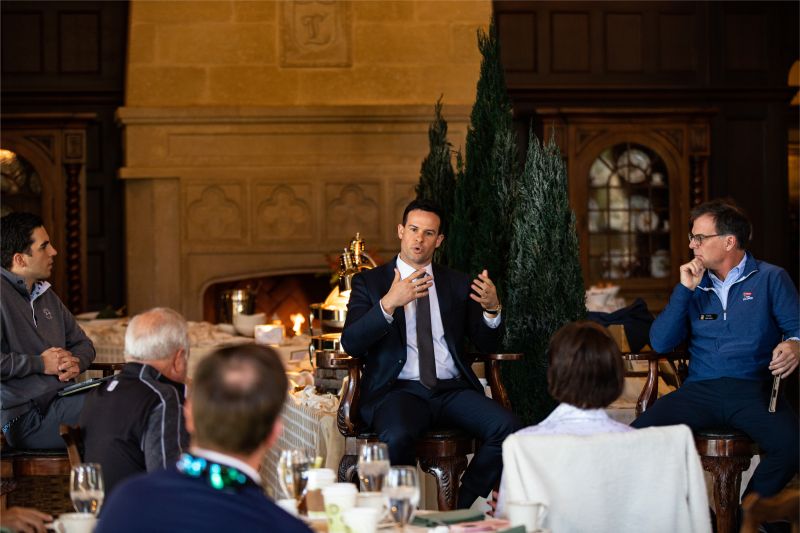
At Somerby Golf Club, the members could have bought the place themselves. They held a right of first refusal. Instead, after meeting the Evergreen Partners team at a December town hall, they voted 96 percent in favor of letting the company become the next owner. For Matthew Hobbins, Evergreen's founder and CEO, the interesting part of the transaction begins with that choice: a community agreeing to put its future in somebody else's hands.
A golf course can be measured in yards. Confidence is harder to put on a scorecard. The Somerby vote, announced in February 2026, gives a concrete expression to the business Hobbins is trying to build. He buys private clubs whose owners have spent years shaping them, then takes responsibility for what happens after those owners step back. The paperwork transfers property. The members still expect to recognize their club on Monday morning.
Hobbins is based in Irvine, California. His company now lists clubs in Tennessee, Georgia, Minnesota, and Mississippi. That spread makes Evergreen a national operation, but the stories behind its acquisitions are stubbornly local. Each involves people with opinions about a particular place. Country clubs possess a remarkable ability to turn the arrangement of leisure into serious business.
Member approval for Evergreen's ownership, following a town hall.
The call before the closing
Before Evergreen, Hobbins worked at Concert Golf Partners. His career there moved through corporate development, finance, and the office of the CEO before he became a vice president. Earlier, he worked in investment banking at Goldman Sachs. He studied at Brigham Young University. It is a career with plenty of financial vocabulary, though the episodes that explain his present work tend to involve conversations.
Consider Hiwan Golf Club in Evergreen, Colorado. Hobbins cold-called its family owners a few years before Concert acquired the club in 2022. The initial answer was that the timing was wrong. Eventually, questions about succession and capital needs brought the parties back together. The interval matters. A first conversation established contact; it did not create an immediate sale. The owners had their own calendar.
Hiwan's ownership group wanted staff development, investment in the property, and a smooth transition for members. The former owners would remain honorary members. In that arrangement, a seller could surrender the responsibility of funding and governing a club while continuing to enjoy it. There is something unusually direct about that test of a buyer: the people who chose you may still be there to see how you behave.
The same year's acquisition of the Club at Renaissance near Fort Myers brought a similar issue into view. Its owners spent time visiting other Concert properties and talking with members and employees. Hobbins emphasized the value of listening to their concerns and hopes. The visits let them inspect the buyer's promises in operation. A polished presentation can travel anywhere. A conversation with an existing member has a rather smaller tolerance for varnish.
A club has more than one constituency
At Marsh Landing Country Club in Florida, another Concert transaction made the audience wider still. More than 1,100 homeowners had an interest in the outcome, while fewer than a third were club members. The homeowners association worked with Concert on the purchase. Hobbins described the importance of aligning with the association and responding to the different stakeholders.
The planned improvements were about $7 million. But money alone did not explain the structure of the deal. A resident who never books a tee time can still care about the future of the club around which a community was built. The transaction required a solution that homeowners as well as members could support. In Hobbins's acquisition work, the perimeter of a club repeatedly turns out to extend beyond the fairways.
These earlier deals help explain Evergreen's choice of properties. Hobbins encounters owners who have built both an asset and a social arrangement. A buyer has to understand each. The price is one question. What becomes of the staff, the traditions, and the neighbors' investment is another set of questions, capable of keeping everyone at the table considerably longer.
The first club was not looking for a buyer
Hobbins founded Evergreen in 2023. Its first property, Blackthorn Club in East Tennessee, joined the company in November 2024. Duke Ingram and Rab Summers, its founding owners, had not planned to sell. They also lacked a defined succession plan. Hobbins and Evergreen colleague Lincoln Duff met them, and the conversation developed into an acquisition.
Ingram and Summers lived in the community. That placed a practical condition on their choice of successor: they would continue to encounter friends and neighbors who used the club. After the sale, they could enjoy Blackthorn as members themselves. Evergreen was taking over a place whose creators were still close enough to notice the details.
Blackthorn already had a distinct character. Its Arthur Hills golf course shared the property with dining, tennis, pickleball, a pool, and a playground. James Allen, its culinary leader, had been named the 2022 Club + Resort Chef of the Year. Racquets director John Lucchesi had been the club's first employee when it opened in 1997. Those details make the handover more personal than a line on a portfolio list.
For Hobbins, the first month was an occasion to thank the team and the founders. He identified Steve Windham as the partner leading the property. That public emphasis reveals where he places credit: with the people who built the club and the people running it. Evergreen's promise of preservation had to coexist with the intention to improve a business already carrying other people's work.
- 2023Hobbins founds Evergreen Partners
- Nov 2024Blackthorn becomes its first property
- Jan 2025Governors Towne acquisition announced
- Feb 2026Somerby joins after member approval
- Jun 2026Reunion acquisition announced
Room to grow, people to keep
Governors Towne Club in Acworth, Georgia, followed. Its January 2025 announcement described an acquisition from founding developer Ken Horton. The community had nearly 300 custom homes and 150 acres available for future development. Its golf course was designed by Curtis Strange. Hobbins saw potential in both the club's amenities and the community around it.
The proposed additions included pickleball and bocce courts, lodging, youth areas, and golf simulators, alongside course improvements. These were plans, rather than a list of completed projects. That distinction is central to an ownership transition. Members are being asked to believe in work that has yet to happen, while the new operator has to learn the daily business it has just acquired.
Evergreen held member meet-and-greets after the purchase. Hobbins credited general manager Lauren Kuhl with helping shape the team's approach to hospitality, and joked that her pace was difficult for the rest of them to match. It is a small glimpse of the person behind the acquisition announcements: an executive willing to make a colleague's energy the punchline, with himself included among those trying to keep up.
“The enthusiasm of this membership is infectious.”Matthew Hobbins, on Governors Towne Club
At Somerby, the original developer also had substantial residential development ahead. Shawn Dahl of Ames wanted an operator who would look after employees and share a long view of the community. Members met the Evergreen team, then made their choice. That vote gave Hobbins permission to proceed, and a constituency to answer to afterward.
A recommendation becomes a president
Building Evergreen also meant finding people to operate it. Shortly after starting the company, Hobbins called Kevin Bozada, the club manager at Augusta National, to ask whom he recommended in hospitality. Bozada gave him one name: Tom Hogan, his former colleague and Augusta's former chief financial officer.
The connection had a history. Hobbins had previously welcomed Bozada to an event at the Club at Longview, where Bozada and Paul Major spoke to club owners. Years later, that professional relationship helped introduce an executive with experience at Augusta National, Discovery Land Company, and the Ritz-Carlton. Hogan became Evergreen's president, with his appointment announced in 2026.
Hogan's responsibilities include operations, capital planning, and growth. He has described an acquisition target of about five clubs a year, tempered by the need to bring each property into the organization properly. That is a stated goal, rather than a forecast of completed purchases. His work includes training people and connecting financial and hospitality systems. The administrative machinery is less picturesque than a fairway, but it is part of keeping the place running.
The next owners will still have neighbors
In June 2026, Evergreen announced the acquisition of Reunion Golf & Country Club in Madison, Mississippi. Kristie and David Nutt had spent decades developing the community. Their choice of a successor involved the club's culture, its employees, and the surrounding homeowners. Hobbins thanked them for the property they had created and emphasized future investment in its people and amenities.
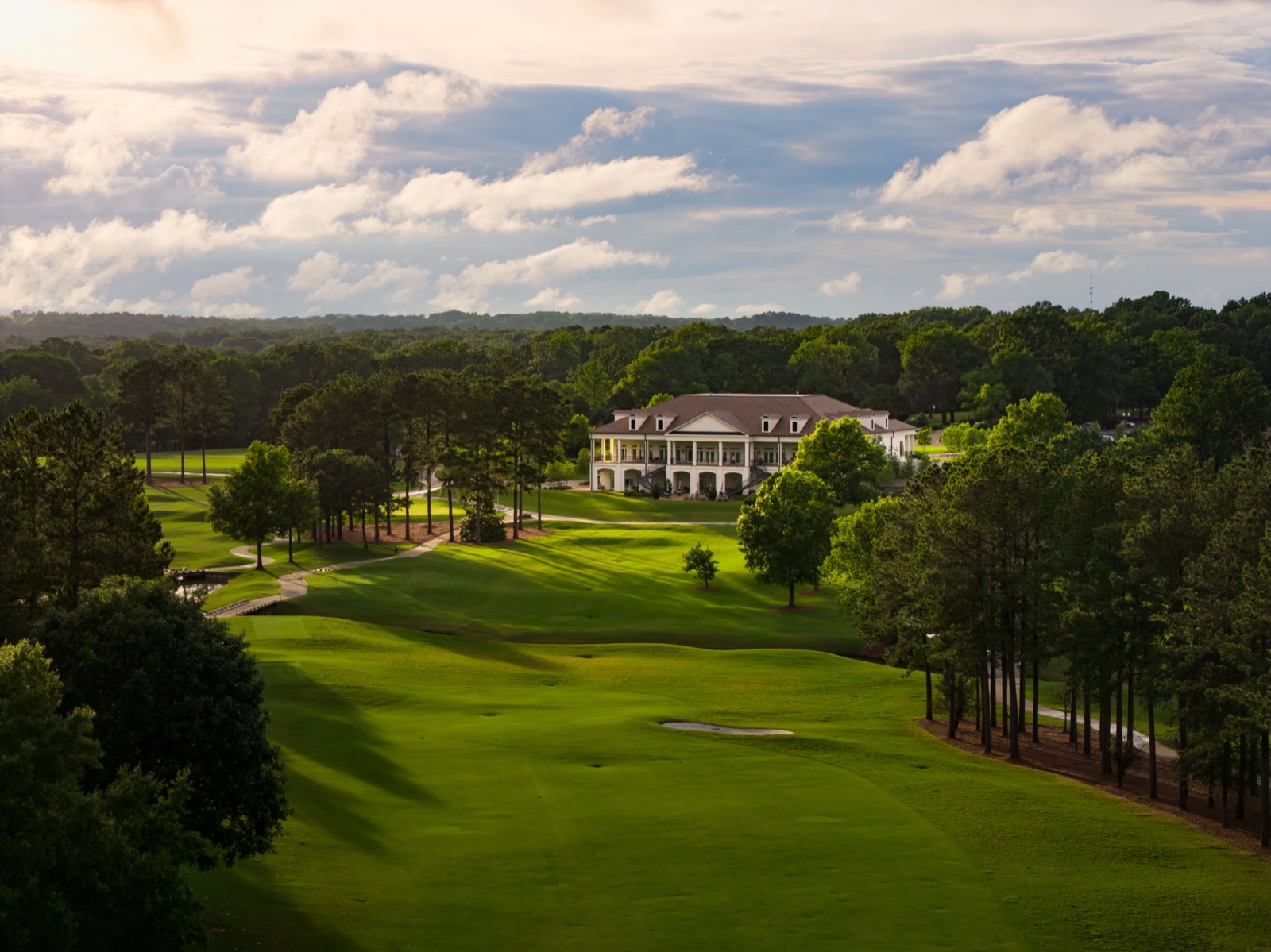
The club offers golf, nine tennis courts, four pickleball courts, dining, swimming, and social programming. Hobbins reported that more than 300 members attended a town hall to voice their support, concerns, and hopes, and that more than 150 employees welcomed Evergreen. Those are different audiences, with different stakes in the same change of ownership.
Across these acquisitions, Hobbins's ambition becomes legible through the people he must persuade. Founders want their work to continue. Employees want a future inside the organization. Members want the next visit to feel worth making. Evergreen describes shared employee ownership and a long investment horizon as part of its model. The measure of that model will accumulate in ordinary visits, long after the announcement. Buying a club gives Hobbins a closing date. Keeping its community's confidence gives him a much longer appointment.