Person / Executive / Operator
Matt
Wetrich
He took the CEO seat at a Dallas repair marketplace the week it was burning a million dollars a month. By the end of Tuesday, seventy percent of the company was gone.
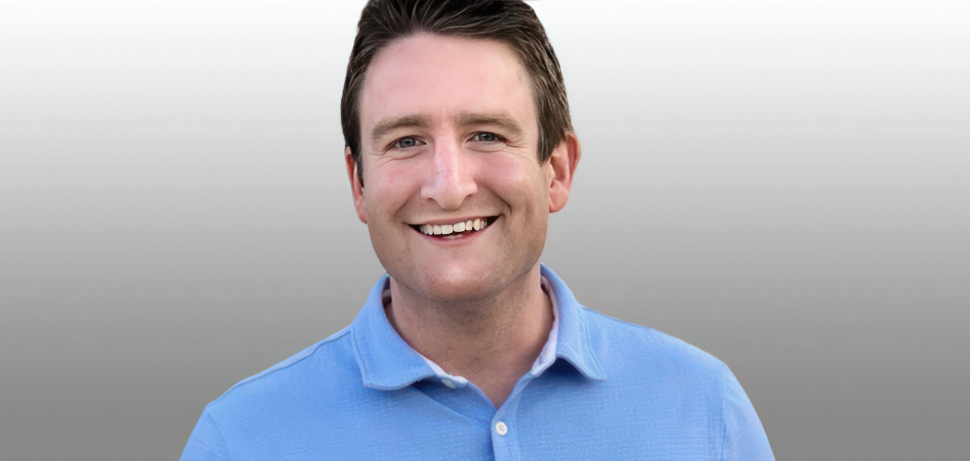
He took the CEO seat at a Dallas repair marketplace the week it was burning a million dollars a month. By the end of Tuesday, seventy percent of the company was gone.
Matt Wetrich runs Stellar, a technology-driven marketplace at 14901 Quorum Drive in Dallas that stands between the country's largest owners of single-family rental homes and the plumbers, electricians, HVAC techs and drywall contractors those homes eventually need. If you own 20,000 rental houses spread across a dozen states and one of them has a leaking water heater in Boise at 4 p.m. on a Wednesday, Stellar is what turns that fact into a scheduled truck roll. Wetrich, from a corner office on Quorum, is the person on the hook if the truck does not show.
He did not build the company. He inherited it, mid-crisis, in 2023. He was hired in May of that year as VP of Operations, coming off a run at Veho, the last-mile package delivery startup, where he had been one of roughly the first fifteen employees and had eventually run a chunk of US operations that grew from three markets to thirty-two in about two years. Revenue at Veho, per the company's own numbers at the time, went up fifteen-fold on his watch. That is the résumé line that got him the Dallas interview. What happened next is what makes him interesting.
Within a few months of joining, the Stellar board asked him to step in as CEO. The company was, by his own telling on the Navigate VC podcast, burning about a million dollars a month against a business that had spread itself across 106 separate trade categories, most of them unprofitable. Wetrich accepted the seat. Within twenty-four hours, he laid off around seventy percent of the company, including most of the leadership team he had inherited. Then he cut the trade catalog from 106 to something closer to seven.
There is a certain kind of operator who talks about turnarounds the way people talk about diets - as a general aspiration that will begin on Monday. Wetrich is a different kind. He seems to be the guy who actually starts on Monday, and by Tuesday morning the fridge is empty. What he says about it, on the record, is unusually calm. The founder had been asked to step aside. Wetrich, who took the seat, went out of his way to note the awkwardness of that. "Nobody wants their founder to leave," he told Navigate. "Some of the best companies are what they are because they kept the founder in the seat." This is the kind of thing a person says either because it is a marketing line, or because it is what he actually thinks. Nothing about Wetrich's subsequent moves - narrowing the catalog, cutting cost, focusing on mid-sized institutional owners other players ignored - reads like marketing.
The path he took to get here is not the standard proptech path. Wetrich went to Texas A&M for finance and started, as ambitious Texas A&M finance grads often do, in investment banking. His first employer was Bank of America Merrill Lynch. He has said that even during that period he was already trying to automate things - looking for the parts of the analyst job that a spreadsheet could just handle without him. That impulse - to look at a manual process and want to write it out of existence - is a useful trait later, when the process in question involves a property manager in Atlanta phoning a plumber's cousin about a rental house in Tulsa.
After banking, he co-founded a company called Vevanto, which billed itself as a big-data analytics consultancy for healthcare. Its most vivid project studied how weather patterns correlated with asthma and COPD hospital admissions, which is either a fantastic pitch or a niche pitch, depending on who is buying. From there he went to Uber, where he spent several years inside Uber Eats. He worked on Global Sales Strategy Planning and Analytics, on Program Management, on Business Planning. More importantly he was part of the team incubating new lines of business inside Eats, including the alcohol delivery vertical and, later, the advertising platform. The Eats ad business is now a run-rate of roughly a billion dollars. Wetrich helped stand it up when it was a slide deck.
Then came Veho. Then came Stellar. If you plot the four companies on any axis you like - prestige, glamour, the amount of college-professor small talk each generates at a dinner party - the trend is downward and it is intentional. Wetrich has been walking, career-decision by career-decision, toward businesses whose problems are more physical and less abstract. A drywall repair is not a metaphor. Either the wall is fixed by Thursday or it isn't. This is Stellar's whole appeal.
Stellar was founded in 2016 by a different set of operators, initially as a fully vertical residential maintenance company. The company Wetrich took over had already begun the pivot toward a marketplace model - a two-sided platform matching contractors with jobs sent in by property managers - but it had not yet made the hard choice about scope. Trying to service 106 trade types meant staffing a coordination team wide enough to know something about roofing and something about landscaping and something about HVAC and something about pest control. It also meant a technology stack that had to model 106 different labor markets. Cutting to six or seven core trades - the ones that come up most often in single-family rentals, and where contractor supply is deepest - is the kind of decision that on paper sounds boring and in practice determines whether the company lives.
The customers, per Stellar's own numbers, are large. Nine of the ten largest single-family rental owners in the US are on the platform. The property count has crossed 150,000 homes. Around 8,000 contractors have accepted work through Stellar, and more than 200,000 individual repair tickets have been resolved. Wetrich's roadmap, as he has described it, includes making more of the work "self-claimable" by contractors on the supply side, layering in a contractor scoring system so the marketplace can preferentially route work to the ones who show up and do it right, and, on the support side, deploying an AI-based accent-masking layer for offshore call center staff to reduce cost without degrading customer experience.
That last one is telling. It is the kind of specific, unglamorous, cost-line-item decision that a real operator makes and that a founder in love with their own vision tends to avoid. It is also perfectly in character.
Single-family rental as an institutional asset class barely existed twenty years ago. It exists now because the 2008 financial crisis produced a wave of cheap foreclosed inventory and a set of investors willing to buy homes by the hundred. Those owners now hold hundreds of thousands of houses collectively, and each house is entropy - roofs fail, dishwashers die, pipes freeze. The operational cost of servicing that entropy at scale is the single largest unfixed problem in the category. Stellar's bet, and Wetrich's bet, is that a well-run marketplace with real technology behind it can extract enough friction from that cost to be worth being the middleman.
The Series B, closed in late 2022 for $20 million and bringing total funding to about $30 million, came in before Wetrich took the CEO seat. His job now, in the phrase founders use when they hire operators, is to make the money do what the deck said it would.
Note: The bar length is the party-conversation index. It goes down. That is on purpose.
Investment banking analyst. Says he was already trying to automate parts of the job out of existence.
Big-data analytics consultancy in healthcare. Most memorable project: correlating weather patterns with asthma and COPD hospital admissions.
Global Sales Strategy, Program Management, Business Planning. Helped incubate the alcohol delivery vertical and the Uber Eats advertising platform, now a business at roughly $1B run-rate.
One of the first ~15 employees. Helped scale US operations from 3 markets to 32; revenue up 15x.
Joined the Dallas marketplace to run ops and part of sales.
Promoted mid-crisis. Cut ~70% of the company in 24 hours. Narrowed the trade catalog from 106 to seven. Refocused on institutional single-family rental operators.
"Nobody wants their founder to leave. Some of the best companies are what they are because they kept the founder in the seat."
"Give your team time back. It works wonders."
"Build something solid. AI is a real tool, but don't let the buzz dictate your business."
Operator, not founder. Explicit about it. Willing to be the person who did not build the thing.
Subtractor. His public turnaround story is a story of cuts. Trades, staff, scope.
Speed. The seventy-percent RIF took less than a day.
Started his career in investment banking. Now runs a company that dispatches plumbers. This is the direction of travel he chose.
Once co-founded a startup studying how weather triggers asthma admissions.
His Twitter handle is @mystellartours - a leftover artifact of Stellar's earlier consumer-facing branding era, before the pivot.
CEO of Stellar, a Dallas-based technology-driven marketplace connecting institutional single-family rental owners with vetted tradespeople. Previously an operator at Veho and Uber.
Stellar, headquartered at 14901 Quorum Drive, Dallas. Founded 2016. Roughly 79 employees. Serves nine of the ten largest US SFR REITs across 150,000+ properties.
Regional General Manager at Veho. Before that, leadership roles at Uber Eats spanning strategy, program management, and business planning. He also co-founded a healthcare analytics firm, Vevanto, and started his career in banking at Bank of America Merrill Lynch.
Bachelor's degree in Finance from Texas A&M University.
Within 24 hours he cut roughly 70% of the company - including most of the leadership team - and narrowed Stellar's catalog from 106 trade types down to about seven core trades.