There is a particular silence that visits a room when the facts are incomplete, the clock is impolite and every available sentence carries risk. A transaction has leaked. A regulator has called. A cyberattack has turned a private operational failure into a public test. In that pause, before the first official words leave the building, Matt Reid’s career makes sense.
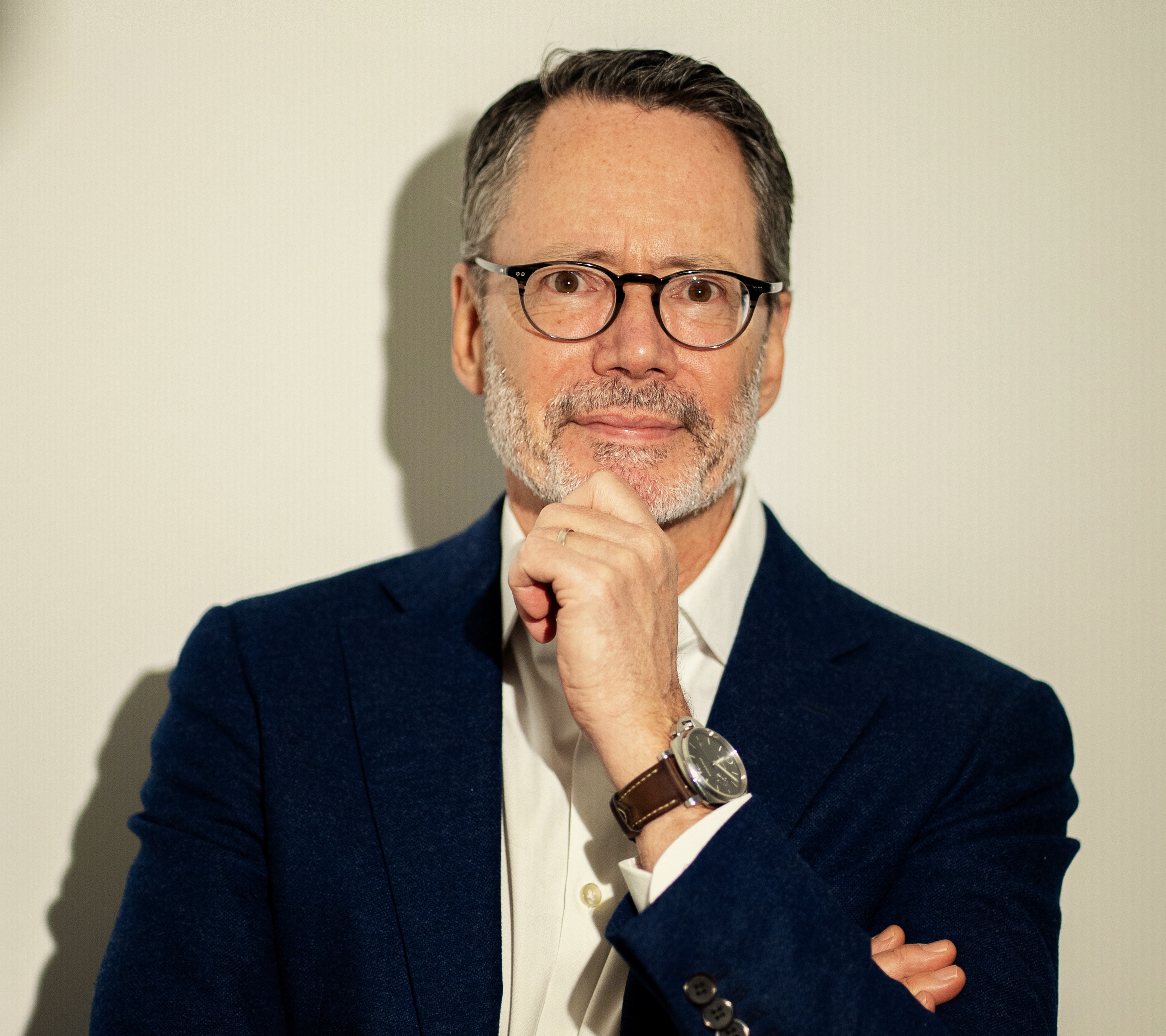
Reid is the U.S. CEO of Burson Buchanan and the Global Corporate and Public Affairs Lead for Burson Group. The first job asks him to expand a British financial communications firm in America. The second gives him a wider canvas across a global agency. Both place him in familiar territory: between what an organization knows, what its stakeholders need and what can responsibly be said.
His public biography reads less like a steady climb through one specialty than a long education in consequence. Political campaigns taught speed. Technology policy supplied scale. Mergers connected language to market value. Litigation and cybersecurity made precision non-negotiable. By the time Reid arrived in Washington for his current post, he had spent three decades learning that reputation is not an ornamental paragraph at the end of a strategy. It is one of the conditions under which strategy succeeds.
A career trained by consequences
The beginning was politics in California, including senior work on a Los Angeles mayoral race and Kathleen Brown’s campaign for governor. Campaigns are famously poor places to cultivate leisurely habits. They compress research, judgment, language and reaction into the same working day. A message has to survive opponents, reporters, supporters and the candidate who must actually say it. The useful lesson is not merely how to move fast. It is how to move fast without forgetting who will hear you.
The route to Washington
After politics came agency work, including GCI Group and FleishmanHillard, followed by six years at the firm then known as Waggener Edstrom. Reid did more than inherit a practice there. He established its global public affairs operation, later led its corporate practice and founded a corporate responsibility practice. The pattern is revealing: enter a complicated boundary between business and society, then give it an operating structure.
The English degree in the crisis room
Reid studied English literature at the University of Nevada, Reno. It is tempting to treat that as a charming preface to the serious business that followed. Better to see it as equipment. Under pressure, verbs acquire liabilities. Sequence changes emphasis. A confident adjective can become a regrettable headline. The communications counselor works with language as both instrument and evidence.
His later assignments demanded exactly that attention. At BSA | The Software Alliance, Reid oversaw global communications and government relations while intellectual property, privacy, cybersecurity and cloud computing were becoming political questions as well as technical ones. In 2013, when Dell joined the association, he described the company as a natural addition to a group trying to open markets and grow the digital economy. It was trade-association language, certainly, but attached to a much larger contest over how software would be made, protected and governed.
Where the facts arrive unfinished
In 2013, Reid joined Sard Verbinnen & Co., now part of FGS Global. He became managing director and co-head of its Los Angeles office, advising on mergers and acquisitions, activist defense, executive transitions, regulatory matters and litigation. The sectors varied from technology to life sciences and education. The underlying problem did not: an event changes what people believe about an organization, often faster than the organization can explain itself.
He moved in 2021 to H/Advisors Abernathy, leading its Los Angeles office along with its cybersecurity and litigation communications practices. A conference biography disclosed the range without revealing confidential details. It included transaction support for a real-estate investment trust, a health-technology merger, incident response and cyber planning for manufacturers and other companies, litigation work for a public agency and a blockchain company, and pro bono communications support for Jarvis Masters.
This is the unglamorous machinery behind the phrase “crisis communications.” Facts must be collected while they are changing. Lawyers, operators and executives may be looking at the same event through different windows. Employees learn details in real time, sometimes through the same public feeds as customers. A counselor cannot make those tensions disappear. The craft is to keep one tension from becoming five.
“Matt brings a successful three-decade career in advising clients through myriad complexities, opportunities and strategic scenarios.”Corey duBrowa, Global CEO of Burson
DuBrowa’s fuller description is more personal. He called Reid a steady hand and a source of wise counsel, speaking from experience as both a former client and colleague. In advisory work, where much of the best performance is invisible by design, that history matters. The counselor is not hired only for what he can write. He is hired for the question he asks before anyone starts writing.
A British boutique crosses the Atlantic
Burson appointed Reid U.S. CEO of Burson Buchanan effective December 2, 2024. The firm had built a long record in Britain around financial markets, investor relations, transactions and corporate reputation. Reid’s brief was to expand the brand and business in the United States while preserving the concentrated expertise that makes a boutique attractive.
The structure offers an appealing combination: a smaller advisory team inside the orbit of a global communications group. Reid framed it as specialized expertise backed by broader resources. That is a useful pitch in financial communications, where an assignment can begin with a board in one city and acquire stakeholders in a dozen markets before lunch.
His early U.S. build also carried the signature of professional relationships. In 2025, Burson Buchanan added managing directors Claire Doan and Jake Yanulis. Reid had worked closely with both before and praised their experience, dedication and depth of thought. Executive hiring statements are often made of polished air. This one contained a practical idea: in high-stakes work, prior knowledge of how a colleague thinks is itself a form of speed.
When a stock ticker becomes a hashtag
Reid’s published advice is most interesting when the environment is least orderly. In 2025, he and Burson Buchanan colleague David Reingold wrote about the return of meme-stock volatility. Social platforms can transform a company’s shares into entertainment, identity and speculation at once. Employees, lenders, suppliers and customers then watch the price swing alongside investors. The investor-relations calendar, with its scheduled calls and carefully assembled decks, meets a crowd that does not keep appointments.
Their prescription was deliberately sober. Equip internal and customer-facing teams with context. Correct rumors. Reassert the company’s value proposition. Communicate transparently and responsibly. Stay fixed on long-term value. They ended with a line compact enough to survive the medium they were warning about: “Memes fade. Fundamentals don’t.”
“Be transparent. Be responsible. And above all, be focused on strategy, building long-term value for all stakeholders.”Matt Reid and David Reingold on meme-stock volatility
The principle extends beyond market frenzies. The dramatic event always tries to become the whole story. Good counsel restores proportion without pretending the event is trivial. It tells each audience what has changed, what has not and what the organization will do next. The language may be public, but the work begins with operations.
Reputation gets a balance sheet
That connection between conduct and communication is central to Reid’s more recent work at Burson. In January 2026, the firm published research that modeled 66 publicly traded companies and estimated a global “reputation economy” worth $7.07 trillion. The study reported that companies with the strongest reputations could receive as much as 4.78 percent in additional unexpected annual shareholder returns.
What reputation looked like in the model
Reid focused on the workplace consequences of artificial intelligence. Companies, he argued, need an “AI people strategy” as well as an AI strategy. Organizations that reskill employees and involve them in shaping the future can earn what he called a reputation dividend. Those that treat AI only as a route to lower headcount risk a reputation tax capable of offsetting efficiency gains.
It is a notably human argument inside a financial one. Reputation may be modeled in dollars, but it is still formed in lived encounters with a company: a product that works, a leader who explains, a workplace that handles change with dignity. Measurement does not make reputation mechanical. It makes the cost of carelessness harder to dismiss.
The sentence that still works tomorrow
Reid’s résumé travels from Nevada to California, from technology policy in Washington to Los Angeles crisis rooms, and back to the capital with a transatlantic growth assignment. Yet its most consistent feature is not geography or title. It is proximity to decisions whose consequences spill across audiences.
His current task is expansive. He must grow Burson Buchanan in the United States, connect financial-market counsel with corporate and public affairs, and help lead a global offering at a moment when politics, technology and capital are unusually entangled. His recent public activity shows the business taking shape: recruiting talent, supporting cross-border transactions and arguing for proof over promise in how companies explain AI investment.
A communications executive can easily be mistaken for a professional supplier of polish. Reid’s career points elsewhere. The job is closer to architecture under weather: establish what can bear weight, understand where pressure will travel and remove anything decorative that might become debris. The room eventually stops being quiet. Reporters call. Employees ask. Markets open. The useful sentence is the one that remains true after all of them have answered back.