The first mistake in a crisis is often a grammatical one. Someone believes the problem has a singular subject: the lawsuit, the breach, the merger, the strike. But the event is only the opening noun. Within hours it acquires modifiers. Employees have questions. Investors make inferences. Regulators notice. Reporters call. A board member forwards an angry email with a two-word preface: “Thoughts?” Suddenly the company is not managing an event. It is managing several versions of reality at once.
TLG Communications exists for that plural. The independent advisory firm, founded in Washington by Molly Levinson, works at the intersection of business, law, policy, markets, and media. Its clients include corporations and boards, financial institutions, law firms, nonprofits, universities, athletes, sports organizations, civic institutions, and public figures. They tend to arrive with problems that do not fit neatly inside one department.
A general advertising shop is hired to create attention. TLG is usually hired because attention has become dangerous, unavoidable, or both. Its job is to decide what the organization needs to achieve, identify the people who can affect that outcome, and make sure the next message does not undermine the next move. The distinction sounds subtle until a press statement becomes Exhibit A.
“We see communication strategies as flowing from business objectives, including the litigation strategy.”Kaye Verville, senior managing director
A newsroom education in what happens next
Levinson came to this work after serving as political director at CNN and CBS. At both networks she directed political reporting, ran election Decision Desks, and worked across campaigns, parties, Capitol Hill, and the White House. The résumé matters less as a credential than as an operating system. Live political coverage teaches a person to absorb incomplete information, test it, anticipate competing narratives, and decide what can safely be said before the clock outruns certainty.
She founded The Levinson Group in 2013. The firm, now branded TLG Communications, has grown into a team of roughly 30 across Washington and New York. Its staff looks like a dinner party arranged by a mischievous seating planner: former television producers beside policy hands, financial journalists beside government officials, litigators' counselors beside political war-room veterans. The mix is the service. A ransomware attack does not care which box owns it on the org chart.
The menu is broad but the premise is narrow. TLG prepares companies for crises; supports litigation and investigations; advises on cyber incidents and workplace conflict; manages communication around mergers, IPOs, restructurings, activist campaigns, and executive transitions; trains leaders for public scrutiny; and runs social-impact campaigns. These are all versions of the same assignment: organize facts and people before an external clock makes the decisions for you.
The equal-pay campaign was not a press release
The firm's most legible public case is the U.S. Women's National Team's fight for equal pay. TLG describes Levinson as a leading architect of the effort. The campaign had legal briefs, collective bargaining, sponsor relationships, television interviews, fan chants, and a simple moral argument traveling at different speeds. Its communications task was not merely to make the players famous. They were already World Cup champions. It was to make the discrepancy understandable and the requested remedy feel like the new baseline.
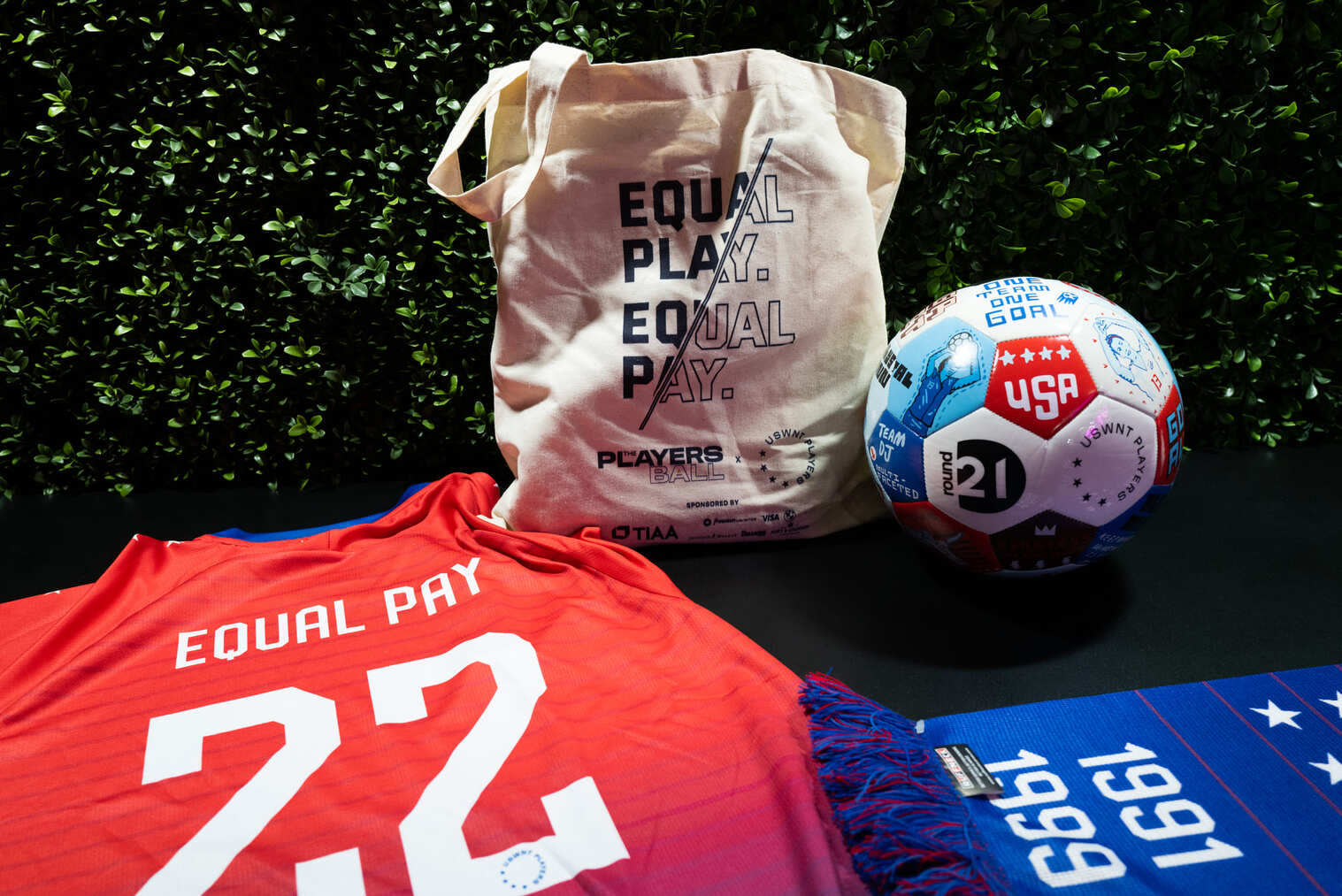
What failed first was the private route. Mediation between the players and U.S. Soccer broke down in August 2019. The lawsuit continued. So did the public campaign, with Levinson serving as a spokesperson and rebutting the federation's claims about compensation. In 2022 the sides reached a $24 million settlement, including $22 million for players and $2 million for post-career and charitable goals. Later that year, the women's and men's player associations signed collective bargaining agreements with identical economic terms through 2028, including shared World Cup prize money.
The money was the public cost of the settlement, not TLG's fee, which was not disclosed. The deeper cost was time: years of litigation, negotiation, and public argument. What changed minds cannot be assigned to one statement or adviser. The result came from legal pressure, player solidarity, fan support, sponsor attention, leadership change at the federation, and bargaining by both national teams. TLG's role shows what strategic communications can do when it is attached to an actual campaign with leverage. It can turn a technical dispute into a durable standard. It cannot manufacture the leverage by itself.
The product is a sequence
Crisis communications is often depicted as verbal perfume: find a phrase that makes the unpleasant thing smell less unpleasant. TLG's public descriptions suggest a more mechanical craft. Assess the risks. Decide the business objective. Map the stakeholders. Build the response infrastructure. Prepare leaders. Then communicate in an order that prevents one audience from learning consequential news through another.
That sequencing is where the boutique model earns its keep. In a sensitive investigation, legal counsel may want silence while employees need reassurance and a reporter has enough facts to publish. In a merger, investors want logic, regulators want detail, and workers want to know whether their jobs will exist. A correct message delivered in the wrong order can still be a failure.
TLG's business model is the familiar one for elite advisory firms: bespoke projects and ongoing counsel, delivered by teams whose value rests on senior judgment and pattern recognition. Prices are private. The competitive set includes FGS Global, Brunswick, Joele Frank, Reevemark, Kekst CNC, APCO, and the internal communications teams that already know the company. TLG's pitch is not scale. It is integration, responsiveness, and comfort beside lawyers when facts are contested.
The market has rewarded that position. Chambers has repeatedly ranked the firm in Band 1 for crisis and litigation communications. PRovoke named it the 2024 Corporate PR Agency of the Year and a Best Agency to Work For in 2023. The National Law Journal placed it in its Best of Hall of Fame in 2024. In late 2025, longtime FGS Global executive Jason Miner joined as managing partner, a notable hire for a firm that remains independently owned. In 2026, TLG has been talking more openly about the growth of its financial-communications practice and its integrated trial work.
What a leader can copy on Monday
Most organizations do not need an outside crisis firm every morning. They do need some of the habits. TLG's approach is most transferable before anything bad happens, when calendars are open and people can still disagree without a television truck outside.
Borrow the method, not the drama
- Write the business objective before drafting the public message.
- List every audience that can change the outcome, including employees.
- Assign a decision owner and a backup before the urgent call arrives.
- Rehearse the three likeliest scenarios and one deeply inconvenient surprise.
- Sequence internal, legal, regulatory, investor, and media communication.
This method works when leaders are willing to surface bad facts early, grant the team access to decision-makers, and let legal and communications advisers challenge each other. It works less well when the mandate is cosmetic, when executives conceal information, or when a company hopes messaging can substitute for a fair policy or a credible remedy. Communications can clarify conduct. It cannot indefinitely outrun it.
The revealing phrase on TLG's website is not “crisis management.” It is “permission to operate.” A reputation is useful not because everyone likes you, but because the people who matter still believe you can be trusted to act. That trust is built slowly and tested suddenly. The headline is only where the test becomes visible.
Go deeper