The usual consulting diagram is a row of tidy boxes. Communications sits in one. Government affairs sits in another. The board is upstairs, human resources is down the hall, and somebody in legal has asked everyone to stop emailing. Then a real problem arrives. A regulation threatens the business model. An activist spots the weakness. A journalist calls. The chief executive needs words, the board needs judgment, and the coalition needs allies by Thursday.
Grayson & Co. was designed for that Thursday. Christopher G. Sheeron founded the Washington firm in 2019 after a career that crossed global public relations, the White House Council on Environmental Quality, executive recruiting, and board consulting. His founding argument was unusually specific: public affairs and communications belonged beside leadership advice. Political uncertainty, corporate complexity, and technological change did not arrive as separate invoices. Why should the response?
The firm calls itself a strategic public affairs and business advisory company. That description is accurate but undersells the oddity. Its published menu contains 24 services, including activist engagement, opposition research, economic research, litigation support, media training, leadership advisory, product defense, state mobilization, literary services, and web development. The connecting idea is not a medium. It is a moment: the point at which an organization must persuade several audiences while deciding what it actually believes.
The founding betThe org chart is the first fiction
Sheeron had spent more than seven years at RSR Partners, recruiting leaders in energy, chemicals, mining, commodities, agriculture, and environmental fields. He also worked in the firm's board practice and in the office of its founder, Russell Reynolds. Before that came crisis and litigation communications, pharmaceutical and health-insurance policy, and work involving oil and natural gas. The résumé reads less like a ladder than a switchboard.
Grayson's initial offer made that switchboard commercial: strategic communications, public affairs, leadership consulting, and board advisory. The company has since made the first two most visible, but the leadership DNA matters. Many agencies begin with the audience - voters, regulators, investors, customers. Grayson also begins with the person expected to face them. A weak message may be a writing problem. It may also be an alignment problem, a governance problem, or simply the wrong messenger.
“A strategic advisory firm operating at the nexus of public affairs and people.”Grayson & Co.'s description of its founding idea
One mandate, four kinds of work
Read the field
Economic research · regulatory analysis · opposition research · issues management
Choose the words
Message development · executive positioning · media training · strategic communications
Move the room
Coalition building · ally recruitment · digital advocacy · state mobilization
Steady the institution
Crisis response · reputation management · leadership advisory · board counsel
Where the model earns its keepSectors in which nouns become arguments
The firm's industry list is heavy with businesses that cannot treat public opinion as decoration: electric and gas utilities, oil and consumable fuels, renewable power, chemicals, mining, pharmaceuticals, biotechnology, health-care providers, financial services, and industrial companies. These sectors live inside permission systems. A project may need a permit, a reimbursement decision, public acceptance, investor patience, and an executive who can explain the whole thing without sounding as if counsel wrote every syllable.
Consider Issaquena Green Power, a developer of run-of-river hydropower concepts for industrial customers. In 2024, Grayson served as its public relations adviser around corporate initiatives announced before CERAWeek. The assignment sits neatly inside Grayson's map: a technical energy proposition, climate and infrastructure questions, potential offtakers, and a global conference where attention is scarce.
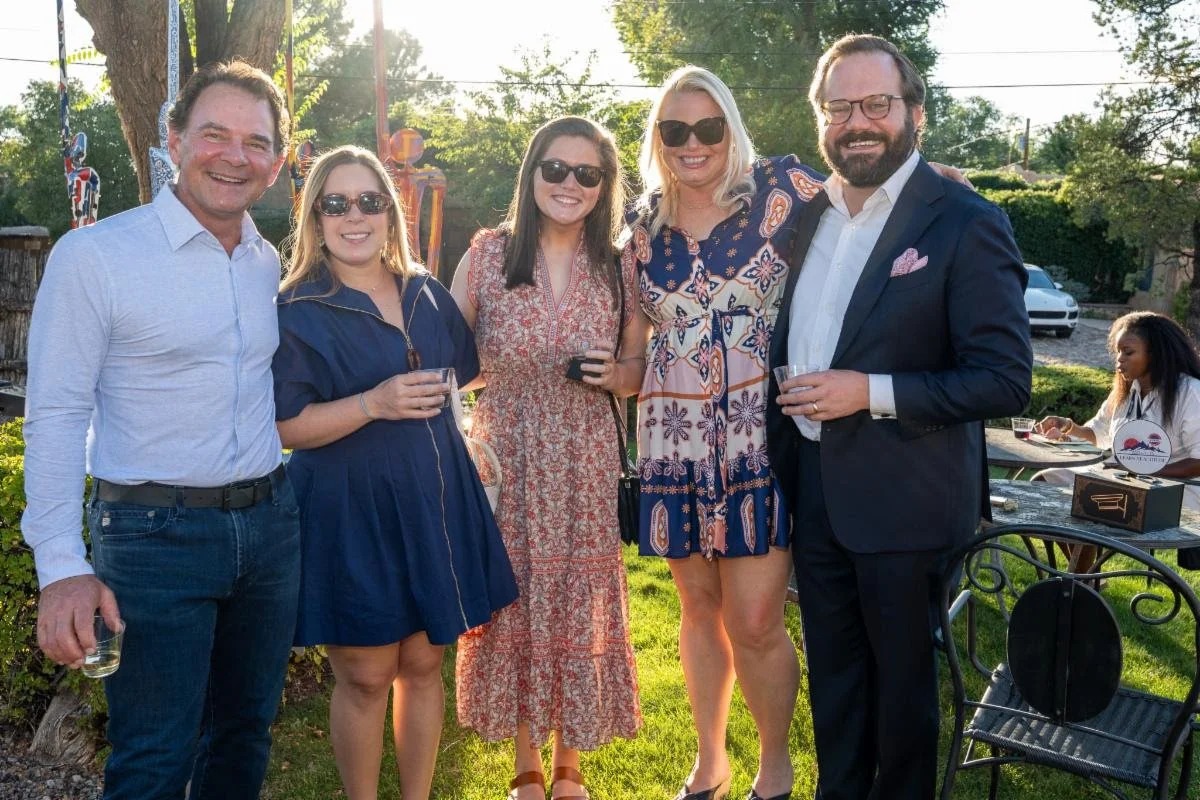
Health care supplies the other conspicuous thread. Sheeron has supported Physician-Led Healthcare for America events, moderated discussions, and in 2025 interviewed former New Mexico Medical Society president Dr. Bill Ritchie at a summit attended by more than 140 hospital executives, physicians, and other leaders. The firm has also appeared around Capitol Hill gatherings where doctors meet lawmakers. This is not consumer publicity. It is translation among professionals who use the same words but answer to different systems.
Small center, wider orbitThe bench is a network, not a tower
Grayson keeps a Washington headquarters and publishes a roster of senior experts spread from Maine to California. Around that core sits a plainly named partner network. Tonio Burgos & Associates adds government-relations reach. Global Nexus works across Latin America and the United States. Alta Crest specializes in public-sector projects and political risk. Taskforce.app brings software for tracking government-affairs work. Bob Berkowitz, a former White House correspondent, contributes message and media-training experience.
The arrangement explains how a boutique can advertise a large surface area without pretending that every specialty lives on one payroll. The business model is bespoke advisory work - projects and continuing counsel rather than an off-the-shelf subscription. Prices are not posted. Buyers are paying for judgment, access to a selected bench, and fewer handoffs between the people who study the problem and those who explain it.
The part worth copying
That last point is the quiet lesson. An integrated advisory shop is not useful merely because it offers many things. It is useful when those things share a diagnosis. The copyable move is to organize around the customer's messy event, then bring in specialists without making the customer conduct the orchestra. A founder with cross-disciplinary experience can hold the score; a partner network can supply the brass section only when the music requires it.
The market positionNot the biggest room - the shortest hallway
The alternatives are familiar: a global PR network for reach, a lobbying shop for government, a crisis boutique for the bad day, a management consultancy for the board, or an executive-search firm for the people question. Each may offer greater depth in its lane. Grayson's wager is that the lane changes are where clients waste time and lose meaning.
There is restraint in the public record. The company does not publish client counts, revenue, funding, valuation, or grand claims about market share. Its evidence is more workmanlike: a services list, a group of named advisers, a set of allies, and public appearances in energy and health care. In 2025, Grayson added Jimmy Rhee, a former Maryland cabinet secretary and Virginia assistant secretary, as senior adviser for Asia. That same year, Sheeron became a senior adviser to Capitol Asset Strategies, a policy and regulatory consultancy focused on financial services and technology. The network continues to thicken at the edges.
A conventional agency promises to tell the story. Grayson is more interesting when the story is still undecided - when the policy case, the coalition, the executive, and the institution must become credible together. Its product is not a press release or a meeting. It is a shorter hallway between the people making the decision and the people who must live with it.