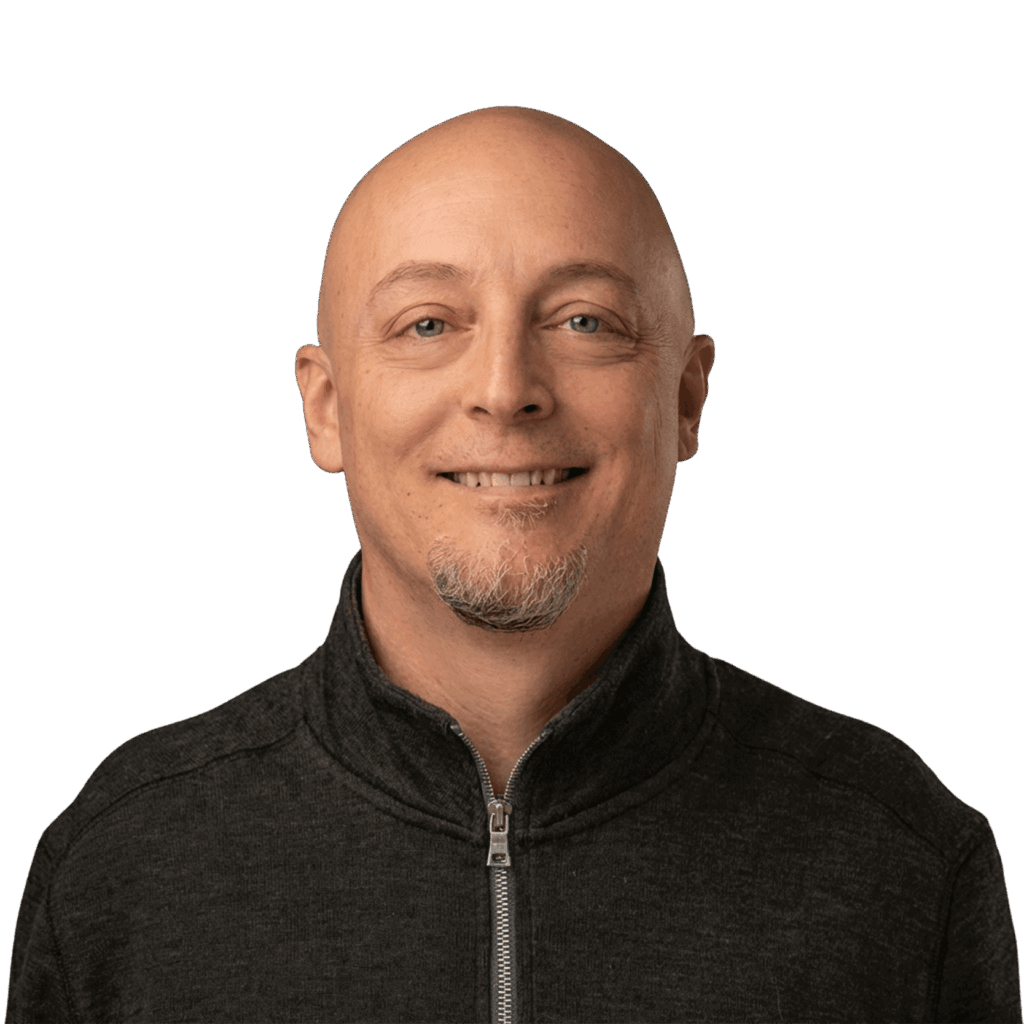
Matt Oberhardt, Partner at Andreessen Horowitz
Profile

Matt
Oberhardt

The Man Who Matches People to Moments

He never wanted to be a recruiter. That's probably why he's the best one in the room.

Role: Partner, Talent Network
Firm: Andreessen Horowitz
At a16z since: 2012
Location: Truckee, CA

The Advisor Who Happens to Fill C-Suites

He built his first startup finance operation before most of Silicon Valley knew what a Series A was. He sat in board rooms when enterprise software was still typed on keyboards, not whispered to AI assistants. By the time he arrived at Andreessen Horowitz in 2012, Matt Oberhardt had already worked three startups from the inside out, put in six years at Korn/Ferry International matching executives to companies that would go on to reshape industries, and earned a pair of degrees that say exactly nothing about what he actually does for a living.

His job title is Partner, Talent Network. What that actually means is that when a16z portfolio founders need to hire their first CFO - or their third - Matt Oberhardt gets the call. When a company is scaling hard and the founding team can't quite figure out why the VP of Sales isn't working, Matt gets the call. When a general counsel walks out the door four months before a public offering, Matt gets the call.

He answers. And then he asks better questions than you expected.

That's the whole thing, really. In an industry full of people who want to be the answer, Oberhardt built a career on being the question. He spent years watching executive searches fail not because the pool was thin or the process was slow, but because no one had bothered to nail down what success actually looked like 18 months into the role. The resume was fine. The interview was fine. The definition of "fine" was the problem.

13+
Years at a16z
Joined Andreessen Horowitz in 2012 - longer than most startups survive
3
Startup Roles Pre-Search
NightFire Software, WorldChain, Clarus Systems - he built before he recruited
7-8
Years on COMMIT Board
Facilitating military-to-tech transitions long before it was a talking point

Why the MOC Document Changes Everything

Walk into an executive search without clarity on what winning looks like, and you will lose. Matt Oberhardt figured this out watching search after search collapse at the finish line - not because the candidate was wrong, but because the company never agreed on what "right" meant in the first place. Someone wrote a job description. Nobody wrote a definition of done.

His answer was the Mission-Outcome-Competency document. Strip out the org-chart noise and write three things: what the company is trying to accomplish (Mission), what this specific executive will deliver in 12-18 months to advance it (Outcomes), and the leadership behaviors required to get there (Competencies). Then hire for those three things. Stop hiring for prestige logos and GPA.

The MOC Framework

Mission - Outcome - Competency

M
Mission
What is the company trying to accomplish? The north star that makes this hire make sense.
O
Outcome
What will this specific executive deliver in 12-18 months? Concrete, measurable, time-bound.
C
Competency
Which leadership behaviors make delivery possible? Not skills on a resume - behaviors under fire.

The MOC framework is deceptively simple. So is compound interest. The founders who use it tend to make fewer emergency calls six months after an executive starts.

Oberhardt runs the process like an advisor who happens to fill roles, not a recruiter who happens to give advice. There is a real difference. Advisors challenge the brief. They push back on a CEO who wants someone "just like me." They surface candidates the founder hadn't considered and then let the data make the case. They tell founders when they're about to make an expensive mistake and they do it before the term sheet gets signed, not after.

We're coming at it from the lens of being advisors, rather than recruiters.

- Matt Oberhardt, Partner, Talent Network, Andreessen Horowitz

On Backchannels and the Art of Honest Reference

The reference call is where most executive searches quietly lie. Not deliberately - but by omission, by softball, by the unspoken agreement that everyone on a candidate's reference list will say something encouraging. Matt Oberhardt finds this spectacularly unhelpful.

His approach: tell candidates upfront that back-channel conversations will happen. "You're going to hear from people who weren't on your list" isn't a gotcha - it's a courtesy. It also changes the dynamic. Candidates who have something to hide start sweating. Candidates who are genuinely good tend to relax. The ones worth hiring aren't rattled by transparency.

He runs references continuously, not as a final formality after an offer is being mentally drafted. A reference gathered in week two of a search lands differently than one gathered in week ten when everyone's emotionally invested. Fresh signals beat confirmation bias.

Great operational talent - the glue - is rare and invaluable in early-stage companies. And it's the first thing to disappear if the hiring process is sloppy.

Whiteboard Sessions Beat Polished Answers

There is a type of executive interview that reveals nothing. The candidate walks the resume, answers "tell me about a time when" with a pre-packaged story arc, and leaves having confirmed only that they prepared well. Oberhardt is skeptical of this format in proportion to how common it is.

He prefers working sessions. Whiteboard exercises. Real problems from the company's actual playbook, not hypotheticals invented to avoid legal risk. Watching an executive actually think - sketch a go-to-market plan, walk through a finance model, draft a people strategy for a team they've never met - tells you things a behavioral interview simply cannot. It shows you how they organize, how they communicate uncertainty, how they interact with ambiguity without a script.

Emotional intelligence surfaces the same way. The executive who answers tough feedback with "I've always struggled with that, here's what I've tried" tells you more about their leadership ceiling than any polished response about growth mindset ever could. Oberhardt watches for the moment the mask slips - not to catch someone out, but because that's when you learn whether you actually want to work with this person for the next four years.

Candidates showing authentic growth from tough feedback demonstrate stronger EQ than those offering polished responses.

- Matt Oberhardt on executive assessment

The Military-to-Tech Pipeline No One Built

Somewhere between the high-stakes hiring of Series B executives and the Sand Hill Road commute, Matt Oberhardt decided to take on a problem the venture capital industry largely ignores: military veterans cannot get hired into startups, and the reasons are almost entirely structural rather than merit-based.

From the Battlefield to the Boardroom

Veterans excel in exactly the conditions that break most new hires: dynamic environments, resource constraints, ambiguous authority, high-consequence decisions under incomplete information. Oberhardt has spent nearly a decade building the bridge that gets them in front of founders who need those skills.

The COMMIT Foundation (Board Member)
BreakLine
Honor Foundation
shift.org

The practical problem is translation. A Special Forces officer has led teams through conditions that would end most startup war rooms before lunch - but their resume says "military" and the recruiter doesn't know what to do with that. Traditional recruiting pipelines miss them entirely.

Oberhardt's answer, run through his board seat at The COMMIT Foundation, is the annual a16z workshop: transitioning service members paired one-to-one with mentors from the Andreessen Horowitz network. The firm provides "the bulk of the mentors." He has done this for seven to eight years running. Not as a photo opportunity - as a practice.

His advice to veterans navigating the tech world: build the network first, then pursue roles. The job comes from the relationship. The relationship comes before you need the job. This is exactly the advice he gives founders too, which suggests it might just be true.

From Startups to Sand Hill Road

Early Career
Director of Business Development, NightFire Software - first exposure to the inside of a scaling tech company
Early Career
Director of Corporate Finance & Business Development, WorldChain - building the financial scaffolding that early-stage companies actually need
Pre-MBA
VP of Corporate Finance, Clarus Systems - managing G&A operations for an enterprise IP communications software firm
2006-2012
Client Partner, Global Technology Practice, Korn/Ferry International - executive search for VC-backed, PE-owned, and public technology companies
2012
Joined Andreessen Horowitz as Partner, Talent Network - bringing operational and search experience into the world's most prominent early-stage VC firm
Ongoing
COMMIT Foundation board membership - 7+ years shaping the military-to-tech pipeline alongside a16z mentors and partner organizations

Tahoe, Two Retrievers, and a Complicated Relationship With Philly Sports

He lives in Truckee, California - close enough to Lake Tahoe that the decision made sense, far enough from Menlo Park to suggest he's thought carefully about what the commute is worth. His Twitter bio has described him as a "less tortured Philly sports fan" for years, which tracks for someone who grew up watching the Eagles, Sixers, and Phillies cycle through heartbreak with the regularity of a market correction.

He has two golden retrievers. He describes them as a "soft spot," which, for a man who spends his days evaluating the emotional intelligence of executives, is a perfectly calibrated understatement.

He also drinks whiskey. Or as the Twitter bio puts it, he is "known to love the brown water." In the context of Silicon Valley, this is a personality statement.

MIT Chems Grad

The engineering degree from MIT is the detail that gets people. Chemical engineering, not computer science. He went into molecules before he went into markets, which perhaps explains why his approach to executive hiring feels so process-oriented, so structured around inputs and outputs and reaction conditions. You don't study chemical engineering without learning that small changes to the system produce outsized changes in the result.

Wharton sharpened the business vocabulary. The startups built the empathy. Korn/Ferry built the pattern recognition. And a16z gave him the portfolio - 13 years of watching how the quality of an executive hire compounds, for better or worse, across a company's entire trajectory.

Profiles & Resources