Before Mary Shank Rockman could email a reporter, she had to learn a little code. This was the era of MCI Mail, when sending a pitch involved a technical hurdle that now sounds like a workplace practical joke. There were also faxes, envelopes and cold calls. Getting a message out required effort. Giving someone a reason to answer required something else.
That distinction runs through Rockman’s working life. She has spent decades explaining technology, working with journalists and guiding companies through uncomfortable attention. In 1999, she started MSR Communications in her living room. By July 2026, the San Francisco agency was marking twenty-seven years in business and its founder was considering another change in how people find information: AI-powered answers.
The machinery has become quicker. Her interest in the person receiving the message has persisted. A useful way into her story is to consider what happens after an introduction. A first call can be an experiment. A second engagement has a history behind it. Someone has already seen how you work.
A message with a little code attached
Rockman began in technology advertising, then took on product marketing and marketing services at an Apple peripherals vendor. Asked to establish its first public relations department, she felt uncertain. She learned through classes and a veteran consultant, adapting traditional PR techniques to technology companies. Soon she was building relationships with reporters across newspapers and computing magazines.
There is something appealingly unglamorous about that beginning. Public relations is often imagined at the moment of arrival: the interview lands, the story appears, the client sends congratulations. Her account begins earlier, with the awkward business of acquiring a skill while the work is already waiting. The person explaining a new technology was also learning how to explain it.
Her LinkedIn education history lists the University of California, Santa Barbara, from 1984 to 1988. Her professional education continued through encounters with people whose job was to ask questions. The technology could be intriguing; a journalist still needed a reason to make it interesting to a reader. That demand gives the communicator a useful discipline. Familiarity with a product does not automatically make an explanation clear.
“Jargon kills clarity.”
Mary Shank Rockman
Years later, Rockman would make that point with characteristic economy. Her advice to technology businesses is to describe outcomes in language an ordinary person can understand and to support the story with evidence. The temptation to sound technically impressive is familiar. A sentence can wear so many credentials that it forgets to say anything.
A crisis before the company
By January 1998, Rockman was director of public relations at Sybase. A photograph from that month places her taking notes while chief executive Mitchell Kertzman answers questions by telephone. The database software company was confronting accounting irregularities in its Japanese operations. The setting offers a concrete view of her corporate career: close to the executive, close to the questions, and dealing with news nobody would have chosen.
Crisis work remains part of her practice. She argues for preparation before trouble arrives and for attention long after an initial response. In her 2025 discussion of reputation management, she describes the uncomfortable balance between replying before the facts are assembled and waiting so long that silence itself becomes a message. A communications plan must leave room for both speed and care.
Her account includes an international assignment involving a cryptocurrency exchange’s collapse in a client’s jurisdiction. The team monitored developments and worked on transparent communication to counter inaccuracies. She also emphasizes that old associations can return through online coverage. An organization may wish to declare a matter finished; the next person searching its name has a different timetable.
PR Boutiques International advertised her as a speaker on restoring reputation after a crisis, alongside practitioners addressing planning, legal considerations and media preparation. Her subject was the aftermath. It is an apt assignment for someone whose recurring concern is what remains once the immediate conversation is over. Accountability needs a longer appointment than the first statement.
The living room acquires colleagues
Rockman grew up as an identical twin with entrepreneurial parents. When she eventually opened her own business, the first office was at home. Early demand brought hiring and a move into office space. The small domestic beginning became an agency serving technology, business-to-business and consumer lifestyle companies, with work spanning media relations, messaging and reputation management.
Starting a firm gives a founder a pleasing degree of control over the name. Keeping it running requires other people to put their judgment behind it. MSR carries her initials, but Rockman has been explicit about the colleagues who helped make it a business. In March 2019, she celebrated Michael Burke and Crisel Ortiz Mills, both of whom had joined in March 2007.
She described Burke’s technology storytelling and Mills’s development of the consumer lifestyle practice. The appreciation was specific to their contributions. Twelve years of shared work gave her plenty to discuss. An agency anniversary can become a recital of client logos; she used theirs to talk about the people doing the work.
Rockman’s October 2024 account. A dated snapshot of MSR’s relationships.
Her approach to leading those people emphasizes trust and giving experienced colleagues room to take ownership. She has spoken about the difficulty of letting go as a founder, and about judging work by results rather than hours. Those are practical choices in an agency, where several client relationships may depend on decisions the founder cannot personally make every minute. A business carrying one person’s initials still needs other people’s authority. Letting them use it becomes part of the founder’s job.
In 2024, she put numbers around that continuity. The Myers-Briggs Company had been a client for more than seventeen years. Team members averaged six years at the firm, and repeat clients worked with MSR four times or more on average. Those figures describe different kinds of return: a continuing account, an employee’s accumulated knowledge, a client deciding to commission another assignment.
They also suggest why longevity interests her. A colleague who remembers a previous decision can bring context to a new one. A returning client brings expectations formed by experience. None of that removes the need to deliver the next piece of work. It does mean that every new conversation need not begin with everyone explaining themselves from scratch.
The promise she will not sell
There is a particular question Rockman hears from founders and marketing leaders: can the agency guarantee coverage? Her answer is clear. Journalists and editors decide what they publish. A company can buy an advertisement or control an article on its own channels. An independently edited story involves someone else’s assessment.
That can be an awkward distinction to bring into a sales conversation. Certainty is attractive, especially when a founder has a launch approaching and a budget to explain. Yet promising an editorial decision would require an agency to claim authority over a newsroom it does not run. Rockman makes the boundary part of the discussion.
Her advice is to understand the reporter’s beat, provide relevant insights and become a useful resource. It is a demanding proposition because usefulness has to be judged from the other end. The company's preferred announcement may be perfectly accurate and still fail to answer the reader’s question. A publicist needs enough distance from the client’s enthusiasm to see that possibility.
In 2024, she identified relationships, research and resourcefulness as skills her profession needed to sharpen. She wanted more relevant outreach and spokespeople ready to help reporters on short notice. Her concern extended to longtime media contacts losing their jobs. For her, the changing newsroom includes people she knows, with work she values.
- 01RelationshipsKnow the person and the beat.
- 02ResearchFind the relevant, accurate angle.
- 03ResourcefulnessHave expertise ready when needed.
A new route to an old question
Her views on AI include practical uses. In 2023, she was discussing its application to research, including industry context, trends and competitive landscapes. By 2024, she was comparing the excitement around generative AI with the internet boom in which she had founded MSR. Having lived through a boom and its aftermath gave her another reference point for evaluating a new technology.
MSR’s twenty-fifth-anniversary announcement also described expanded work with Savant Growth, a returning partner. Rockman’s interest in changing tools sits alongside familiar commercial relationships. The agency marked the anniversary with an infographic on changes in public relations, adding to an earlier retrospective. Looking backward had become a way to consider what the next assignment might require.
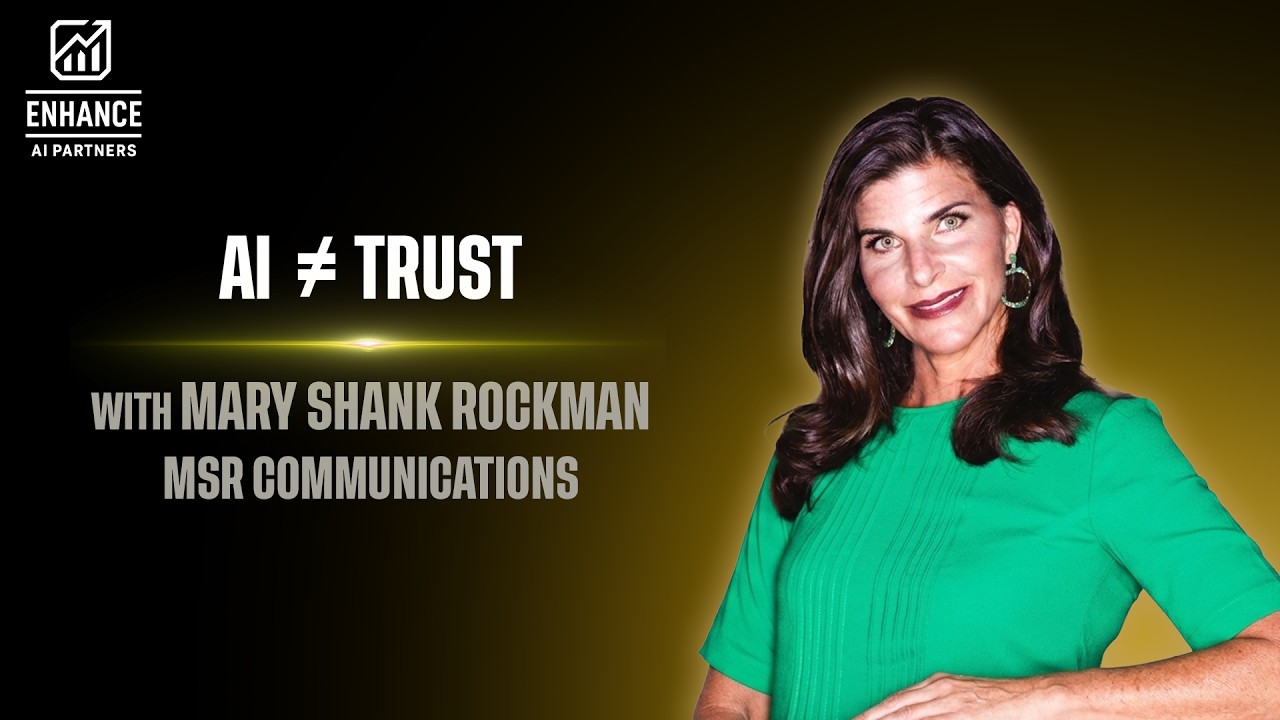
In July 2026, her anniversary reflection turned to the way AI-powered systems surface and summarize expertise. She argued for clear positioning, substantive commentary and independent validation. The brief now included making a company’s knowledge understandable to systems that help people discover it. Her concise principle was that “credibility cannot be automated.”
Away from the business argument, her interests are pleasantly concrete: tennis, skiing, flower arrangements, chocolate. Her biography makes room for a sense of humor: “If you can't laugh at yourself, you miss half the fun of life!” There is room in this account for someone who enjoys arranging flowers as well as arranging an interview.
The distance from MCI Mail to AI-powered discovery is considerable. Rockman has had to keep learning what each new tool permits, and what its speed can obscure. Across those changes, her work keeps returning to a human judgment: whether a message deserves attention, whether a promise is credible, whether someone wants to work together again. The next introduction is easier to make when the last one was worth remembering.