In 1978, a blizzard left Martin Vanderploeg and his classmates stuck for a weekend in Michigan State University's Engineering Building. They spent some of that enforced togetherness discussing a company they might start someday. A snowstorm is an economical business incubator: everyone is available, nobody can leave, and the competition has presumably gone home.
The company would take time. Vanderploeg finished his engineering education, became a professor and helped build two software businesses. The second, Workiva, made a business out of helping people connect information that otherwise lived in separate places. It is a fitting occupation for someone whose own career connects a university classroom, an Iowa technology company and the opportunities available to the next group of students.
He is usually called Marty. He served as Workiva's chief executive from 2018 until 2023 and now chairs its board in a non-executive role. Those titles describe the responsibilities. To understand his choices, it helps to go back to the advantage he says he had before any of them.
A comfortable place to begin
Vanderploeg grew up in Midland, Michigan, with an engineer father and a schoolteacher mother. College was an expectation in the family. His parents had met at Michigan State. In his account of that upbringing, he used a baseball expression with refreshing economy: “I was born on third base.”
There is a useful candor in that description. A résumé records degrees and appointments. It rarely has a column for the people who made a degree seem ordinary, attainable or inevitable. Vanderploeg's parents had supplied that assumption long before a university supplied the credential. He could spend his time considering where to study.
He earned three mechanical engineering degrees from Michigan State: a bachelor's in 1978, a master's in 1980 and a doctorate in 1982. The sequence is easy to read as a straight line. The decisions along it involved other people. Professor Jim Bernard encouraged him toward doctoral study. Vanderploeg later followed Bernard to Iowa State after first teaching at the University of Iowa.
That history matters to his giving. He has experienced a university as a student and as a member of its faculty. He knows a mentor can alter the shape of a career, and that a promising idea needs somewhere to be worked on. His later donations pay for both sides of that relationship.
From the laboratory to the business
At Iowa State, Vanderploeg was a mechanical engineering professor from 1985 to 1993. He founded and directed its visualization laboratory. It was work concerned with making complex things visible, an engineering problem that would follow him into business.
He became a co-founder and chief technology officer of Engineering Animation, known as EAI. Other founders included Jim Bernard, Jay Shannan and Jeff Trom. Matthew Rizai joined as chief executive. Several people who would later build Workiva were getting an earlier education in what it takes to turn technical work into a company.
EAI developed visualization software, including the product that became VisView. Its applications included helping people inspect designs and understand engineered objects on a screen. Unigraphics Solutions acquired the business in 2000; the technology's subsequent corporate lineage leads to Siemens. Vanderploeg had moved from explaining engineering to students to helping customers examine it through software.
His time at EAI also supplied a working relationship with Trom, who would become Workiva's chief technology officer. There is something practical about a second company with people who have already built a first one. The introductions are shorter. Everyone has seen the difference between a demonstration and a product someone will pay to use.
The peculiar trouble with a perfectly good number
Workiva began in 2008 as WebFilings, with six co-founders. Its early target was corporate reporting. Finance teams needed to gather information across a business and produce documents that could withstand scrutiny. Numbers were available. Keeping them consistent across the work was the problem.
A number can be correct in a spreadsheet and out of date in a presentation. A revision can arrive after somebody has copied an earlier version into a report. Nobody has to be careless for the machinery to become cumbersome. The more people, documents and revisions involved, the more opportunities there are for a small discrepancy to become a large afternoon.
The company's Wdesk software launched in 2010. It recorded users' changes and preserved an audit trail across the reporting process. Linked data meant that people could work with connected values rather than tend a collection of independent copies. The appeal lay in removing some of the repetitive checking that stood between knowing a result and reporting it.
WebFilings took the Workiva name in July 2014 and went public on the New York Stock Exchange that December. Wdata, introduced in 2018, expanded its ability to prepare and connect larger datasets. The business kept widening the circle around its original reporting task.
When Vanderploeg became CEO in June 2018, he had already spent a decade as chief operating officer. His appointment followed Matthew Rizai's departure. This was a change in the leadership of a business he knew from its beginning, with an expanding platform and customers asking it to handle more work.
That expansion also demanded engineering underneath the product. In 2020, Vanderploeg described a move to a microservices architecture and the ability to package specific reporting solutions more quickly. The detail is revealing: he could talk about the market, then descend into how the software was built. His earlier profession had not disappeared beneath the executive title.
The boss who invited the questions
Vanderploeg's approach to management made room for employees to speak directly. Workiva used all-hands meetings with live questions, individual conversations, anonymous surveys and open chat channels. He also shared his personal mobile number with employees and customers. Executive accessibility acquired a fairly literal meaning.
“The first job of our managers is to listen.”
Martin Vanderploeg, 2019
Listening had a product purpose as well as a social one. He described an approach built around learning from customers, showing them prototypes and improving those designs through repeated feedback. The customer could react to something concrete. An engineer could learn what needed changing before the idea hardened into an expensive assumption.
In 2021, Workiva described weekly company-wide virtual meetings hosted by Vanderploeg, chief operating officer Julie Iskow and others, alongside a formal flexible-work policy. The methods changed with the workplace. The habit of letting people hear from management and respond remained part of the operation.
His succession announcement supplied a less solemn illustration of the relationship with Iskow. In a public post congratulating her, he praised her engineering and operating experience and added that she could launch a pie with particular skill when charity was involved. He included photographic evidence. Corporate transitions seldom arrive with such a persuasive dessert.
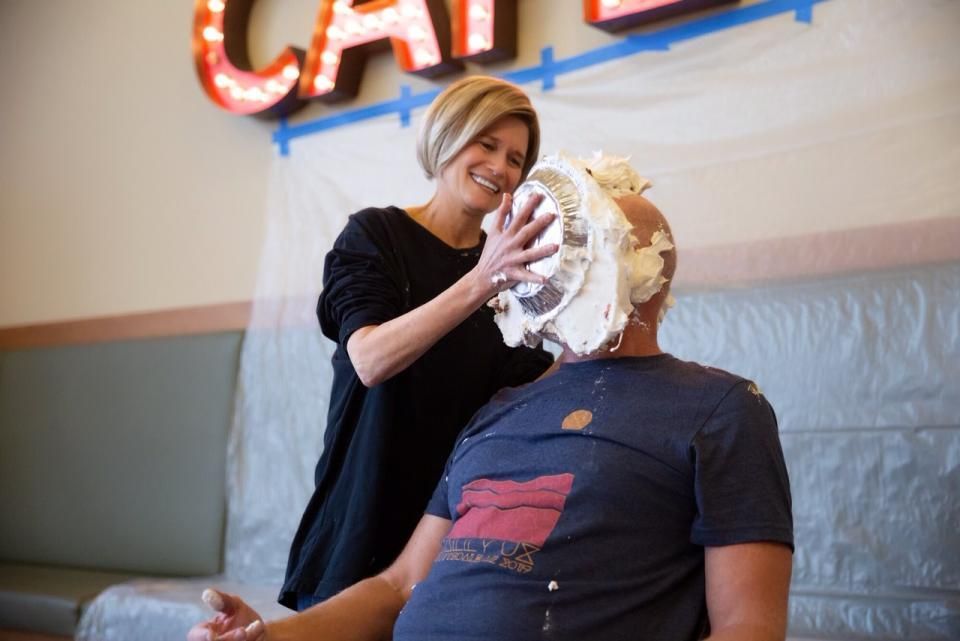
Iskow took over on April 1, 2023. Workiva then served 5,600 customers worldwide. Vanderploeg stayed as non-executive chair, supporting a successor who had joined in 2019 and had already taken responsibility for day-to-day operations. The move gave their working relationship a new arrangement.
Paying for the chance to participate
By then, Vanderploeg had put substantial money back into education. Michigan State announced a $17 million gift in February 2022. Most supported first-generation students through scholarships and academic programming. He also supplied immediate funding so the scholars program could begin that year, rather than wait for its endowment to produce income.
The design extended beyond tuition. Advising, mentorship, summer preparation and opportunities to study abroad were included in the original plan. For a student navigating an unfamiliar institution, those are practical provisions. Getting admitted is one event. Finding people to ask, understanding the next decision and staying connected take longer.
“I think humanity's hope is in education.”
Martin Vanderploeg, 2022
The engineering portion of the gift, $5 million, supported three endowed faculty positions and research. One position honored his father, Marvin L. VanDerPloeg, who earned a Michigan State mechanical engineering degree in 1956. A family history of engineering became money available to future faculty and students.
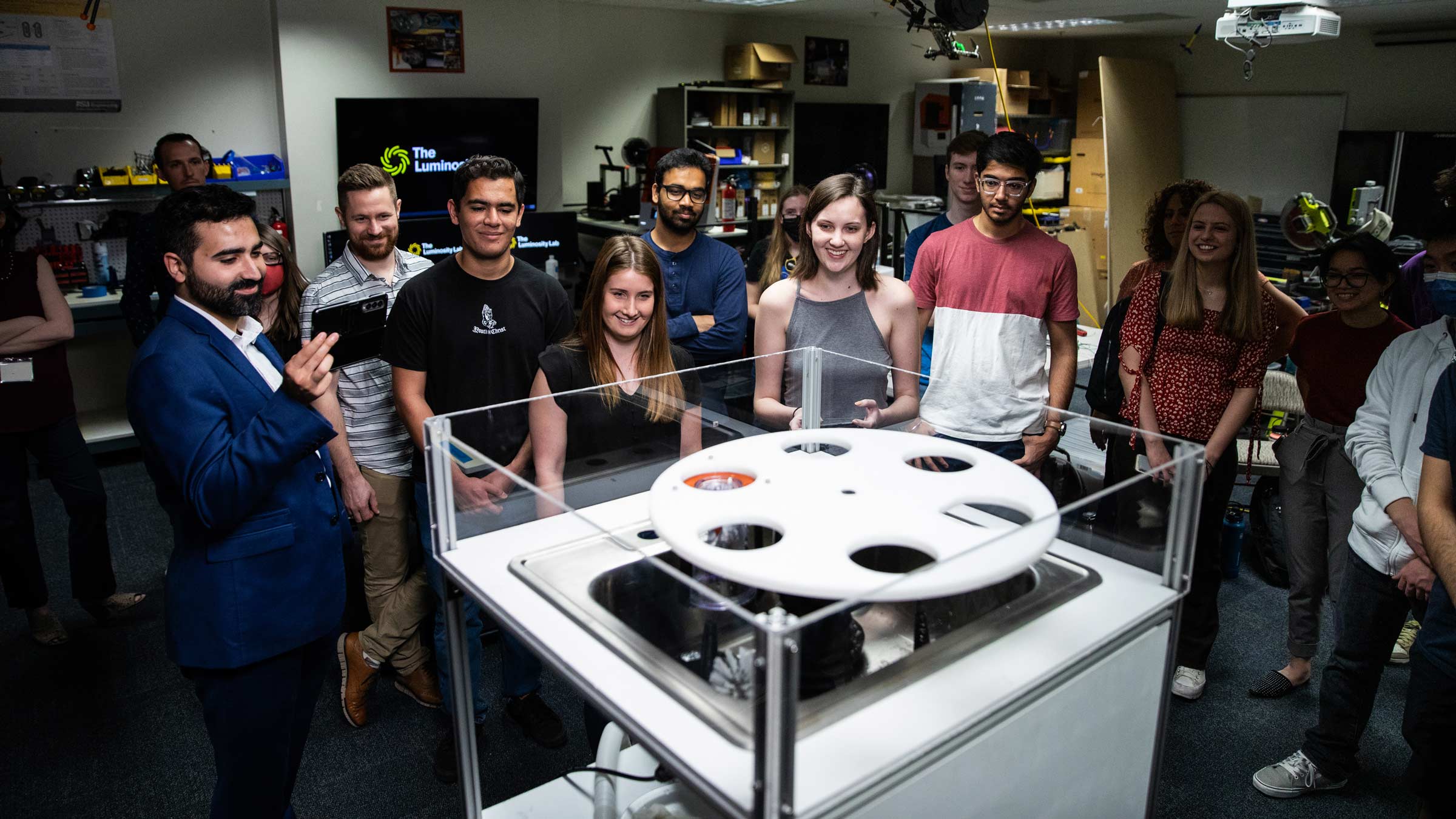
At Arizona State, his $15 million endowment funded the Vanderploeg Luminosity Scholars Program. The inaugural group in fall 2022 comprised 20 students, each receiving $5,000. The purpose was to address financial need and make time available for participation in the Luminosity Lab, where students work together on research and prototypes.
Here, the gift paid for a resource easily overlooked in discussions of talent: hours. Joining a project requires time to try something, find the error and try again. The scholarship offered freshmen and sophomores more room to do that. Business, engineering and other disciplines appeared in the first cohort, placing different kinds of knowledge around the same problems.
A fishing enthusiast funds the research
Lake Superior State offers another glimpse of his interests. The university describes Vanderploeg as an Eastern Upper Peninsula fishing enthusiast and a longtime benefactor. In March 2023, it announced that his $1 million gift had created its first endowed faculty position, supporting freshwater research and education.
The position, named after his father, went to Kevin Kapuscinski, an associate professor and fisheries researcher. Eighty percent of the funding was allocated to salary and 20 percent to research. That division has an appealing plainness. Work needs someone to do it and resources to continue it; the gift made provision for each.
It also brings his story back to the faculty appointment. Vanderploeg once occupied that world himself. Now, some of the proceeds of his business career support people doing research and students learning beside them. The fisherman has found a way to contribute beyond the next cast.
The next group gets its turn
In May 2026, Vanderploeg appeared on Logan Lin's FinanZe podcast for a conversation about teaching, building EAI, growing Workiva, company culture and the future of software in an AI-first world. Workiva's 2026 proxy continued to identify him as non-executive chair. The founder had stepped out of daily management while remaining involved in the company's governance.
His education commitments have a continuing life too. Michigan State's FLI Vanderploeg Scholars Program, launched in fall 2022, was accepting applications for its 2026 cohort. Students now meet the program as part of the university they are entering, rather than as a donation announcement.
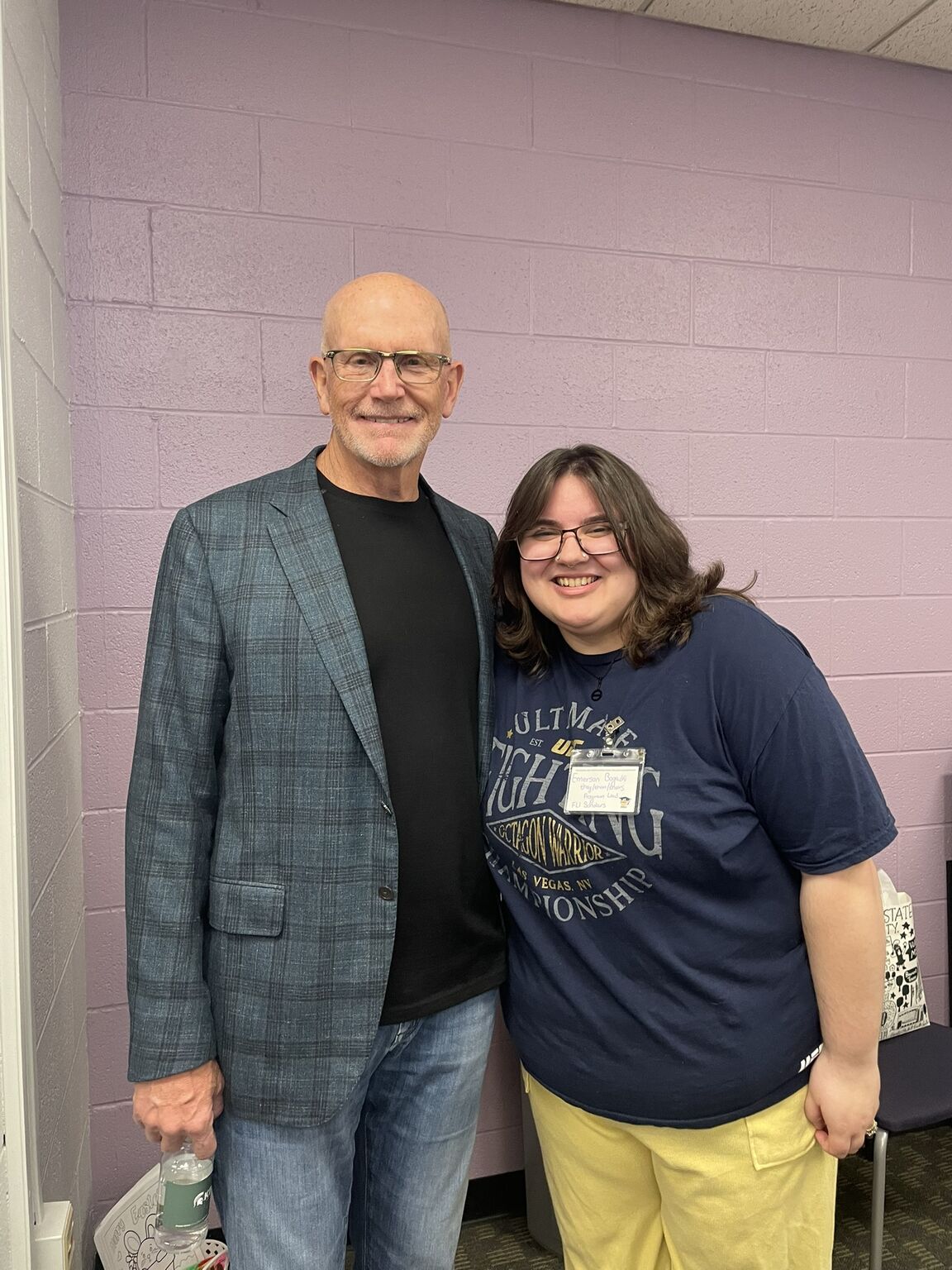
That is a useful place to leave him: alongside a student, with the next chapter belonging to someone else. The snowbound engineering classmates of 1978 had time together and a place to imagine a business. Vanderploeg's later work has helped provide rooms, research support, advice and time for another group to imagine what they might build. Their companies, if any, can come later.
Keep following the connections
Profiles, programs & conversations