The future of the internet has a plumbing problem. Every week brings a fresher interface, a more fluent model, a more urgent declaration that everything has changed. Then Monday arrives. A marketer rebuilds the same paragraph for five channels. A designer discovers that the developer heard about the concept two meetings too late. An AI pilot wins applause and loses its owner. Somewhere in this gap between announcement and operation, Markus Bereflod has made his career.
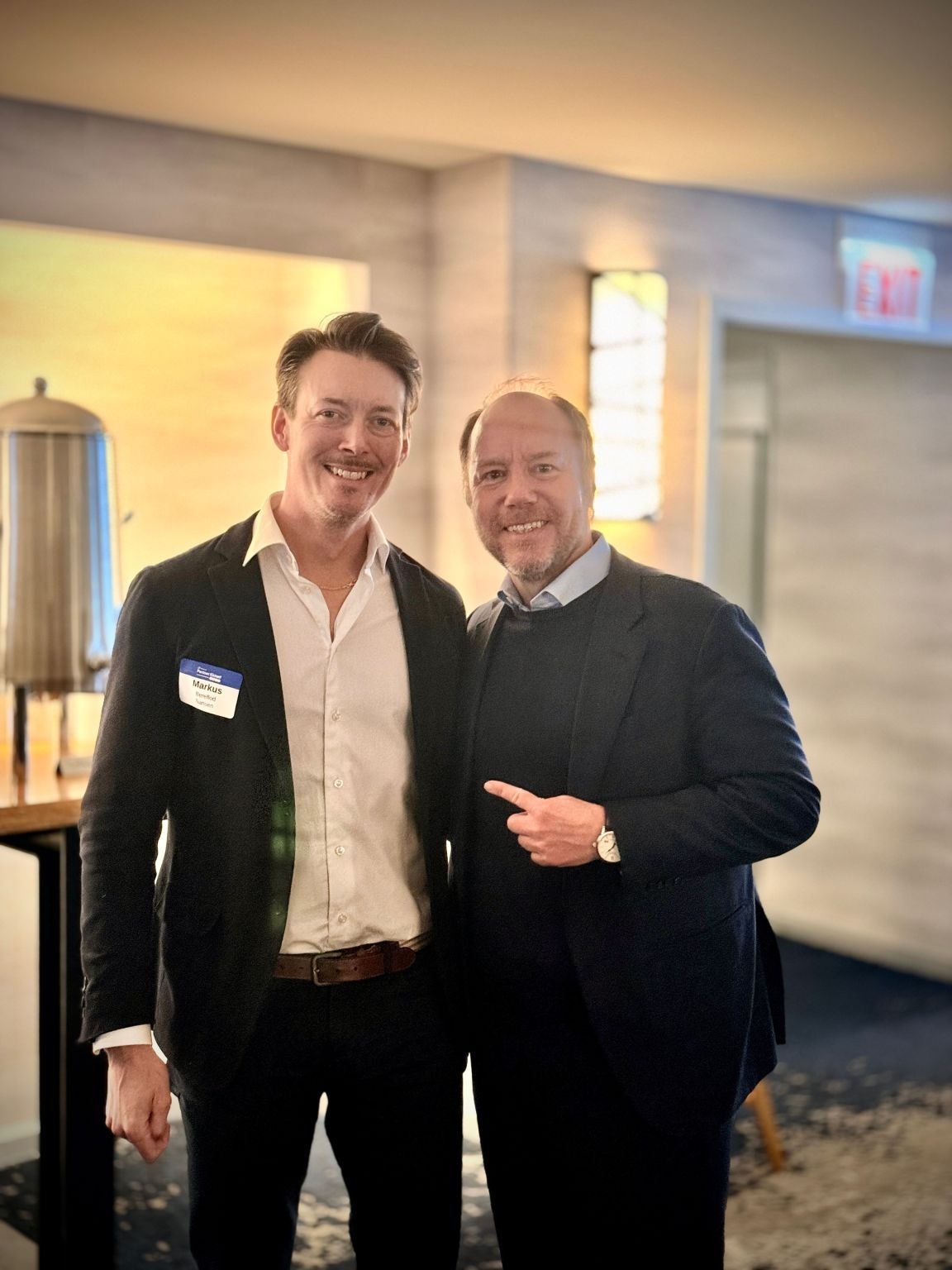
Bereflod is Co-CEO of Nansen, the digital experience agency headquartered in Chicago. He studied at KTH Royal Institute of Technology in Stockholm from 2002 to 2007 and now works from Palm Beach Gardens, Florida. His public writing spans customer journeys, conversion, content management, data platforms, design methods and artificial intelligence. The subjects move with the industry. His instinct stays put: look beneath the visible thing.
It is a useful instinct in a trade enchanted by surfaces. A website is visible; the taxonomy that keeps its content coherent is not. A new feature earns a launch; the conversation that prevented three weeks of rework does not. Bereflod keeps returning to these quieter mechanisms. He is less interested in the magic trick than in whether the stage crew can perform it again on Thursday.
What slows things down usually isn’t a lack of creativity. It’s everything after the idea: distribution, adaptation, reuse.Markus Bereflod, 2025
01 / The operating systemA career in the seams
In 2014, Bereflod wrote about Fridtjof Nansen, the Norwegian explorer and humanitarian who inspired the agency’s name. The lesson he drew from Nansen’s Greenland crossing was charmingly unromantic. Success came partly from making tents lighter, improving food, and adjusting skis and footwear. Grand achievement had been assembled from practical corrections.
That essay now reads like an early statement of Bereflod’s operating taste. He favors accumulation over revelation. In his version of innovation, important progress can begin with an equipment check.
The same pattern appeared when Nansen reconsidered its design process in 2022. The familiar five stages of human-centered design looked orderly, but the work passing through them did not. Designers, developers and clients were speaking adjacent dialects. Technical insight arrived late. Scope expanded. Deadlines wandered. Instead of polishing the diagram, the agency loosened it into three stages and made communication a job that belonged inside the process.
The conversation is the method
The move was not a manifesto against structure. It was an admission that structure should help information travel. A method earns its keep when the people using it can still influence the work before the expensive parts harden.
Bereflod applied the same logic to customer experience. In a 2021 account of Nansen’s work with California’s Pacific Surfliner service, the website had two jobs that could easily quarrel. Travelers needed schedules and tickets, but a famously scenic route also needed to inspire. Nansen’s customer-experience workshop mapped practical improvements, including personalization and a more streamlined journey. The agency reported that the resulting work helped lift quarterly referral sales by 40 to 50 percent. The useful detail is the combination: function did not have to evict feeling from the carriage.
His support for experience data platforms followed the same anti-demolition instinct. Large companies already had content, commerce, product and planning systems full of useful material. Replacing all of them would be slow and expensive. Bereflod argued for a connecting layer that could combine selected data and make it available to a website, app or service portal through purpose-built interfaces. The idea was architectural thrift: preserve what works in the back room, then make it more useful at the counter. Digital transformation, in this telling, does not require setting fire to the furniture every time the shop window changes.
02 / Protected curiosityWhen Friday was too small
Nansen once reserved every other Friday for independent projects and education. The program had a splendid name, Fridtjof Fridays, and a predictable enemy: paid work. Some people never reached their experiments. Others found the intervals too short. A few simply did not know where to begin. Curiosity was on the calendar, but urgency still held the eraser.
The replacement was Nansen Product Lab. Teams of three would receive five uninterrupted days to explore, prototype and build. The aim was both cultural and commercial: make room for people to work across normal boundaries, sharpen rapid experimentation, create useful internal products, and reduce an agency’s total dependence on client revenue.
One rotation tackled a humble internal wish: a skills matrix. Three developers entered the week with the idea of a visual application that could help employees assess their abilities, see strengths across the company and discover whom to ask about an unfamiliar technology. By day five, colleagues were testing a functioning prototype.
There is an operator’s joke hidden here. Companies often say people are their greatest asset, then catalogue laptops with more care than capabilities. The skills matrix tried to make knowledge visible without turning it into a managerial spreadsheet. More broadly, the lab made a strategic belief legible in time. If exploration matters, it gets a week no client can borrow.
03 / Content after the homepageThe front door moved
By 2025, Bereflod’s attention had shifted toward a new kind of fragmentation. Digital strategy had long revolved around attracting people to a website and moving them through a controlled journey. Discovery now happens in LinkedIn carousels, private messages, product reviews, chat interfaces and AI summaries. A buyer can develop a firm opinion before the homepage has had the courtesy of loading.
Bereflod’s phrase for this is distributed discovery. It requires a brand to design meaning that survives outside its preferred container. Content must be modular enough to travel, structured enough for machines to interpret, and clear enough to work when a single excerpt carries the burden of the whole company.
This explains his irritation with content volume. Teams have invested in producing more while neglecting distribution, adaptation and reuse. The result is a rewrite loop: a campaign becomes one version for the web, another for email, another for social, another for sales. Each copy introduces delay and drift. By launch, the urgent idea has acquired the posture of an old memo.
The homepage isn’t dead. But it’s no longer the gateway to growth.Markus Bereflod, 2025
His proposed repair is infrastructure: modular libraries, headless or hybrid architecture, dynamic assembly, shared measurement and content that can move from a CMS to a chatbot without shedding its meaning. These choices sound operational because they are. They also decide whether the brand can be understood in a world it no longer controls.
04 / AI that reports for dutyThe pilot has to land
The same impatience with ornamental progress shapes Bereflod’s view of AI. In February 2026, after Nansen was named Optimizely’s North America AI Innovator of the Year, he wrote that AI creates value when it improves how teams operate and how businesses compete. Moving beyond pilots and embedding AI in real workflows, he argued, is where measurable impact happens.
Nansen’s work with Road Scholar offers the number that makes the philosophy concrete. An AI-assisted review workflow that once required hours was reduced to minutes. Other content tasks became substantially faster, and the organization moved multiple agents into production. The result mattered because it changed recurring work, not because a machine produced an impressive paragraph on command.
For Bereflod, the human portion is not an apologetic footnote to the technology. It is the operating model: adoption, education, confidence, ownership and a shared understanding of what the system should do. A pilot can live on novelty. Production needs governance and a person who answers when the metric moves the wrong way.
This is the line connecting the lighter tent of the 2014 essay to the AI agent of 2026. Both are tools inside a system of work. Neither rescues a confused team by itself. The useful question is not whether the technology looks like the future. It is whether tomorrow’s task becomes clearer, faster or more effective without making the people around it less capable.
05 / The stealable partAmbition in work clothes
Bereflod’s public career does not offer the tidy mythology of a lone inventor. It offers something more practical for an operator to borrow. Bring disciplines together before decisions calcify. Protect curiosity with an actual boundary. Break content into parts that can travel. Use existing systems when they still have value. Judge AI by the workflow it changes.
These ideas share a modesty that should not be mistaken for small ambition. The ambition is considerable: digital experiences that adapt across channels, teams that keep learning, and artificial intelligence woven into responsible daily use. The means are simply obliged to pass through reality.
That may be Bereflod’s most distinctive contribution to the noisy discussion around transformation. He keeps giving the future a job description. He asks where it sits, whom it helps, what it reuses, and how anyone will know it worked. The answers are rarely glamorous. Good plumbing seldom is. Yet when the tap runs, nobody misses the keynote.