In the summer of 2013, Mark Zekulin left a law firm without another job lined up. The problem was the view ahead. He liked the firm, but could not picture himself there in twenty years. Four months of networking followed. Then came lunch with Bruce Linton, a new cannabis company, and a job that would be rather difficult to explain to his grandmother.
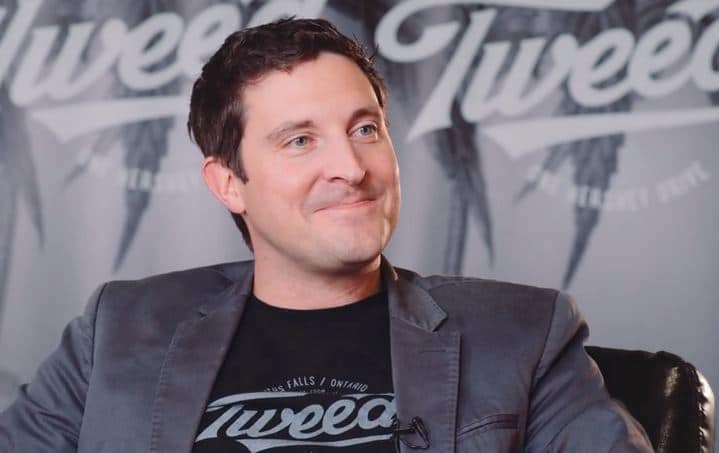
Zekulin joined Tweed as employee number five. Six years later, the business had become Canopy Growth, with thousands of employees across five continents. Its beginnings in an abandoned chocolate factory had acquired the dimensions of a public company. Along the way, the lawyer became president, co-chief executive, and finally chief executive. That is a considerable amount of responsibility to emerge from lunch.
Today, he chairs Invert, which finances and develops carbon projects, and is a founding partner at the private investment company The Greater Return. The industries have changed. The attraction to businesses taking shape around new rules has endured. His career invites a question familiar to anyone with a respectable job and an uneasy feeling about the next twenty years: when should you leave?
The education before employee number five
There was plenty of preparation, even if the destination was unexpected. Zekulin earned a mathematics degree at the University of Waterloo and a law degree at the University of Ottawa. He later added a master's in law at Cambridge. Mathematics, public policy, international trade: his qualifications covered a useful range for someone who would spend years working across the boundaries of business and government.
His early positions included advising Ontario finance minister Dwight Duncan and working at the Business and Industry Advisory Committee to the OECD. He practised international trade law at Cassidy Levy Kent, an Ottawa-Washington firm. These were jobs in which a rule, a negotiation, or a government decision could alter the possibilities available to a business. Cannabis would give that relationship an unusually visible setting.
At Tweed, his responsibilities spread beyond legal advice into running the business. By 2015, the small team had grown to more than seventy people. Coordination meant meetings, and then more meetings. For all the novelty of the product, the calendar had discovered the familiar habits of a growing company. Someone still had to get people in a room and decide what happened next.
Five people, five continents
Canopy's early address gave the growth story an almost suspiciously convenient visual metaphor: a former Hershey chocolate factory in Smiths Falls, Ontario. An industrial building that had lost one purpose acquired another. As the company expanded, the distance between that first small team and its international operations became a way to explain what had happened in only a few years.
The scale was consequential. During Zekulin's leadership, Canopy became a business with more than 4,400 staff across five continents. It was listed on the New York Stock Exchange. A legal and operational exercise in one Ontario town had become a company whose decisions involved international expansion, production facilities, consumer brands, investors, and a workforce spread across countries. Success now required much more machinery than the original team.
2013
across five continents
closed November 2018
In June 2018, Zekulin was named one of Canada's Top 40 Under 40 and elevated to co-CEO alongside Linton. The announcement paired recognition with a larger assignment. Linton praised the colleague with whom he had built the business. The promotion also formalized something visible in Zekulin's earlier work: the lawyer had become part of the company's operating leadership.
That November, Constellation Brands closed an investment announced at C$5 billion, or US$4 billion. Shareholder approval and Canadian government clearance preceded the closing. The transaction was intended to finance expansion and the development of new markets. For a company whose earliest scale could be expressed in single-digit headcount, the cheque introduced a very different order of arithmetic.
Money bought capacity and ambition. It also sharpened the question of what the capacity would earn. A company could raise capital, build facilities, and hire people faster than a newly regulated market could settle into predictable buying habits. The apparent neatness of an upward growth chart leaves out the difficulty of deciding how much to build before demand becomes clear.
When building became operating
In July 2019, Linton left Canopy and Zekulin became sole CEO. He stayed while the company searched for a successor. It was an awkward chapter for a business identified with its founders: the leadership was changing at the same time that expectations were moving toward profitability. The work of creating an industry had produced a company that investors now wanted to judge as an operating business.
That September, Zekulin described a shift from building to operating. Constellation had said it was dissatisfied with Canopy's earnings, and recent results had missed expectations. His explanation was that the business had reached a natural next stage. Facilities and expansion had occupied one phase; making those investments work occupied the next. The distinction sounds orderly. Living through it was a more demanding assignment.
On December 9, Canopy announced that Constellation executive David Klein would become CEO in January 2020. Zekulin's departure as CEO and director took effect on December 20, 2019. The succession announcement identified him as a founding employee and credited his progression through the presidency and chief executive roles. His six-year chapter at the company ended with a handover rather than another promotion.
There is a useful complication here for anyone tempted to read his career as a sequence of inevitable advances. Zekulin helped build substantial scale. He also occupied the chief executive's office during a period when that scale faced harder commercial questions. Both belong in the account. A photograph of the factory can capture a beginning; it cannot tell you whether all the rooms will pay for themselves.
A familiar cast, a different kind of green
His next major venture brought some familiar colleagues into a different market. In February 2022, The Net Zero Company announced its rebranding as Invert and Zekulin's addition as executive chairman. Andre Fernandez and Rade Kovacevic shared the chief executive duties at that time. Both had held senior Canopy roles. The new business assembled people who had already experienced the strain of building together.
The plan combined work for corporate clients with funding for projects that reduced or removed carbon emissions. Invert also set out to give individuals a way to understand and act on their carbon footprints. Zekulin saw parallels with cannabis: an emerging industry, uncertain regulation, and the need to make a young market intelligible. Experience with uncertainty was part of what the team brought along.
“This is exactly what cannabis was like.”
Mark Zekulin, on regulatory uncertainty in carbon markets, 2022
By March 2022, Invert employed twenty-eight people, roughly a third of them Canopy alumni. The team was reviewing about forty possible projects across several continents. Those were the dimensions of a developing business, with funding decisions still ahead. Zekulin's interest lay in applying time and capital to a problem he considered worth working on, while drawing on people whose abilities he already knew.
Financing followed. Altius Minerals provided a US$5 million convertible note investment in March 2022. Invert subsequently completed a C$25 million equity financing in August. Its board expanded that November to include independent directors with sustainability, legal, and finance experience. The announcements show the practical work beneath the mission: secure money, examine projects, recruit oversight, and establish a company able to make decisions.
- 2013Employee five
Tweed - 2018Co-CEO
Canopy Growth - 2019Leadership
handover - 2022Executive chair
Invert
The return that stays in Ottawa
The Greater Return, which Zekulin founded with Kovacevic, gives the investment approach a name. It seeks early-stage businesses positioned around regulatory or societal change, bringing operating experience alongside capital. Its stated aim includes improving communities as well as generating investment returns. Zekulin's current biography also records a previous chairmanship at BC Biocarbon, a company that turns waste materials into carbon-storing biochar.
Some of his commitments are much closer to home. After the May 2022 storm in Ontario and Quebec, he gave C$25,000 to Team Rubicon Canada and offered to match another C$10,000 in donations. The organization brought veterans and first responders into disaster recovery work, including clearing fallen trees and debris. He appreciated the combination of skilled volunteers, a shared mission, and service to neighbours who needed help.
He has also served as board president of Big Brothers Big Sisters of Ottawa. Its 2021 annual report recorded just under 550 mentoring matches at year-end, up thirty percent from the beginning of that year. In his message, he thanked staff, volunteers, and donors for keeping those relationships going. By 2025 he was a past chair, still attending the organization's gatherings.
The Ottawa Community Immigrant Services Organization's 2025 annual report lists him as vice-chair. Alongside his wife, fellow Ottawa law graduate Linsey Sherman-Zekulin, he also co-founded Happy Roots Foundation. Taken together, these commitments keep a local dimension in a career often described through international operations. Board work and mentoring organizations bring the unit of attention back down to people who live nearby.
A swim, then the next question
Ask Zekulin to show someone Ottawa, and the itinerary becomes pleasantly specific. A drive along the river. A swim in the Pond. The university and Parliament. Westboro, Remic Rapids, Preston, Chinatown. Then ice cream at Beachconers by Britannia Beach. A visitor following the whole programme would earn the ice cream, and might begin negotiating over how many neighbourhoods remained.
The curiosity extends back to his education. He has said he never originally intended to become a lawyer; law school offered knowledge and experiences. An exchange in Iceland added subjects ranging from legal history to data protection. Returning to Ottawa to speak with students, he has encouraged them to get involved with young companies and make themselves useful. It is advice consistent with a career that grew beyond the first job description.
His counsel is compact: “show up and be helpful.” There is room inside it for an unexpectedly broad working life. A mathematics graduate can become a lawyer. A lawyer can help run a company in a chocolate factory. A former CEO can examine carbon projects and serve on an Ottawa board. At each turn, there is another group of people, another set of rules, and something concrete to do.
Follow the next turn
Work, conversations, and a look inside the factory.
- The Greater Return Investment approach and leadership ↗
- Invert Current team and board ↗
- Mark Zekulin on X Publicly documented account ↗
- Watch: the Smiths Falls factory tour Midas Letter interview, 2017 · YouTube ↗
- The early Tweed interview PrecedentJD, 2015 ↗
- The move into carbon finance Ottawa Business Journal, 2022 ↗
- Returning to the law faculty University of Ottawa, 2023 ↗