Mark Urdahl helped bring a technology into the world, then returned to inspect the trouble it had grown into. Fibre Channel connected servers to storage. It also left the people running those systems with a difficult question: what, exactly, was happening between the two? In 2008, Urdahl became founding CEO of Virtual Instruments, the company later renamed Virtana. His opportunity was inside the machinery that enterprise computing had already bought.
There is a particular sort of comedy in expensive equipment that cannot adequately explain itself. Everything has a manual. Everything has a vendor. The application is still slow. Urdahl’s early company addressed the space between those facts, where a collection of individually respectable products could produce a collectively baffling afternoon. Measurement offered a way to turn that afternoon into something more useful than a meeting.
An industry, and its blind spot
Urdahl came to the problem with history. At IBM, he helped establish the Fibre Channel Systems Initiative. Joseph Mathis, an architect of the standard, later credited him with building an alliance involving IBM, Sun Microsystems and Hewlett-Packard, supporting interoperability and helping turn technical work into a commercial market. A standard needed agreement about how equipment would actually behave together. Urdahl worked on the business conditions that made adoption possible.
That distinction matters in understanding him. The inventor and the person who gets an industry to commit are doing different work. A specification does not arrange its own partnerships. Someone has to persuade organizations with separate interests to move in a compatible direction. Mathis’s account puts Urdahl in that connective role, where technical possibilities meet purchasing decisions and corporate commitments.
Years later, the network’s success supplied another problem. Urdahl argued that customers needed a clearer view of storage traffic and its relationship to applications. He described the network as a black box. A market built around moving information had created a market for understanding its movement.
“Unlike Ethernet, Fibre Channel is a black box.”
Mark Urdahl, 2008
A scientist, a salesman and a licensing deal
Before storage monitoring, there were photographs. In the 1990s, Urdahl worked with Albert Edgar and Sada Cumber at Applied Science Fiction, an Austin company commercializing IBM image-correction technology. Edgar brought the invention; Urdahl was chief executive. His commercial choice was to license the technology to scanner makers rather than compete by building a high-end scanner. The route to the customer mattered as much as the underlying cleverness.
The company joined the Austin Technology Incubator after its founders left IBM in 1995. It secured licensing relationships, raised venture funding and grew to 134 employees by 2000. A planned public offering was withdrawn as market conditions deteriorated. Kodak later acquired assets and technology in 2003. The sequence contains several familiar startup chapters, compressed into a business that helped clean up other people’s pictures.
In a 1999 financing announcement, Urdahl described an agenda of expanding engineering, licensing and branding. Those three activities belong together: improve the thing, find partners who can distribute it, make its value recognizable. The imaging business offers an earlier view of his commercial interests. He was working on how a technical capability could travel beyond the organization that first developed it.
June 2008: a product gets its own company
The Finisar transaction made that question concrete again. An investment group led by Urdahl, Silver Lake co-founder Jim Davidson and former Siebel executive Steve Mankoff took over assets associated with NetWisdom. Finisar retained a minority stake. Here was an existing monitoring product, existing enterprise demand and a new organization intended to concentrate on both.
Urdahl’s connection to Finisar stretched back to 1993, when he had worked with Jerry Rawls on the Fibre Channel SAN initiative. Fifteen years later, the relationship helped frame a different transaction. The technology had accumulated scale and complexity; a dedicated company would pursue the tools needed to examine it. This was a founding built around continuity as well as change.
By October, Virtual Instruments said its first full quarter had produced more NetWisdom bookings than the product’s preceding twelve months. It also reported that gross profit on those bookings exceeded expenses by 22 percent. These were the company’s own early operating figures, a snapshot of a newly independent business finding customers while putting more money into products and partnerships.
More NetWisdom bookings than the preceding 12 months of product sales, as reported by Virtual Instruments in October 2008.
The pitch was practical. Give operators information they could use when deciding how much infrastructure to buy and how to use the infrastructure already installed. For a young company, that made the product part of the customer’s budget conversation. The dashboard had to earn its place alongside the hardware it observed.
The recession made the question sharper
By February 2009, Virtual Instruments was announcing offices in London and Munich. Urdahl linked demand to the recession and the pressure on organizations to accomplish more with fewer resources. Customers were also preparing for production server virtualization, which made understanding performance increasingly relevant to how they planned their systems.
An overseas office sounds like a growth announcement. It is also a service commitment. The company said local specialists would support customers and channel partners in Europe. Selling an enterprise tool creates obligations that extend beyond demonstrating it. Someone has to help a customer deploy it, interpret its results and keep using it after the sales conversation ends.
At the close of its first independent fiscal year, Virtual Instruments described growing its workforce, expanding round-the-clock support and adding executives across sales, marketing, engineering, products and services. Its customer list included retailers, financial organizations and other large enterprises. Urdahl’s job had broadened from arranging a spinout to assembling an organization capable of serving that market.
VirtualWisdom, introduced during this period, brought storage input/output measurements into VMware environments. The promise involved placing virtual machines with a better understanding of the storage performance beneath them. The product’s name was rather grand; the customer’s question was ordinary enough. Where should this workload go, and what evidence supports the decision?
Bring the architect back into the room
In May 2009, Joseph R. Mathis Sr. became the first Virtual Instruments Fellow. A thirty-year IBM veteran and Master Inventor, Mathis would help shape storage networking and virtualization strategy and work with large customers on measurement criteria. His remit connected product planning with the practical demands of deployment.
The appointment makes Urdahl’s network of relationships visible. The person who had helped develop Fibre Channel was now joining the company trying to understand how it performed in complex environments. Urdahl emphasized the value of having that expertise collaborate with partners and customers on the roadmap. The business had brought an industry’s earlier technical knowledge into its next operational problem.
There is something satisfying about that reunion. Technology careers are often presented as successive departures: leave the old employer, start the new company, turn the page. Here, accumulated knowledge and relationships returned to useful work. An established standard still had things to teach the people building tools around it.
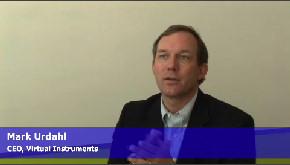
In April 2010, Urdahl recorded an interview explaining NetWisdom and VirtualWisdom for the C-4 Summit in Cyberspace. The discussion covered traffic between servers and storage, virtual machines and the benefits of measuring their behavior. It captures him in the explanatory part of the CEO’s job: translating a technically involved product into a reason for an organization to care.
The board seat before the corner office
John W. Thompson entered the company first as an investor and director in 2009. Urdahl welcomed the former Symantec chief’s experience in systems, storage and technology policy. The announcement described a company expanding internationally and looking for guidance for its next stage. A board appointment supplied both experience and a relationship that would soon become operational.
On May 6, 2010, Thompson replaced Urdahl as CEO. Urdahl remained a director and a large shareholder. The company reported that sales had grown more than 100 percent in 2009 and described a wider customer base and European presence. The founding CEO’s tenure had covered the separation from Finisar and the early work of building an independent organization.
The handoff is part of Urdahl’s story, rather than a footnote to someone else’s. Founding a company establishes a relationship with it; running it is a particular assignment within that relationship. In this case, the assignment changed while ownership and board participation continued. Accurate dates make the contribution easier to see.
The name changed. The question survived.
Virtual Instruments became Virtana in October 2019, under later leadership. The company explained that its broader portfolio now reached across data centers and public cloud, with an application-centered approach to infrastructure management. The name kept a connection to the old initials while pointing toward real-time analytics and automation.
Urdahl’s own public professional profile now lists Mountain VC and Austin, Texas. A June 2026 investment forum agenda identifies him as the firm’s managing partner. His career has moved between operating and investing, with technology commercialization linking the chapters. The current affiliation belongs alongside the founding credit, rather than being swallowed by it.
What remains distinctive about the early Virtual Instruments chapter is the return visit. Urdahl had helped an industry adopt a technology. He then helped build a business around understanding the systems that resulted. Enterprise computing had become very good at connecting things. Customers still needed someone to explain what those connections were doing.