Most real estate money chases the same thing: the tall tower, the trophy address, the building with its name in lights. MARK Capital Management spends its time somewhere less photogenic. It buys the low warehouse on the edge of the ring road, the shopping arcade that stopped drawing crowds a decade ago, the block of a city that everyone walks past without looking up. Then it makes those places useful again.
The London firm describes itself plainly as a multi-platform real estate investment manager "focused on the opportunities created by urbanisation and innovation." Strip out the industry language and the idea is simpler than it sounds. Cities keep growing. People need homes. E-commerce needs somewhere to store and sort parcels close to where those people live. MARK buys the property that serves both needs - and has a nickname for it that sounds like a pub order: beds and sheds.
The originA father, a son, and a company built from leftovers
MARK started life in 2004 under a different name. It was called Meyer Bergman, and it was assembled by chairman Ton Meijer and chief executive Marcus Meijer from holdings of the former MAB Group. A father-and-son pairing at the top is unusual in institutional real estate, where firms are more often built around a rotating cast of dealmakers. At MARK the family thread has stayed intact through two decades and a full change of strategy.
The name "MARK" only arrived in 2020. The rebrand was not cosmetic. It marked the point where the firm stopped thinking of itself mainly as a retail-property specialist and reorganised around a set of specialist platforms - each aimed at a long-run trend rather than a single deal. The company also signalled interest at that time in emerging asset classes such as life sciences and digital real estate, sectors it saw the pandemic accelerating.
The engineCrossbay, or why a boring warehouse became prime real estate
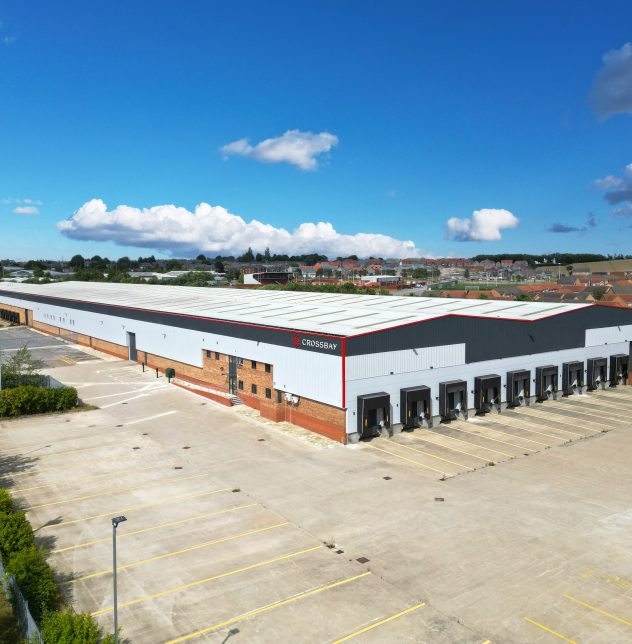
If one platform explains MARK's recent run, it is Crossbay. Crossbay buys single-user distribution warehouses - the last-mile "sheds" wedged inside or beside major European gateway cities, the ones that make same-day delivery physically possible. For years these were an afterthought. Then online shopping rewired retail, and the humble urban warehouse turned into one of the most sought-after asset classes in Europe.
In 2025 MARK reached a final close on its second Crossbay fund at €660 million of equity commitments - roughly a 20% jump on its predecessor. With debt layered on top, the vehicle carries total investment capacity above €1.5 billion. It had already bought more than 7.5 million square feet of assets across the United Kingdom, France, Benelux, Germany, Spain and Italy, and was over 65% committed. A €250 million debt facility from Citi helped fund the portfolio's early growth. Crossbay is run day-to-day by CEO Marco Riva, who came from logistics operator Logicor.
Crossbay II · the shape of the fund
Equity raised, debt-boosted capacity, and portfolio scale.
The strategy behind it has a name too: aggregation and granularity. Rather than chase one enormous trophy shed, Crossbay buys many smaller, well-located warehouses and knits them into an institutional-scale portfolio. Buying granular means more work per euro deployed, but it also means access to assets too small for the giants to bother with - and a portfolio that is harder to replicate.
That approach earned the firm industry recognition. In 2025 MARK was named PERE's Logistics Investor of the Year, the sector's most closely watched award, on the strength of the Crossbay track record.
The playbookValue-add: buy what's broken, fix it, make it useful
Crossbay is the loud story, but it sits on top of MARK's older discipline: value-add investing through closed-ended funds. In practice that means buying under-utilised assets in urban gateway locations, then repurposing and repositioning them - across mixed-use, retail, office and residential - so they generate more value than they did before. It is patient, hands-on work: sourcing, development, asset management and portfolio management, all under one roof.
The results are visible on the map of London. Over the years MARK has been connected to landmark assets including Burlington Arcade, the Regency-era luxury shopping promenade off Piccadilly; the Bentall Centre in Kingston; the Queensway redevelopment around the former Whiteleys department store, now The Whiteley; and Borough Yards, the mixed-use scheme near Borough Market. Each is a case of the same instinct - take a building the market had written down, and rewrite what it is for.
The customersWho actually funds all this
MARK does not invest its own balance sheet at scale. It is a fund manager, and its customers are some of the largest pools of capital in the world: pension funds, pension insurance companies, sovereign wealth funds, endowments and family offices, drawn from Europe, North America, the Middle East and Asia. They commit capital to MARK's funds; MARK sources and manages the assets; and the firm earns management fees on that capital plus performance fees when returns clear an agreed hurdle. Debt facilities, like the Citi line for Crossbay, stretch each euro of equity further.
The marketWhere MARK sits, and who it's up against
MARK is a mid-sized manager in a market that includes some very large names. In last-mile logistics it operates in the same territory as Blackstone's Mileway, Prologis and Brookfield; in value-add and mixed-use it competes with the likes of Patrizia, Tristan Capital Partners and AEW. Its edge is not size. It is local presence - teams on the ground in each market who can find off-market buildings before they are listed - paired with the discipline institutional capital expects.
Scale, though, is on the firm's mind. In 2025 MARK was reported to have explored a merger with OCP, a Dutch investment manager founded by former Goldman Sachs banker Victor Van Bommel, in a deal that would have combined two roughly €5 billion managers into something near €10 billion. The talks were understood to have paused into 2026, with both firms free to consider other partners. Whether or not it happens, the conversation says something about where European real estate is heading as a new cycle begins: mid-sized players looking for the heft to compete.
What's nextMomentum into 2026
Into 2026 the firm has kept moving. Crossbay expanded its French portfolio past 150,000 square metres following a sale-and-leaseback deal, added senior hires across Crossbay and its Client Solutions team, and appointed a new Head of Asset Management for the logistics platform. For a firm whose entire thesis rests on being close to the ground in each market, hiring operators is not a footnote - it is the strategy in action.
The through-line, from Meyer Bergman in 2004 to MARK today, has stayed remarkably steady. Read a trend before it is obvious - urbanisation, e-commerce logistics, the structural change in how cities use their buildings - then build a specialist platform to act on it. The buildings themselves are rarely the story. The judgment about what they could become is.