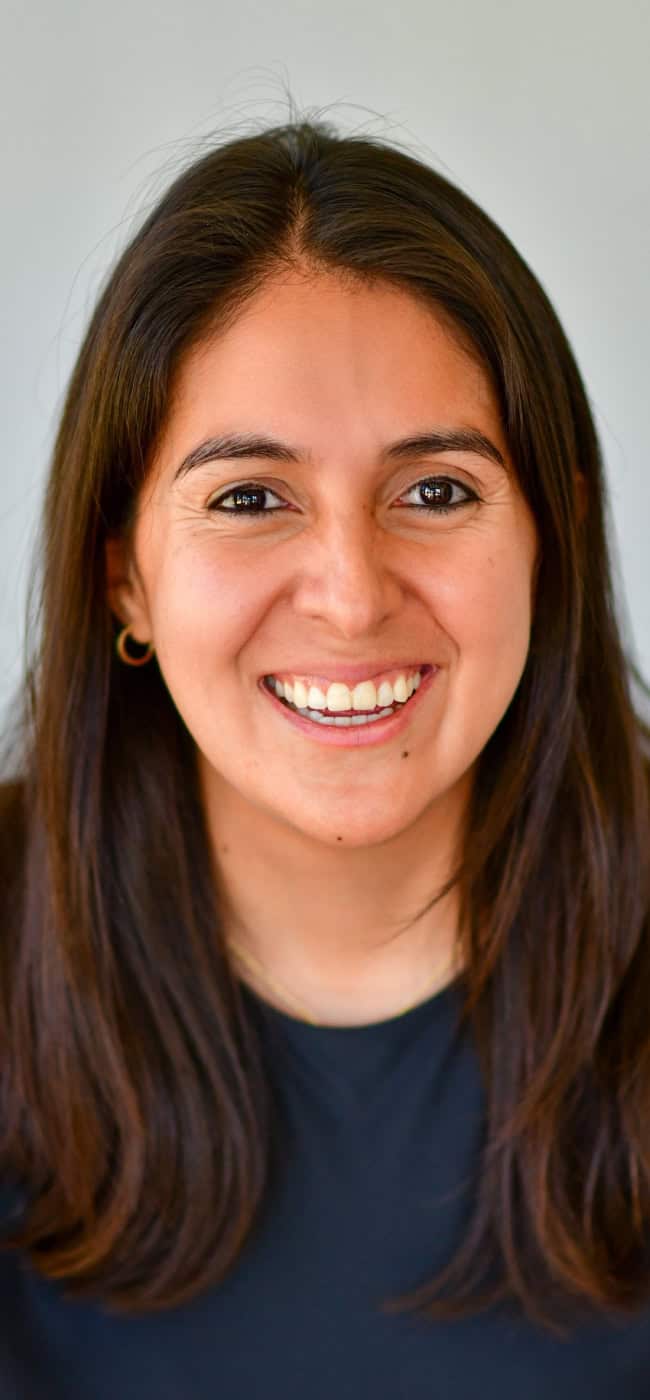
Profile
The Investor Who Built the Map, Then Followed It
She was seven years old when her family left Bogota, Colombia. They landed in Orlando, Florida, a city better known for theme parks than tech ecosystems. By high school, she was student body president of a 4,000-student school and captaining the public forum debate team. The debate instincts would stay with her longer than the Florida heat.
At UC Berkeley, studying Political Science, Legal Studies, and Public Policy, Maria Salamanca discovered FWD.us - an immigration advocacy organization co-founded by Mark Zuckerberg, Ron Conway, and Bill Gates. She didn't wait for a job posting. She cold-emailed Emanuel Yekutiel, secured a role in donor engagement and fundraising before graduation, and turned it into her first credential in a field she was still learning to name.
Shortly after graduating in 2015, she joined Unshackled Ventures as an early hire, working alongside founders Manan Mehta and Nitin Pachisia. The fund had a clear and unusual thesis: back immigrant founders from day zero, with capital, networks, and immigration legal support. She spent the next seven years building it from two investments to 75 across three funds, evaluating more than 8,000 deals along the way. She made partner.
The best investors I have met spend time understanding the past and have a thesis on the future, but what really stands out is their ability to see the present clearly.
- Maria SalamancaThe Ulu Move
In 2022, she made the jump to Ulu Ventures - a Palo Alto-based seed fund co-founded by Clint Korver and Miriam Rivera. She had met Rivera in November 2017, crediting her as the first GP in the industry to mentor her meaningfully. That mentor-mentee arc, played out over five years, ended with a partnership. She had already co-invested with Ulu Fund III in four companies: Allocate, Formally, Parfait, and Syndicate.
Ulu Ventures occupies a specific and increasingly validated niche: data-driven, decision-science-informed seed investing with a bias toward underrepresented founders. The firm isn't just claiming diversity as a value - it builds it into the process itself. Nearly 80% of Ulu's portfolio companies have immigrant, female, or minority founders. Fund I returned 6.6x net TVPI as of Q3 2024. Ten portfolio companies have become unicorns.
The Fund She Didn't Wait For
Fund IV closed in February 2025 at $208 million - a 50% increase from Fund III's $138 million - bringing total AUM above $400 million. Backers include MacArthur Foundation, Ford Foundation, California Wellness Foundation, GCM Grosvenor, Illumen Capital, Melinda French Gates' Pivotal Ventures, and multiple university endowments. In a market where many funds were shrinking, Ulu grew.
Salamanca's framing of that growth is characteristically direct: "If you are going to be standing strong on DEI today, you have to be incredibly buttoned-up." The fund's discipline on process is the point. "We want to be an example of how to do it thoughtfully, we don't want to be a target."
Her investment range runs from $100K to $10M with a sweet spot around $1 million. She looks for speed of execution, relentless prioritization, and founders who can define the toughest problems standing between them and their next phase. The data-analytics infrastructure at Ulu isn't window dressing - it's the methodology. Risk/return modeling and decision analysis inform every check written.
The Map Maker
Before YesPress, before signal.nfx, before most people could name a Latina VC partner, Maria Salamanca was building the infrastructure so others wouldn't have to start from scratch. In 2018, she co-founded SomosVC, a 501(c)(3) dedicated to increasing and retaining Latinx professionals in venture capital. The organization published the first-ever annual report on the state of Latinx diversity in VC. In 2024, she co-authored its third edition.
She was also the founding COO of Swing Left in 2016 - a political organizing platform built to flip the House of Representatives - and later joined its board. The throughline: she joins things at the beginning when the map doesn't exist yet, and builds it.
Palo Alto to Orlando (and Back)
In November 2022 - the same year she joined Ulu Ventures - Maria Salamanca was elected to the Orange County Public Schools Board of Education, representing District 2. OCPS is the 8th-largest school district in the United States, serving the Orlando metro area where she grew up. She became both the youngest and the first openly LGBTQ+ person elected to the board.
Running a seed fund and serving on a school board for 200,000+ students requires a specific kind of logistical tolerance. She's noted that adaptability - listening to perspectives from people experiencing the economy differently - keeps her calibrated. Her passions for education, local politics, and venture capital aren't separate rooms; they're the same argument made in different registers.
Make sure that the reason you want to be on this career path is less about the potential glamour of it all and more aligned with your enjoyment for innovating, building, learning, and selling.
- Maria Salamanca, on a career in venture capitalWhat She Sees That Others Miss
Her investment thesis is shaped by what she calls the ability to see the present clearly. Not the glossy pitch narrative, and not just the TAM slide. She's watched AI's growing impact and America's renewed focus on manufacturing and heartland industries reshape where the real opportunities sit. She covers B2B software, digital health, sustainability, and information technology - sectors where Ulu's decision-analysis framework can stress-test assumptions that other funds take on faith.
The practical advice she gives to aspiring investors cuts against the mythology of venture capital. "A very humbling job with failure built in," she says. Most startups take close to a decade to succeed, if they do. The job requires curiosity, genuine love of learning, and comfort with ambiguity - not the glamour of it all.
From a cold email to a $400M fund partnership, from debate captain in Orlando to General Partner in Palo Alto, from immigrant daughter to the person who counted the Latinx investors and found too few - then did something about it. That's not a career arc. That's a decade of showing up with the values her community holds dear and doing hard things well, slowly, correctly.