An early customer gave Marek Zamecnik’s team a portfolio of Brazilian footballers. The names were camouflage: this was investment data, anonymized for a trial of Vestberry. The figures refused to reconcile. For two weeks, the team tried to make them add up. Eventually, they wrote to ask whether the mistakes were deliberate. They were. The customer wanted to see whether the people selling portfolio software understood portfolios.
There are more flattering ways to audition for a job. A demonstration usually gives the software its best manners: tidy inputs, agreeable totals, a dashboard without a hair out of place. This customer supplied the awkwardness instead. The test put the problem back where it belonged, among numbers that required someone to question them.
Zamecnik tells the story in an anniversary recollection. It is a useful opening to a career that has moved through investment businesses, accelerators, coworking spaces and conferences before settling on the machinery behind a fund’s decisions. His subject has often been the connection between people with capital and people building companies. Vestberry asks what information should travel along that connection.
Trying to reconcile a dataset whose errors had been planted on purpose. A founder’s recollection, rather than a performance benchmark.
The long way to the spreadsheet
Zamecnik’s education took him through institutions in Britain, France and Denmark, including Oxford Brookes University, Université Paris-Dauphine, Copenhagen Business School and the University of Manchester. At Manchester, he studied International Business and Management at master’s level. The geography matters here: the subsequent career would also cross borders, carrying relationships and business ideas back to Slovakia.
He worked for Nova Founders Capital in Kuala Lumpur, developing a venture aimed at the Swiss market. A 2018 account described him managing roughly twenty people across Europe and Asia. Even before the portfolio software, his work involved making an enterprise function across distances. The map had become part of the job description.
He dates his first encounter with venture capital to 2013. What appealed to him was its combination of technology, innovation and money: funds helped decide which new ideas would reach the world. That observation gives his later choice of business a particular logic. Someone interested in the consequences of capital allocation might reasonably become interested in the quality of the information behind it.
It also supplies a less theatrical origin than the familiar moment of invention. He noticed how funds worked, then noticed difficulties in their work. The eventual product would concentrate on portfolio management, a subject with rather less public glamour than announcing the next investment. There is plenty to do after the announcement has been framed.
First, give people a place to meet
Back in Slovakia, Zamecnik co-founded the RubixLab accelerator in 2014. Two years later came 0100 Ventures. His co-founders included Michal Paško and Dušan Duffek, whom he knew from high school, and Martin Hauge, whom he had met during his time in Malaysia. The partnership combined old friendships with a relationship formed abroad.
The group developed coworking and conference activities through Campus and 0100 Conferences. By 2018, its plans included Campus City in central Bratislava, a coworking space designed for about 300 people. Zamecnik discussed accommodating teams of six to forty in private offices alongside shared space. Those are concrete dimensions of community: people need somewhere to put their laptops, and growing teams eventually need a door.
His conference work dealt with another practical problem: bringing investors together. In a 2017 interview, he argued that the neighboring cities of Bratislava, Vienna, Brno, Prague and Budapest offered opportunities that foreign investors did not always recognize. His phrase was simple: “I see a huge potential in this region”. Conferences and workplaces gave that belief a physical form.
Forbes Slovakia included him in its 2018 30 Under 30 selection. At that point, the career already contained several kinds of building. An accelerator helped teams get started; coworking supplied space; conferences made introductions. Software would soon take on a different part of the same ecosystem, following the information after the introductions had produced investments.
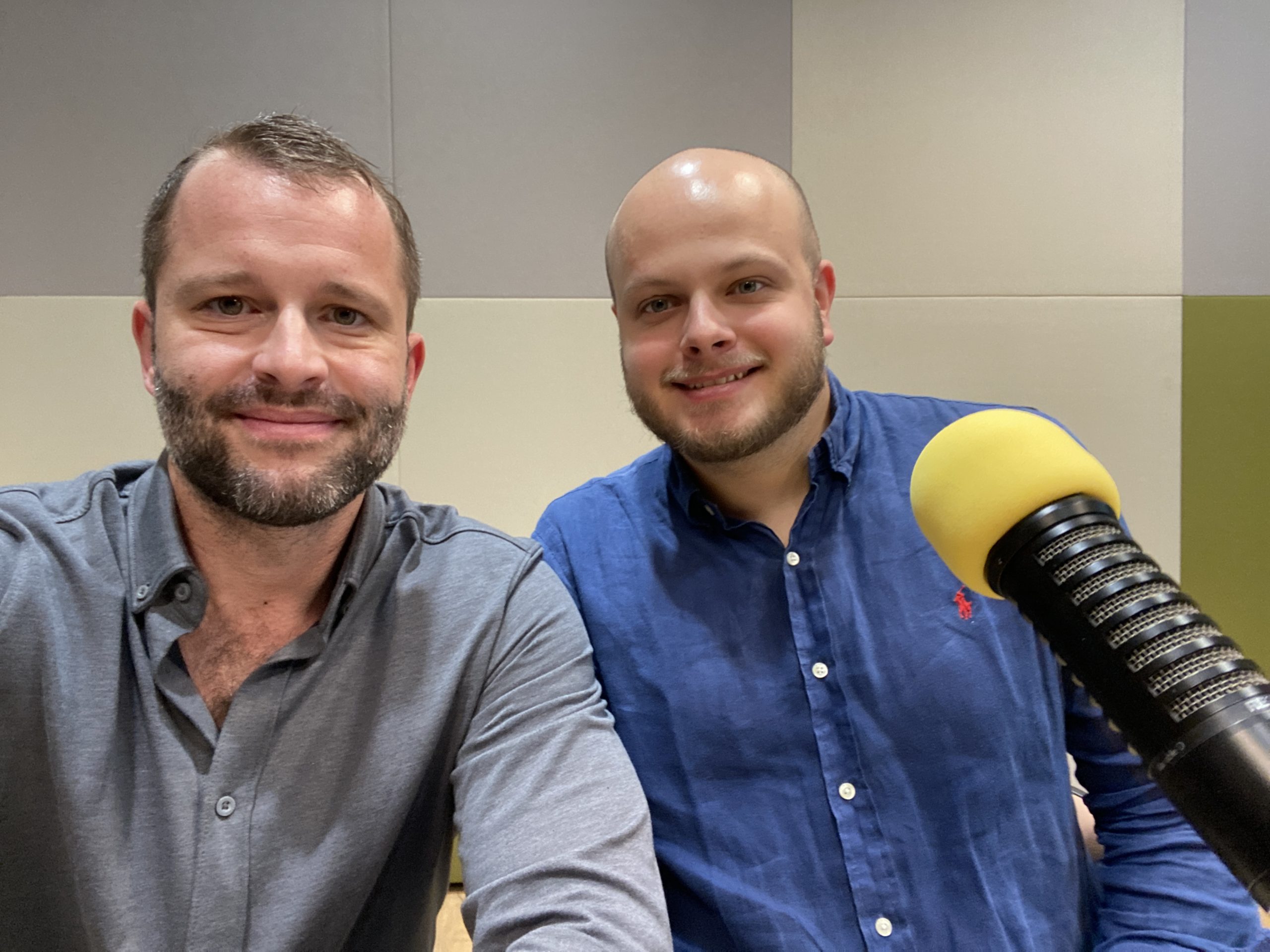
A yellow microphone gets the front seat. Peter Chodelka, left, with Zamecnik during his Podnicast visit. Photo: Podnicast.
The idea that customers edited
Vestberry’s original sketch appeared on a whiteboard in October 2015, according to Zamecnik. The first concept was a social network for limited partners and general partners: the people supplying capital to funds and the people managing it. In 2017, the team discarded that version after funds asked for better portfolio and reporting software.
It is an instructive change of direction. The initial idea addressed who could connect with whom. The revised one addressed what a connected organization needed to know. Customers had edited the premise. An investor network could make an introduction; a reporting system had to remain useful through the less sociable business of checking figures.
The Swiss fintech accelerator F10 brought the team into contact with banks and investment organizations. Zamecnik has described spending six months there, listening to problems and requirements before building the business in Slovakia. Anthemis became one of its early customers and helped develop the product over another twelve months. A buyer became part of the learning process.
Public biographies date Vestberry’s founding to 2018, with Ján Káčer and Matej Pavlanský alongside Zamecnik. The earlier whiteboard and pivot belong to the development of the idea. Together, those dates make a more useful chronology than a single founding birthday: sketch, revision, customer work, company. The footballer dataset fits that sequence beautifully. A prospective client was willing to help, but reserved the right to set an examination.
LP / GP social network
Portfolio and reporting pivot
Zamecnik, Káčer, Pavlanský
After the money arrives
Vestberry now describes its work in terms of portfolio intelligence. The phrase covers questions that come after a fund has invested: where risk is appearing, which companies warrant attention, and where further capital might be useful. Zamecnik’s talks return to the need for structured data that can support those choices.
The distinction matters because a report can be complete without making the next decision easy. A list of holdings tells an investor what is owned. Monitoring and analysis ask how those holdings are doing, what has changed and where a conversation should begin. The interesting part of the work lies in that movement from a record to a question.
In his public writing, Zamecnik has emphasized the period after money reaches a company. His ambition is to make the information useful for decisions about support, risk and follow-on investment. The administrative work has a direct relationship to founders: a fund cannot offer well-informed help if its understanding of a business arrives late or is difficult to assemble.
The scale is now visible in Vestberry’s own published figures. Its website reports more than 500 funds, over $45 billion in client assets under management and more than 8,000 companies. These are figures about customers and their portfolios. They describe how widely the software is used, rather than money belonging to Zamecnik or capital invested by Vestberry itself.
A fast answer needs a paper trail
The current leadership page names Zamecnik as Co-CEO and co-founder, alongside Co-CEO Natália Jamborova. The technology around that leadership has changed considerably since the first whiteboard. His recent public discussion of AI, however, comes back to the sort of question that the mischievous early customer was asking.
He asks whether tools handling portfolio data can identify the origin of their numbers. An extracted revenue figure is useful only if an analyst can check its origin. Otherwise, the typing may disappear while the detective work remains. Speed can make an answer arrive sooner without settling whether anyone should trust it.
Zamecnik explains Vestberry’s approach as linking each extracted number to its place in a document, spreadsheet or email. An analyst can inspect the original, confirm or correct the figure, and approve it before it enters the platform. The human judgment stays in the workflow. There is something reassuringly ordinary about the requirement: show the working.
“Can it show you where the number came from?”
Marek Zamecnik, on AI tools handling portfolio data
His 2026 outlook anticipates less time spent assembling spreadsheets and more time looking through information for signals that can help companies grow. That is an aspiration, with implementation still doing the hard work. The useful test is whether the saved minutes survive contact with checking, correction and reporting. A beautifully phrased answer is poor compensation for another afternoon spent finding its ingredients.
Still getting people into the same room
The conference thread continues through Venture Intelligence Day. His Prague 2025 talk was titled Intelligence Is the New Edge in VC. Another recorded conversation, with Leah Welch of AR Capital, examines the limited partner’s perspective on transparency and portfolio information. The old work of convening people has acquired a more technical agenda.
There are other public details around the software career. His LinkedIn record includes guest lecturing at Comenius University in Bratislava from 2015 to 2018. It also calls him a TechBiker. He was named among the co-founders bringing the TechBikers charity cycling initiative to Central Europe, supporting Room to Read. Investor networking, on that occasion, came with pedals.
These activities give the career some texture without requiring a grand theory of his personality. Workplaces, lectures, conferences and a charity ride all involve getting people to participate. Portfolio software has its own version of that problem: someone has to contribute information, someone has to interpret it, and someone has to accept responsibility for a decision.
The early customer understood that responsibility well enough to insert mistakes into an audition. Years later, with AI in the workflow and thousands of companies in the system, the question remains wonderfully unpolished. Will anyone notice when the numbers are wrong? Zamecnik’s business began learning its answer with an email about Brazilian footballers. It still has to earn the answer, one figure at a time.
More from Marek’s world
Follow the work, hear the conversations, and revisit the early chapters.
Vestberry ↗Marek on LinkedIn ↗Podnicast interview · Slovak ↗Watch: Intelligence Is the New Edge in VC ↗Watch: the LP perspective with Leah Welch ↗The 2017 Campus conversation ↗The October 2025 interview · Slovak ↗His argument for an AI audit trail ↗Vestberry on LinkedIn ↗Vestberry on X ↗Vestberry on Facebook ↗