Before Hurricane Irma reached Florida in 2017, five lakes in Ormond Beach were already responding. Sensors measured their water. Software watched the forecast. Valves released water ahead of the storm, making room for what was coming. The lakes did not overflow. Irma also delivered less rain than predicted, a detail worth keeping attached to the story. Preparation can be observed; the flood that might otherwise have happened is harder to put on a ruler.
Marcus Quigley, the founder and founding CEO of OptiRTC, described that deployment the following year. It gives his work a setting more useful than a server room: an ordinary lake, with a little more space available before bad weather. The technical ambition was to let infrastructure use information about the future. A weather forecast, after all, is rather wasted on a pond that has no way to respond.
Quigley’s career has moved between engineering, company building, and advising engineering businesses. The connection is visible in the questions he keeps addressing. How do you know a system works? Can it perform better with different controls? And how do you turn an answer developed by engineers into something other people can use?
Learning what the water actually did
Before Opti became a separate company in December 2014, Quigley had spent about twenty years in water resources consulting. He established Geosyntec Consultants’ Brookline, Massachusetts office in 2008 and oversaw its operations through 2014. He also served a one-year term on the firm’s board in 2011-2012, including work on its audit committee. There were projects to deliver, an office to run, and a business to understand.
His technical work included stormwater design, modeling, data analysis, and field measurements. He co-authored national guidance manuals on monitoring runoff and assessing stormwater practices for clients including the US Environmental Protection Agency, the Federal Highway Administration, the National Cooperative Highway Research Program, and the Water Environment Research Foundation. The manuals concerned a stubborn problem: a facility’s existence tells you considerably less than its measured performance.
That concern predates the software company. In work published around the turn of the century, Quigley and fellow researchers examined how to compare the effectiveness of stormwater practices. Results collected at one location had to be useful elsewhere. Different monitoring methods and performance measures could frustrate those comparisons. The task was to make evidence travel, so another engineer could make a better decision.
His training supplied the water resources foundation: undergraduate study in Engineering and Environmental Science at Notre Dame, followed by a master’s in Civil Engineering at Oregon State. His professional credentials include Professional Engineer and Diplomate of the American Academy of Water Resources Engineers. Those qualifications sit behind a career in which the field measurement and the business decision increasingly share a desk.
The forecast meets the valve
Rainwater storage has competing responsibilities. Keep water and it can be reused. Leave room and the same storage can receive a storm. A full tank is useful until the next downpour needs somewhere to go. The difficulty is deciding when to hold water, when to release it, and how much space the forecast calls for.
A patent granted in November 2013 made that balancing act explicit. Quigley and Philip Reidy were named as inventors of a combined water storage and detention system, originally assigned to Geosyntec. The method considers stored water alongside the expected timing, intensity, duration, and volume of precipitation. When the forecast and existing water would exceed capacity, controls discharge water to create room.
In a 2013 article written with Steve Roy and Chuck Raymond, Quigley explored the dual purpose of rainwater harvesting: conserving water while managing runoff. The engineering problem was already being explained in public before the independent company arrived. Opti emerged from that consulting environment, with Quigley becoming its founder and CEO in December 2014.
The platform brought together sensors, weather information, software, and physical controls. Microsoft Azure supplied its cloud foundation. Operators could inspect measurements and forecasts on web dashboards, export data, and operate valves manually. Automatic control allowed the system to make routine adjustments without waiting for someone to watch every changing water level.
A company with muddy shoes
The name for the approach was Continuous Monitoring and Adaptive Control, usually shortened to CMAC. Beneath the acronym was a practical change in the job of a pond or tank. Its operating decisions could account for the weather ahead, alongside conditions on site. Existing infrastructure could acquire another way to work without first acquiring another concrete wall.
By February 2017, Opti reported more than 130 commercial and public projects across 21 states. Its customers included the Philadelphia Water Department, New York City’s Department of Environmental Protection, Washington’s Department of Energy and Environment, and Greater Chicago’s Metropolitan Water Reclamation District. That month it announced $5.5 million in equity funding led by Ecosystem Integrity Fund.
The investment was intended to expand operations and sales, including work at watershed scale. It marked a business built around multiple sites and owners, rather than one bespoke engineering assignment. Geosyntec participated alongside investors including MissionPoint Partners, Renewal Funds, and the Massachusetts Clean Energy Center. The consultancy remained part of the company’s wider circle.
A February 2017 snapshot during Quigley’s CEO tenure.
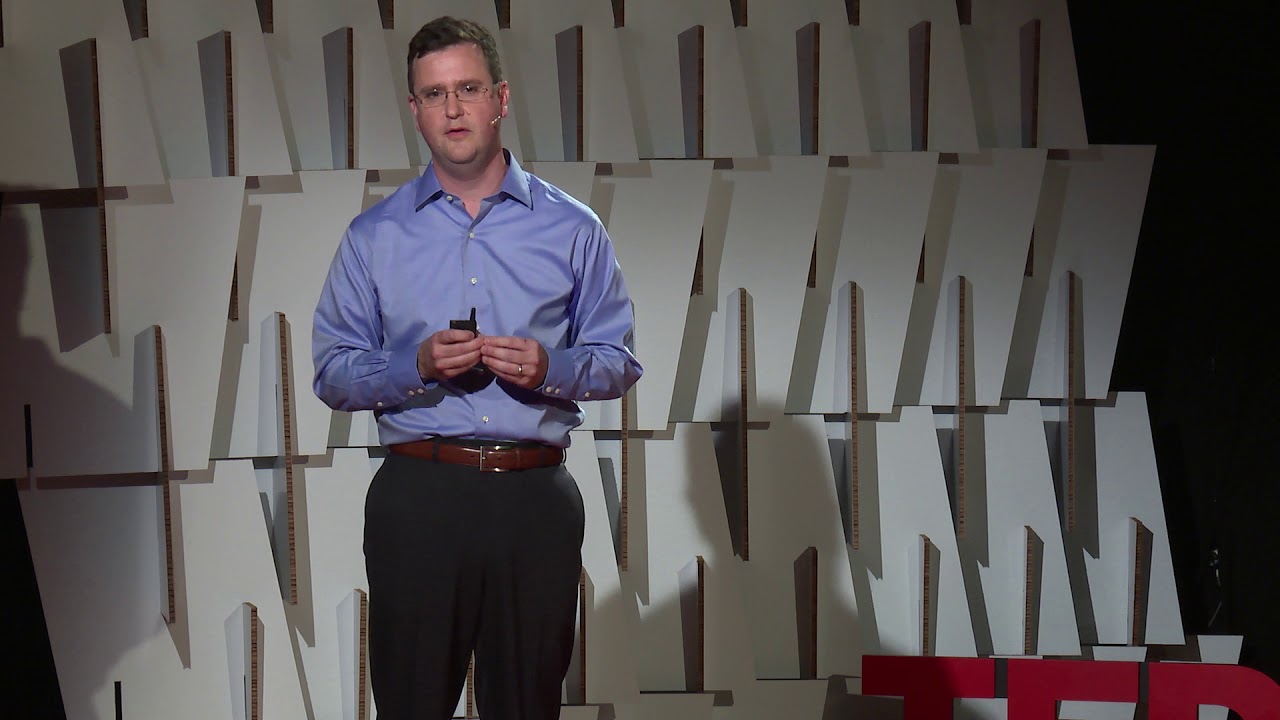
Quigley’s 2017 TEDxBeaconStreet talk took the idea out of the technical meeting and onto a public stage. Its subject was flood-resilient cities facing an uncertain future. The engineering proposition was that storage could prepare in advance of rainfall. The wider proposition concerned cities that could adjust to changing conditions, with controls doing something useful about the information available.
Another use of the technology was visibility. Chicago made real-time green infrastructure monitoring information public. That opened a question Quigley wanted communities to discuss: what happens when rain falls, and what does the infrastructure accomplish? He encouraged customers to learn from each other, including the less flattering results. Public investment benefits from an audience able to see beyond the installation photograph.
The Ormond Beach lakes belonged to that same practical world. Forecast-responsive controls acted before Irma arrived. The lower-than-predicted rainfall prevents the event from being a tidy demonstration of how much flooding was avoided. It remains a concrete example of equipment preparing rather than waiting. For infrastructure, a head start can be a useful change in routine.
After the launch, the maintenance
Quigley’s Opti CEO tenure ended in February 2019. A March 2019 water-sector podcast introduced him as a senior advisor to the company. He began serving as CEO of EcoLucid that March and moved into EFCG’s technology practice later that year. In November 2022, Aliaxis acquired Opti. The business continued beyond its founding CEO’s time in the chair.
EcoLucid kept him close to the question of whether infrastructure was doing its job. Its work with soil moisture sensor company Sensoterra uses readings from green infrastructure, combined with rainfall and other information, to support maintenance decisions. A green space can look thoroughly respectable while the drainage beneath it deserves attention. Good manners on the surface are insufficient evidence.
The operating logic is straightforward. After rain, soil moisture should change as the facility drains. A pattern that does not decline as expected can signal a problem needing investigation. EcoLucid analyzes the measurements and provides information through dashboards. A Sensoterra case study describes a Washington, DC pilot testing how the sensors could be used in an urban setting.
This work follows the same concern as the monitoring manuals: useful measurements should lead somewhere. Here they can help an operator decide which facility to inspect. The detail matters because green infrastructure is distributed across a city. A collection of individual installations needs a way to report how each is behaving.
“connecting with people is our end goal”
Marcus Quigley / WEFTEC 2021
At WEFTEC in 2021, Quigley placed community connections at the center of technological change. He also discussed developing sensors, satellite imagery, and modeling tools, and the challenge of putting new capabilities to use. His point gives the monitoring work a purpose beyond an attractive dashboard: people need information that helps them operate and understand their surroundings.
The next forecast is for the profession
At EFCG, where he is Partner, Technology and Innovation, the systems under examination include engineering businesses themselves. He presented a technology industry overview at the firm’s June 2024 Technology Leadership Conference in Chicago. In 2021, he and the EFCG team helped Agile Frameworks through a majority investment by Long Arc Capital, another technology business emerging from an engineering setting.
The connection to Opti is easy to see: technical knowledge can become a product, but a product also needs a viable organization. His advisory work brings those questions into the architecture, engineering, and consulting industry. EFCG’s March 2026 CFO conference agenda listed him for sessions on AI workforce preparation, financial technology, and putting AI into business operations.
His technical inventing has continued, too. A patent granted in November 2020 names Quigley and Judd Goodman for active stormwater controls designed to manage changes in runoff behavior following development. A separate application published in January 2025 names Quigley for using genetic algorithms to optimize weir plates, the outlet structures that regulate pond discharge. The latter is an application, with an engineering proposal rather than an implied record of commercial results.
Away from work, his stated pastimes include fishing, hiking, kayaking, and sailing with his wife and children. Water occupies part of the weekend as well as the working week. That is a modest personal detail beside the patents and business roles, but a welcome one. The water need not justify its presence with a quarterly report.
The empty space in the Ormond Beach lakes offers a way to read the career. Quigley has worked on how to measure performance, how to act on the measurements, and how to build organizations around those capabilities. In each setting, the useful result happens somewhere outside the software: water finds room, an operator learns where to look, an engineering firm makes a decision. The forecast earns its keep when something can respond.
Follow the water
More from Quigley, his work, and the projects along the way.