The curious thing about Manisofts is how much of its promise can be found in an ordinary spreadsheet. Visit its wholesale service page and, among the language about growth and automation, you find Excel profit-and-loss calculations. Someone still has to work out what came in, what went out, and whether selling another box is worth the trouble. That small detail tells you rather more about the business than a photograph of a rising sales chart.
- Manisofts runs ecommerce tasks for sellers, with Amazon at the center.
- Its offer spans wholesale, online arbitrage, private label, and supporting creative work.
- The useful buying question: which responsibilities, costs, and decisions are you handing over?
The agency offers a way to buy back the hours consumed by an online store. Product research, listings, advertising, inventory, and customer service appear together in its service menu. That breadth matters. A seller can have an excellent listing for a product that never arrives, or a warehouse full of something nobody wants. The coordination is part of the purchase.
Three routes to the same buy button
Manisofts works across three Amazon models. Wholesale starts with branded goods bought from manufacturers or distributors. Online arbitrage starts with a price difference: find an item selling cheaply enough elsewhere to make resale worthwhile. Private label starts with a product that will carry the seller’s own identity. The shopper may see a similar product page. The owner has made a very different bet.
The company’s private-label service lays out that bet in stages: research demand, examine competitors, find suppliers, negotiate, evaluate samples, develop packaging, build listings, and advertise. This is useful for a new brand that needs several capabilities at once. An experienced seller might instead need help with one congested part of the operation, such as inventory or paid search.
Its Walmart and eBay offerings extend the agency relationship beyond Amazon. Web development and graphic design sit nearby for a practical reason: a marketplace business also needs images, content, and sometimes a storefront of its own. Manisofts competes for the seller who would prefer one coordinated provider to a collection of separate specialists.
The people inside “automation”
Muhammad Imran’s founder message dates the company’s beginning to May 13, 2017. The team page also identifies Amir Saleem as co-founder and UAE lead, alongside a UK team manager and specialists in wholesale, arbitrage, and development. The geography helps explain the pitch: assemble operational expertise and apply it to sellers serving overseas customers.
The division of labor is revealing. Research is a job. Supplier communication is a job. Keeping inventory records accurate is another. Calling the whole arrangement automation can make the people disappear from view, even though the company’s own descriptions repeatedly bring them back. Its wholesale page includes daily communication, CRM accuracy, shipping strategy, and those spreadsheets.
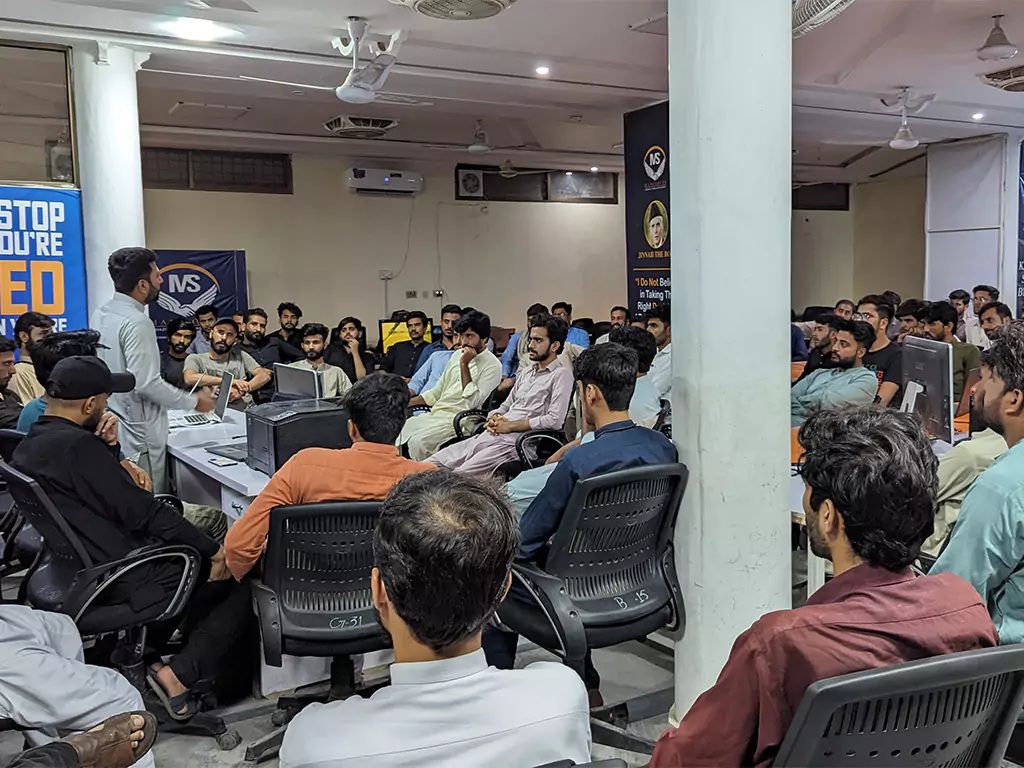
The founder describes a culture built around integrity, transparency, and attention to clients and employees. For a buyer, those ideals become useful when translated into routines: a named account owner, understandable reports, and a clear route for questions. The company sells ongoing work, so the relationship has to survive beyond the excitement of opening a store.
That also defines its place in the market. A seller hiring an independent advertising specialist must still connect advertising to purchasing and stock. A seller building an internal team must recruit and supervise those capabilities. Manisofts offers to bring the functions together. Its attraction depends on whether that coordination is worth the fee for a particular store. Breadth alone cannot answer the question; the owner needs to know how the pieces will be managed together.
A sales number needs a second number
Public project accounts give the offer some texture. Flodeck owner Adekunle Ogunnowo described hiring Manisofts to set up an Amazon operation and build a WordPress site. In a February 2023 review, he reported spending more than $10,000 and receiving weekly account reports. He also reported more than $7,000 in website sales. Those figures describe different things; they do not establish a return on the entire engagement.
Clutch lists a $5,000 minimum project and hourly rates of $25-$49. Treat that as directory pricing to discuss against a specific scope. Inventory, advertising, shipping, and marketplace charges deserve their own budget lines. An agency fee buys services. A store needs working capital as well.
“Their team is professional and engaging.”An online-retail executive’s March 2023 review
= what remains
Inventory · fulfillment · advertising · returns · agency fees
Manisofts advertises product hunting aimed at returns above 25%. That is a company claim, and the definition matters. Ask what costs enter the calculation, how long stock takes to sell, and how cash moves between orders. A product-level percentage and a profitable business are separate measurements. The spreadsheet earns its place when it connects them.
Keep a hand on the controls
Delegation also concentrates responsibility. In a December 2023 review, Ganesh Enterprises owner Fenil Patel alleged that unauthorized products damaged account health and ultimately led to an Amazon suspension. He reported spending roughly $25,000-$30,000 on services. That is one client’s account, not an adjudicated finding. It does identify a concrete failure sequence: product decisions, account warnings, then lost access to the marketplace.
The company’s publishing offers another glimpse of that responsibility. Its December 2024 articles cover private-label investment and requirements, alongside TikTok Shop vacation settings and violation points. These are the small administrative questions that emerge after someone decides to become a seller. A shop needs rules for pausing, restarting, and dealing with warnings, as well as a plan for attracting customers. The range of topics captures how quickly a simple selling idea becomes an operating routine.
The practical lesson is to define permissions before orders begin. Decide who approves suppliers, purchases, advertising changes, and responses to account warnings. Keep visibility into the underlying accounts. This arrangement is a poor fit for an owner who expects to commit money once and stop examining the operation, especially when the business depends on a platform’s continued permission to sell.
A seller can copy the useful part of Manisofts’ approach without copying its entire service menu: turn the store into named, repeatable tasks. Assign responsibility for research, sourcing, listings, stock, and reporting. Then examine the handoffs. The question worth carrying into an agency meeting is wonderfully plain: when something goes wrong between the supplier and the customer, who notices first?
Follow the work
Website · Seller guides · LinkedIn · Instagram · Facebook · X
Watch the company’s account walkthroughs
Imran’s Amazon account ↗Tom’s Amazon account ↗
Manisofts 360 on YouTube ↗