Payroll looks like arithmetic until somebody has to do it. On a construction site, a clean row of hours can pick up complications on its way to Friday: the job sits in a particular county, the worker belongs to a particular union, public money brings a prevailing-wage rule, and the timecard may have arrived on paper with one corner smudged by the week. The multiplication is the easy bit. Context is where the work lives.
This is the sort of problem that has followed Manish Kumar around, although it has changed clothes. Before he co-founded Lumber, the construction workforce software company where he is CTO, Kumar spent years close to enterprise project systems. His name appears on a sequence of Oracle patents about staffing, calendars, forecasts, resource allocation and constraints. They concern the recurring managerial headache of getting people, work, money and time to agree with one another.
At Lumber, that headache wears steel-toe boots. The company's software covers time tracking, payroll, compliance, HR and field operations for contractors. The proposition sounds broad because the back office is broad. A clock-in can affect a paycheck; a paycheck can require a report; the report can depend on where the work happened and which agreement governs it. A product that treats each step as an island merely gives the customer several attractive islands.
Before the job site, there was the project chart
Kumar studied for a B.Tech at the Indian Institute of Technology Kanpur from 1995 to 1999. The public record becomes especially revealing in the next decade, when his work at Oracle produced a trail of inventions. Patent titles are not known for their charm, but these are unusually good clues. One is a “Visual Resource Allocation System.” Others address project-team staffing, resource compatibility, forecasting, soft constraints, smart planners and changing several calendars at once.
The visual-allocation patent, granted in 2017, describes a chart whose task shapes respond when a person is reassigned. Move a resource from one task to another and the blocks change width and height, showing the effect on duration and the critical path. It is an attempt to make an abstract decision visible before the decision becomes an expensive surprise. This is less about drawing a clever chart than about respecting the consequences hidden behind a drag of the cursor.
The parallel with construction is useful. Building is full of dependencies that look harmless until one moves. A crew arrives late; an inspection shifts; the schedule slips; the cost follows. In payroll, the hidden connection may be a worker's location or classification. Kumar's earlier inventions and his current company are not the same product, but they share a discipline: the software must carry the relationship, not just store the fields.
“This milestone will help us continue building our ... agentic AI platform.”Manish Kumar on Lumber's Series A
A timecard is small. Its consequences are not.
Kumar and Shreesha Ramdas brought Lumber to market in 2023. The first public framing centered on a gamified time-tracking application for construction contractors. Time tracking is an intelligent entry point: it sits close to the field, feeds the financial system and exposes whether the software understands how construction actually behaves. It is also the place where the digital world meets handwriting, weak reception, changing crews and a foreman's finite patience.
The product surface expanded quickly. Lumber said it launched eight products during the year before its March 2025 financing, moving across payroll, HR, compliance and field productivity. By the time it announced a $15.5 million Series A led by Foundation Capital, the company was describing a broader plan for AI agents. Tishman Speyer joined the round, alongside Carbide Ventures, 8VC, Sure Ventures and FirsthandVC. Including the earlier seed round, the reported capital raised reached $21 million.
“Agent” is one of those technology words that can arrive at a meeting before its job description does. Lumber's examples are concrete. A system can ingest a paper document used in time tracking or expenses. Another can reason across payroll conditions involving worker location, union requirements and compliance. The value is not that software can read a number from a page. Optical character recognition has had that party trick for years. The value is whether it knows which other facts the number must meet before anybody should trust it.
Consider the difference between a record and a decision. A record says that eight hours were entered. A decision asks whether those hours belong to this project, whether the worker's credential is current, whether the rate changes at this site and whether the resulting report has the right shape for the agency receiving it. Traditional software often keeps those answers in neighboring rooms and asks a person to walk between them. The agentic promise is to make the walk inside the product. That promise is only useful when every step leaves a trail, because a contractor eventually needs more than an answer. Someone needs to know why the answer is right.
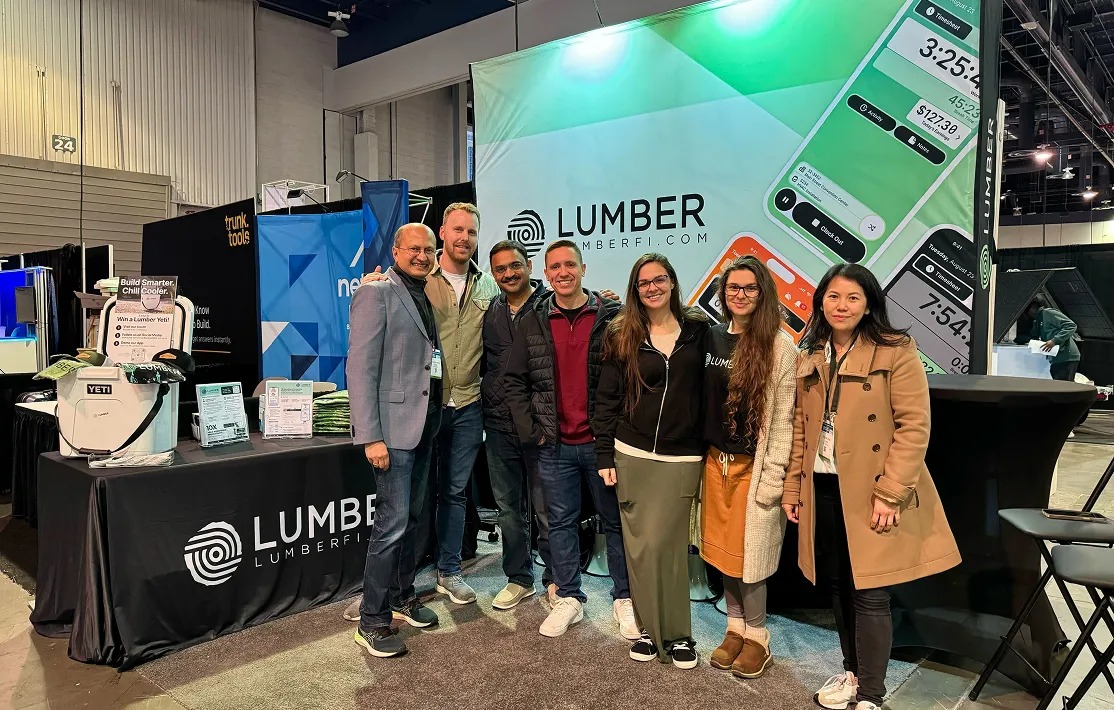
That requirement favors a CTO who has spent time with systems in which one changed input redraws the plan. Kumar's professional summary ranges across construction, healthcare, financial services, payments, marketing automation and cloud software. He describes expertise in scalable enterprise products, system design, machine learning and building development teams. The list is broad, but the common demand is reliability under rules. A payroll system is not forgiven because its mistake was innovative.
Quality control with a human pulse
Former colleagues fill in something that patent documents cannot. One who worked under Kumar at Oracle recalled that he led development and product-management teams, offered practical help on people and stakeholder problems, and created room for product managers to grow. Another remembered a manager who cared about whether his people had what they needed, stayed close enough to the product to file bugs, and helped correct problems rather than hunting for someone to blame.
There is also a pleasingly ordinary detail in that recollection: Kumar was often on his phone, including while walking. The colleague turned it into a joke about “walk the talk.” It is hardly mythology, which is why it works. Technology leaders are frequently described in the language of mountaineering. Here is one instead checking a device, spotting a defect and keeping pace with the corridor.
The same tone appeared when a Lumber intern announced a move into a full-time software role and thanked Kumar among the people who had helped. Kumar's public reply was short: the company was fortunate to have him. That sentence does not reveal an operating manual, but it agrees with the older descriptions. The version of high performance in those accounts includes correction without humiliation and growth without ceremony.
The important system is not the one that handles the usual case. It is the one that notices when the case has stopped being usual.The engineering thread through Kumar's work
Make the exception legible
When the Series A closed, Kumar thanked both investors and the team, adding that the company's “innovation engine” remained fast. The phrase is cheerful, but the agenda beneath it is exacting. Construction firms do not need an AI performance. They need fewer hours spent re-keying forms, chasing approvals, reconciling systems and checking reports whose rules vary with the work.
There is a temptation to tell every AI story as a story of replacement. Lumber's more interesting proposition is administrative compression. The carpenter remains a carpenter. The payroll administrator gets a system that can assemble context, flag a discrepancy and prepare the work that once consumed a long afternoon. The contractor gets records that travel together instead of being reintroduced at every software boundary.
For Kumar, the challenge is a larger version of the chart he helped patent years ago. The system has more inputs now, the consequences reach a weekly paycheck, and the screen may be in a pickup cab rather than an office. Yet the old logic holds. Work is connected. Move one piece and another changes. Good software shows the connection soon enough to do something about it.
The construction industry has never lacked for complexity. It has often lacked software polite enough to learn that complexity before asking people to change. Kumar's career suggests a patient answer: map the constraints, make them visible, and then let the machine carry more of their weight. The fine print was always part of the job. Now it may finally become part of the system.