Payroll arrives disguised as arithmetic. Hours multiplied by rates, deductions removed, a number delivered on Friday. In construction, the disguise does not last. A single paycheck can carry job codes, union rules, tax obligations and the peculiar demands of work that moves from site to site. The building may be visible from the highway. The machinery that pays the people building it is hidden, intricate and intolerant of carelessness.
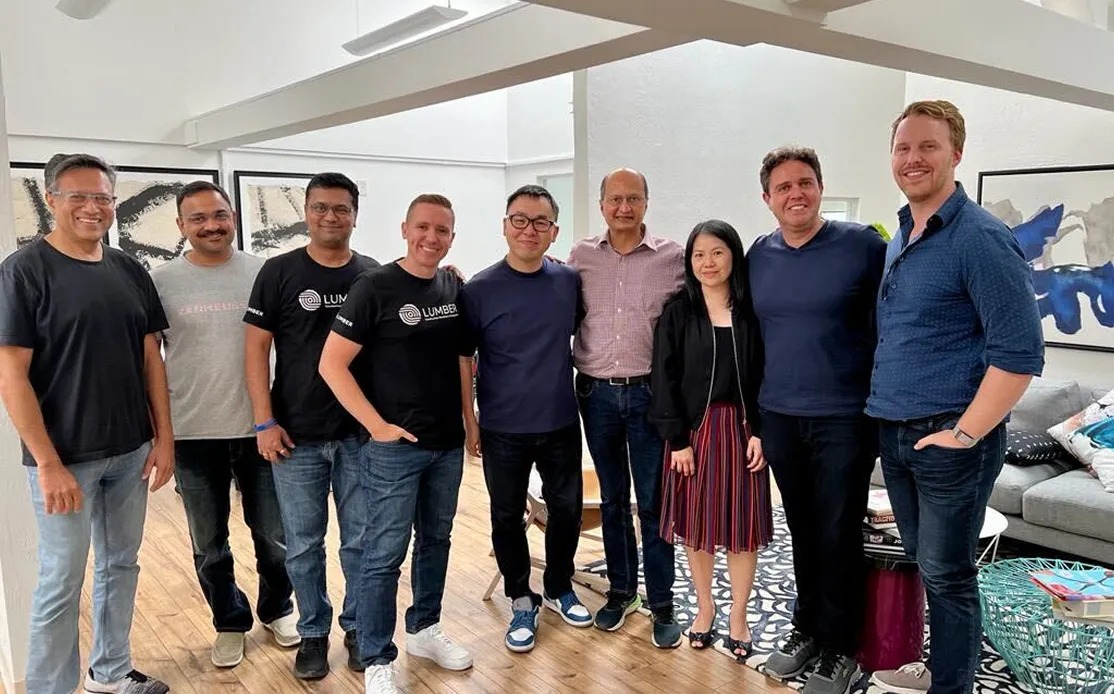
This is where Sandeep Yeole has chosen to work: inside the consequential machinery. He is a founding member and Head of Customer Experience at Lumber, the construction workforce platform. His title sounds conversational; his résumé is architectural. More than 20 years run through internet security, financial technology, product leadership, software development management and customer experience. PayPal, Symantec/VeriSign and Yodlee appear along the route. So does PlanAll, an education-technology startup he co-founded. An MBA from Oxford sits near the middle.
At first glance, construction software looks like a detour from that path. It is closer to a destination. Security companies manage trust. Fintech companies manage complexity with money attached. Customer-experience leaders must make both intelligible. Construction payroll asks for all three, then adds a hard hat.
The customer does not want to admire the plumbing
Yeole’s official biography describes his method as combining product, process and technology. It is an unshowy trio. Product alone can become a collection of buttons. Process alone can become a binder. Technology alone can become an expensive way to preserve a bad habit. Customer experience is the discipline that forces the three to meet in the same room and answer for one another.
His published work at Lumber makes the point by attending to subjects that polite dinner parties avoid: bookkeeping duties, accounting methods, project budgets, payroll tax deposits and financial records. These are the joists of a contractor’s back office. Nobody commissions a handsome photograph of them, but neglect one and the floor develops opinions.
In one guide, Yeole calls bookkeeping the scaffolding supporting a construction company’s financial stability. The metaphor is apt because scaffolding is useful only when it is dependable. A contractor does not need a poetic ledger. A contractor needs to know what was earned, what was spent, who was paid and what is owed. The experience of the software begins with those answers being right.
The most convincing customer experience is often the crisis that never arrives.A lesson written between payroll lines
That perspective helps explain the passage from large technology companies to a young construction platform. At VeriSign and Symantec, the underlying subject was digital trust. At Yodlee and PayPal, it was financial infrastructure. At Lumber, it is the weekly reality of crews, contractors and administrators whose records cannot remain approximate. Different screens, same moral: the back end eventually becomes somebody’s day.
From the certificate authority to the construction site
The public chronology is more outline than autobiography. It gives no childhood epiphany, no legendary garage, no conveniently prophetic teacher. What it does give is a pattern. Yeole took leadership roles across product, customer experience and software development management. He worked at companies where reliability is not a feature to be added after launch. Then, in 2008 and 2009, he studied for an MBA at the University of Oxford’s Saïd Business School, with an affiliation to St Catherine’s College.
The combination matters. Engineering management teaches what a system can do. Product teaches what it should do. Business school teaches what an organization can sustain. Customer experience reveals whether any of those answers survive contact with a person who has neither the time nor the desire to study the software’s internal logic.
The connective thread
PlanAll added the founder’s view. Co-founding a startup means discovering that every elegant strategy has to pass through a calendar, a budget and a customer’s willingness to care. The surviving public description is brief, but the experience belongs naturally in Yeole’s later story: he has seen software from the side that invents it, the side that operates it and the side expected to trust it.
There is a smaller detail, and it may be the most revealing. A recommendation on Yeole’s professional profile comes from Laura Macias, a former mayor of Mountain View. She remembered meeting him as a Meals on Wheels volunteer while he was at VeriSign. He had a busy technology job, she wrote, yet still made time for the community. Another recommendation describes him as knowledgeable, proactive and willing to help.
Recommendations are not laboratory instruments. They are, however, evidence of what people remember when the project plan has been archived. In Yeole’s case, they remember competence attached to service. For someone who eventually put “customer experience” in his title, this is either splendid consistency or an unusually long setup.
“Sandeep was extremely knowledgeable, proactive, and always willing to help.”From a professional recommendation
Eight products, one place where they meet
Lumber’s stated mission is to bring AI to construction workforce management while joining systems that have long sat apart. Its platform covers payroll, time tracking, safety, compliance, field productivity, rewards and recognition. The company says it launched eight products in the year before its March 2025 Series A. That round brought in $15.5 million, led by Foundation Capital, with Tishman Speyer, Carbide Ventures, 8VC, Sure Ventures and FirsthandVC participating.
Funding is company news, not a personal medal. Yet it changed the scale of the operating problem around Yeole. Every added module creates another seam. Every seam creates another chance for data, expectations or language to fail at the handoff. The Head of CX occupies that busy intersection, where the product roadmap meets the person attempting to run payroll before lunch.
This is also where Yeole’s long tour through financial technology becomes practical. Construction payroll is not generic payroll wearing work boots. Rules can vary with location, project, trade and agreement. Records gathered in the field must become calculations in the office. The person submitting time and the person approving it may inhabit different working worlds. A usable product has to respect both.
Yeole’s articles approach these matters without theater. They define, classify and explain. What belongs in construction bookkeeping? When are tax deposits made? How do accounting and bookkeeping differ? The prose works like customer experience should work: put the complicated thing on the table, label its parts, and let the reader leave with fewer reasons to worry.
A career built around the handoff
Technology biographies tend to worship the solitary flash: the idea on a napkin, the code written at midnight, the launch that changes everything by breakfast. Yeole’s record suggests another form of value. It lives in the handoff from engineering to product, from product to operations, from operations to a customer, and from that customer’s frustration back to the team capable of fixing it.
This kind of work is difficult to photograph. Its proof appears indirectly: a process clarified, a strategic customer helped, a set of financial concepts made legible, a volunteer shift kept despite a demanding job. It is made from attention rather than spectacle. The result, at its best, is software that does not ask the user to admire how hard everyone worked.
There is also a useful modesty in the subjects Yeole chooses to explain. His byline does not promise to reinvent arithmetic. It walks through the difference between accounting and bookkeeping, the duties of a bookkeeper, the timing of a tax deposit and the logic of a project budget. These are ordinary questions with expensive wrong answers. Treating them seriously is a form of respect for the reader, especially in an industry where an office mistake can travel quickly into a worker’s wallet.
The same modesty keeps customer experience honest. A customer does not experience a corporate mission statement. A customer experiences whether the timecard was accepted, whether the rule was applied and whether a knowledgeable person helped when the system became confusing. Yeole’s history places him close to each layer: software development, product decisions, business operations and the human conversation at the edge. Few careers are tidy enough to look designed in retrospect. This one looks less tidy than cumulative, each chapter supplying another tool for the same demanding task.
Lumber’s team page still lists Yeole as Head of CX. His location is Austin, while the company’s public identity stretches across construction and technology. The physical distance is almost beside the point. His career has already crossed Oxford, Silicon Valley institutions, education technology and the administrative thickets of the American jobsite. The connecting line is not geography. It is translation.
A paycheck is arithmetic only after somebody has understood the rules. A product is simple only after somebody has absorbed the complexity. And customer experience feels effortless only after an operator has paid close attention to all the effort hiding underneath. That is the quiet architecture of Sandeep Yeole’s work. You notice it most when nothing goes wrong.