Somewhere between a software demonstration and Monday morning, the trouble begins. The demonstration has clean data, a cooperative audience and an obliging clock. Monday has suppliers, missing information and somebody asking why the numbers disagree. Manish Kedia has spent much of his working life in that interval. It is a less photogenic place than the launch stage. There is usually more to do.
In September 2026, CloudMoyo, the company he co-founded and leads, acquired a new owner: HumanTronik, an enterprise AI business co-founded by his longtime colleague Monish Darda. Kedia stayed in charge of CloudMoyo. Behind the transaction sat a question he had been pursuing through successive generations of enterprise technology: how does an impressive capability become something a customer can use?
His new vocabulary includes AI agents and autonomous execution. His older vocabulary includes databases, warehouses and consulting. Read his career in that order and the latest chapter becomes easier to understand. He has been working on the foundations for quite a while.
Before the AI vocabulary
Kedia studied computer engineering at the University of Mumbai and later earned a certificate in business management from Wharton. His career began at Siemens. At Nexgenix, he joined an early-stage business as an associate and rose into senior leadership, working around business intelligence, data warehousing and customer relationship management. He helped lead its merger with TCG.
Microsoft followed. His responsibilities included global consulting services strategy and work on big-data and analytics appliances in the SQL Server business. The career moved between technology and the business arrangements needed to put it to use. Consulting requires both. A customer may buy the same platform as its neighbour and still require a very different conversation.
By early 2015, he was president of Icertis. That April, its cloud solutions and services business spun out as CloudMoyo. Kedia’s fellow founders were Samir Bodas and Monish Darda. Bellevue provided proximity to customers; Pune housed an engineering and innovation centre. The new business began with an established connection to Microsoft technology and a reason to work closely with Icertis.
It was a particular kind of entrepreneurial beginning. CloudMoyo emerged beside a software platform whose customers needed implementation and services. Kedia’s opportunity lay in accompanying the purchase into the customer’s business, where the requirements grew considerably more specific.
A railway is an unforgiving customer
Among CloudMoyo’s early applications were railway scheduling and operations. A train has an excellent way of exposing the distance between a clever idea and a working system: it must go somewhere. Crews, equipment and schedules have to agree with one another. The consequences of bad coordination refuse to remain politely inside a spreadsheet.
The company also worked with Microsoft on retail-store planning and deal management. Toyota was an early customer. These were uses of data with tasks attached, giving Kedia’s business a practical identity beyond the cloud label in its name.
In December 2016, he described a company that had taken a small amount of seed and angel funding and had been cash-positive from its beginning. “We are frugal. We make ends meet.” Profits went back into the business, and having much of the engineering team in India helped contain costs. This was his account of the early years, a useful view of the operating habits he chose to emphasize.
Rail remained part of the conversation. In October 2020, Kedia joined a panel with Kansas City Southern’s Erica Wilson, CloudMoyo product manager Bishram Keshri and transportation analyst Anthony Hatch. Their subject was interline settlement: the financial work involved when freight moves across railroads. Shorter revenue cycles and fewer unresolved disputes made a rather concrete agenda.
The work after the launch party
By July 2020, Kedia was also discussing data warehouse modernization with CloudMoyo analytics leader Sanket Saraph. Their webinar addressed data latency, integration, volume and access to near-real-time information. It concerned the familiar enterprise difficulty of gathering information in a form that people can actually use.
A warehouse may sound like an eccentric place to begin a story about leadership. Yet the questions involved are revealing. Who gets access? Which information can be combined? How quickly does it arrive? The answers determine how much independence a business team has when it needs to make a decision. A technical foundation can quietly become an organizational constraint.
In a 2025 conversation with Icertis chief evangelist Bernadette Bulacan, Kedia explored contract intelligence implementation. The discussion covered defining business outcomes, integrating systems, investing in change management and maintaining governance after launch. It treated implementation as continuing work, with preparation and follow-through on either side of the moment the system goes live.
Consider the ordinary journey of a contract. It contains prices, obligations and dates. People in purchasing, finance and operations may all need those details for different tasks. Storing the agreement is one accomplishment; getting its terms into the processes that depend on them creates another set of responsibilities. Somebody must arrange those connections and keep them useful.
Five days, and a personal cheque
Kedia’s public statements about leadership become more interesting when they include amounts and dates. On June 8, 2020, he published an anti-racism message with two commitments. He offered to match employee donations through a personal gift of up to $10,000 in aggregate to the NAACP Legal Defense Fund. CloudMoyo would also provide five paid days that calendar year for employees to volunteer, support community efforts or protest.
Those details gave the statement a practical shape. Money and time were available. Employees could decide how to participate. The commitment extended the company’s values into a decision about resources, the place where values have to compete with everything else a business wants to do.
The company uses FORTE for fairness, openness, respect, teamwork and execution. An acronym can lead a comfortable life on an office wall. Paid leave gives it an appointment in the calendar. Kedia’s message attached the language to actions that people could take.
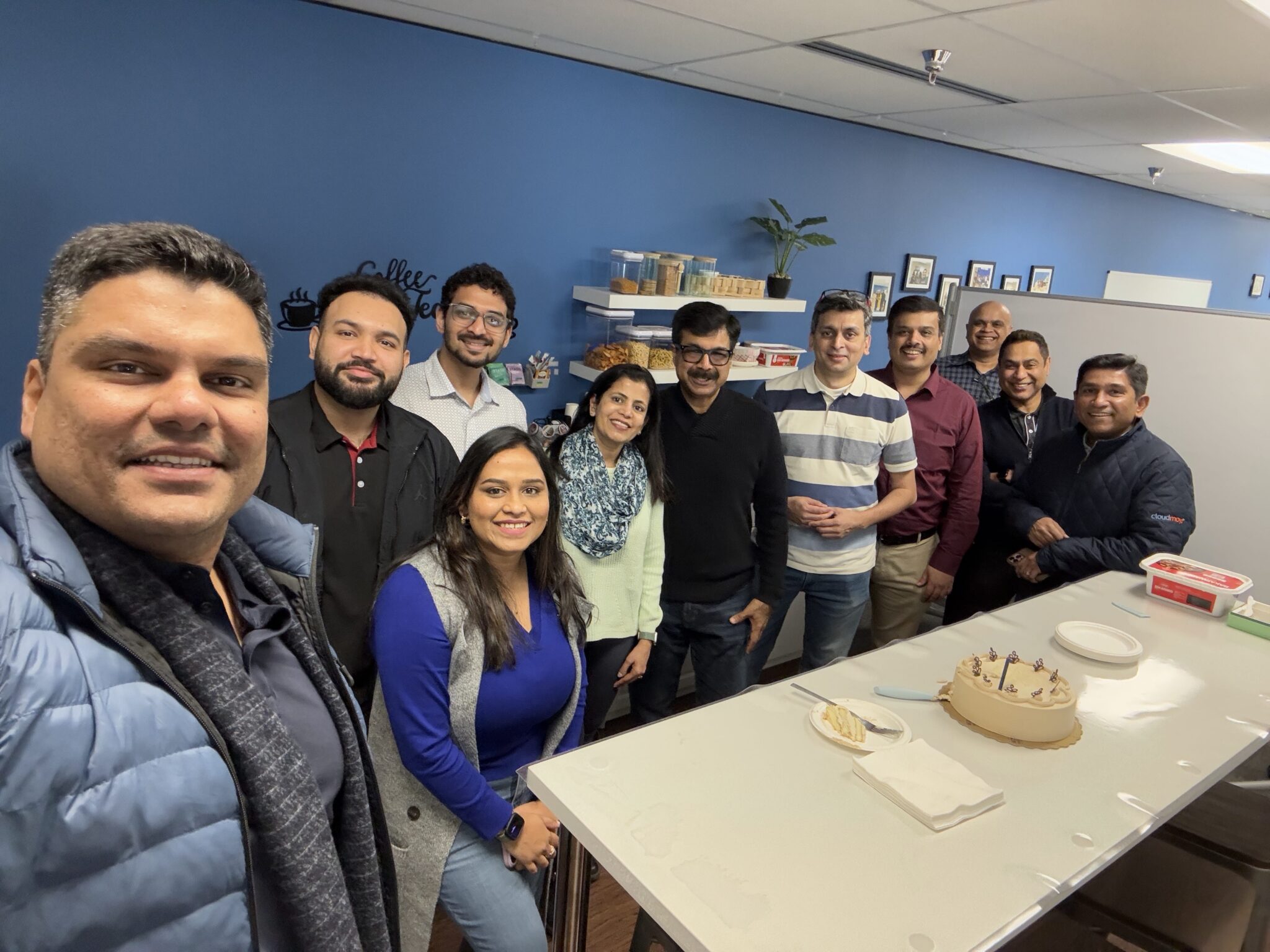
The business also makes room for a less formal vocabulary. Employees are the MoyoFam. A Bellevue team photograph gathers colleagues around a cake in an office kitchen. These small rituals fit alongside a founder whose public biography lists hiking in the Pacific Northwest, family travel and support for the Seattle Seahawks. There are occupations that leave the office with you; football at least supplies a different scoreboard.
The numbers he wants to change
In April 2026, CloudMoyo outlined an ambition to reach ₹1,000 crore in revenue over the following few years. Its digital and AI revenue had reportedly doubled year on year and overtaken the legacy contract lifecycle management business. The target described where Kedia wanted to go; the reported shift in the revenue mix showed why the company was changing its emphasis.
His case for that change grew out of contracts and their connections. A purchasing agreement might contain an entitlement that never reaches the payment process. A business can own several capable systems and still struggle to get information between them. CloudMoyo’s work increasingly joined contract information to the wider enterprise environment.
Kedia described the direction as intelligent operations. His account put three requirements together: unified data, timely intelligence and the ability to act within a workflow. Human oversight remained part of the arrangement. He also wanted business owners involved alongside technology leaders, so a project would have someone responsible for the problem it was meant to solve.
There is a recognizable consulting instinct here. Before discussing the tool, identify the person who needs the result. A procurement leader and a data engineer may describe the same difficulty in different languages. Getting them into the same conversation is part of the implementation.
“They started asking why none of the benefits reached their numbers.”
Manish Kedia, on customers’ changing AI questions, September 2026
An old colleague, a new arrangement
The HumanTronik deal began with a conversation in the Bay Area. Kedia and Darda compared what their businesses were building; negotiations followed over roughly two months. With Darda a shareholder in both companies and a CloudMoyo board member, he stayed out of the direct negotiations, Kedia said. Each side had its own legal counsel.
The September 29 announcement paired HumanTronik’s enterprise AI platform with CloudMoyo’s Microsoft engineering and delivery experience. CloudMoyo would continue under its own brand, preserving existing customer teams, contracts and service commitments. Kedia’s role continued, too. The new structure brought software and the people responsible for deployment into the same organization.
He calls the approach “Service as Software.” The phrase places ongoing support inside the subscription and shifts attention toward results. For someone who has spent years selling the work around technology, it is an understandable destination. The relationship with the customer continues while the system is being used.
The name CloudMoyo carries an older piece of the founders’ history. One of them encountered the word moyo while travelling in South Africa. Associated with heart or spirit in Swahili, it gave a cloud business a warmer name than the usual collection of technical syllables.
Eleven years after the spin-off, Kedia is still trying to carry technology into the working day. The platforms have changed, the ownership has changed, and the ambitions have grown. Monday morning retains its talent for asking questions. He has built a career around being there to answer them.