The first Main+Rose office was in the place its name promised: near Main Street and Rose Avenue, in the Silicon Beach corner of Los Angeles. This is the sort of origin detail brand people adore. A map becomes a name. A neighborhood becomes a mood. Then the neighborhood sent an invoice.
Tech companies moved in. Rent shot up. Roughly a month after taking the space, co-founders Kelly Gibbons and Beth Doane looked at the four walls and questioned the premise. Why did a creative agency need to keep people inside them? The office, the conventional proof that a young firm was real, was the first idea to fail.
No public figure records the extra rent, but the cost mattered enough to change the company. Main+Rose gave up the room and kept the intersection. It hired its first full-time employee in New York rather than Los Angeles and gradually distributed people across cities and time zones. The small financial irritation became an operating decision. Years later, when agencies everywhere staged emergency tutorials in remote work, Main+Rose had already been practicing.
“Why are we beholden to having these four walls and putting people inside them?”Beth Doane, recalling the decision in Digiday
A serious agency with no room to point at
Main+Rose was founded in 2013 by Gibbons and Doane, two brand builders with backgrounds that crossed entertainment, fashion, sustainability, communications, and entrepreneurship. The proposition was pointed: agencies often offered bright creative work without a strategic skeleton, or strategy with no pulse. Main+Rose wanted the two in the same room, even if there was no actual room.
Today it describes itself as a female-led global creative communications agency. Its headquarters is listed in Miami, while its public footprint reaches Los Angeles, New York, Riyadh, Dubai, and Tokyo, with team experience across Europe and Asia as well. The customer is usually an organization with a complicated thing to say: a government inviting the world into a pavilion, a nonprofit trying to turn goals into action, a destination seeking visitors, or a technology company entering a new market.
One argument, carried across four layers
That sequence explains the service list. Brand strategy covers research, positioning, architecture, naming, messaging, go-to-market plans, and thought leadership. Design turns the strategy into identities, websites, user experiences, photography, video, and sales material. Campaign teams add media, social, activations, content, and partnerships. Cultural-transformation work carries the promise inward, asking whether employees experience the company the way its advertising describes it.
The business model is bespoke professional services, delivered through dedicated account teams and longer advisory relationships. There is no public rate card. This is not a software product bought with a credit card; it is senior attention sold against a knotty, often public problem. The alternatives range from global agency networks to specialist identity firms and management consultancies. Main+Rose's wager is that a smaller partner-led team can keep the research, language, design, publicity, and internal behavior attached to one idea.
Proof travels better than adjectives
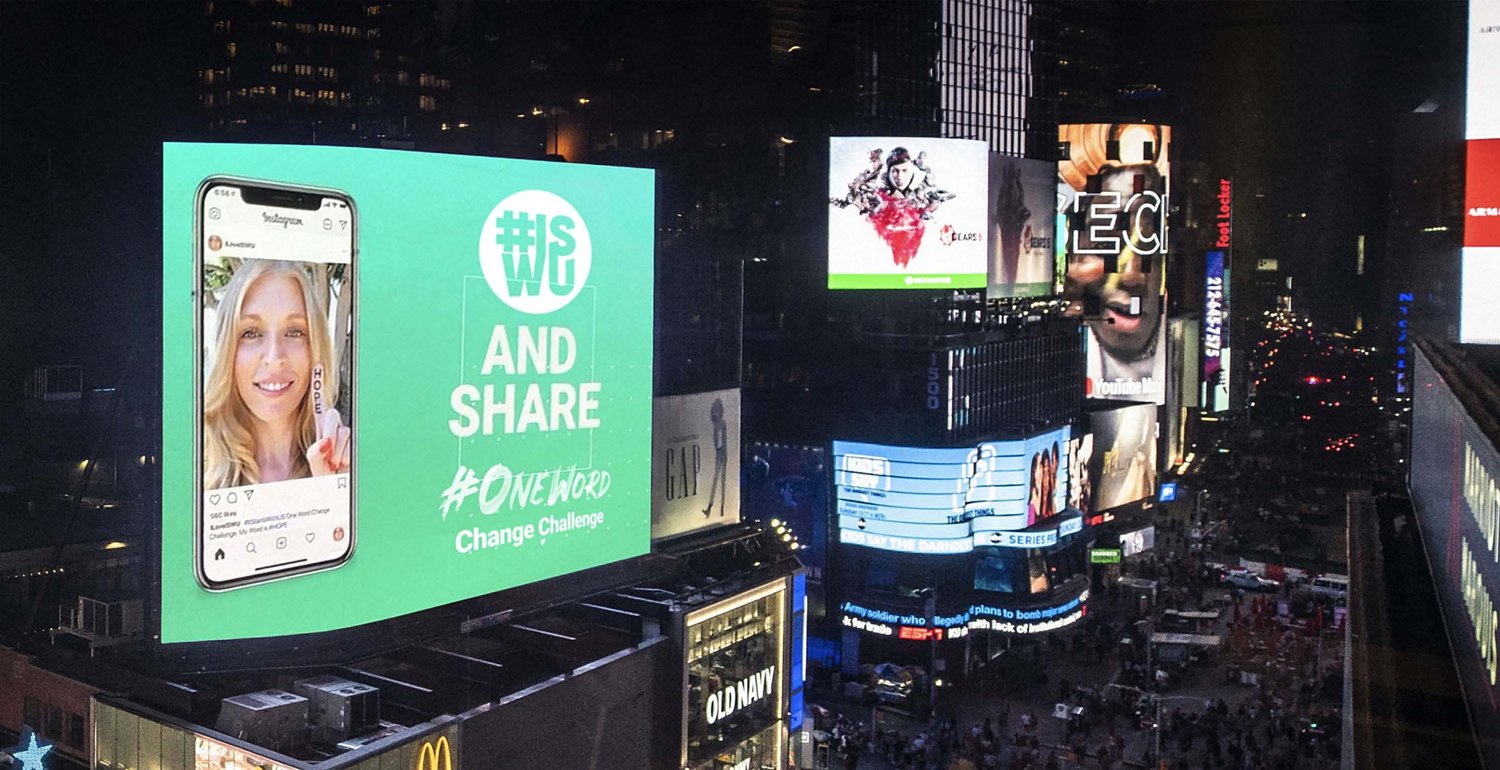
Consider #ItStartsWithUs. The United Nations needed to mobilize young people around the 17 Sustainable Development Goals. Main+Rose researched existing programs and media behavior, selected Gen Z as the most receptive audience, and built a simple invitation that could move through social media, digital channels, live events, and the UN General Assembly. The agency reports that the work produced more than 81 million impressions, 2 million engagements, and a 280 percent return on investment.
The useful lesson is not the large number. It is the order of operations. The agency did not begin with a hashtag and reverse-engineer a rationale. It studied the programs, chose a public, then made a phrase easy for that public to carry. The creative object was small because the distribution problem was large.
For WeTransfer, the job was different. The Dutch file-transfer brand wanted a firmer U.S. presence. Main+Rose paired executive positioning and conference appearances with press and partnerships. It helped place the company's president on stages and connected the brand with organizations including the United Nations and Spotify. For TED, the agency studied perceptions of the nonprofit, reframed the value of brand partnerships, and negotiated sponsorship relationships that it says helped support millions in annual funding.
These examples locate Main+Rose in the market more accurately than the label “marketing agency.” It works where reputation, growth, design, and institutional relationships overlap. A logo may be part of the answer. So may a speech, a sponsor, a newsroom, a website, or a room full of diplomats.
The tiny mechanics of working everywhere
Remote work expanded the available talent and the client map, but it did not abolish management. It made management more explicit. The Main+Rose method, as Doane described it, includes deciding before a client call who will present and who will jump in. Brainstorms move through video calls and shared documents. Real-time conversation happens in messaging tools or, radically, on the phone. Employees can arrange their schedules, while meetings gather near the middle of the day when several zones can overlap.
This is the part worth copying. “Go remote” is a location policy. “Assign the handoffs” is an operating system. A team can borrow the latter without copying the former: name the presenter, name the decider, keep one shared record, create a predictable overlap window, and periodically meet as people rather than rectangles.
What the model buys
A wider talent pool, proximity to more markets, flexible schedules, and fewer office distractions.
What the model demands
Self-directed staff, visible deadlines, rehearsed client calls, written decisions, and deliberate human contact.
There are conditions. A distributed studio works poorly when decisions live in private conversations, when junior staff need help but cannot signal it, or when a client equates physical presence with commitment. Main+Rose has acknowledged that distance can make it harder to see why someone is stuck or why a deadline is slipping. Its answer has included occasional in-person gatherings, shared rituals, and a culture page unusually specific about kindness, curiosity, book clubs, learning sessions, and work-life balance. The freedom is real; so is the maintenance.
The brief becomes a country
The clearest recent demonstration of range was the USA Pavilion at Expo 2025 Osaka. Working with Trivandi and the U.S. Department of State inside a much larger delivery team, Main+Rose handled an integrated multilingual program spanning strategy, press, web development, digital media, photography, content, and social. The pavilion was not merely a building. It was a national story that had to work for Japanese visitors, global media, officials, performers, sponsors, and millions of passing phones.
In 2026, the relationship extended to the USA Pavilion at Expo 2027 Belgrade, where Main+Rose said it would lead marketing, media, and communications alongside Trivandi. Then came a more personal transition. On September 8, Trivandi announced that Gibbons, Main+Rose's co-founder and longtime CEO, would become its Executive Vice President for the United States. Its announcement credited her with building the infrastructure, teams, profitability, and client relationships that scaled Main+Rose across markets. Beth Doane is now presented by the agency as founder and CEO.
There is a neat symmetry here. Main+Rose began when an external pressure changed the founders' idea of where work had to happen. Thirteen years later, one founder moved into the company that had become a close delivery partner on the agency's largest international stages. The durable idea was never the office, and it was not even remoteness. It was that structure should follow the work.
The agency named for a street corner became more useful once it stopped requiring everyone to stand on that corner.