A Tuesday in late September 2025. The Lightspeed term sheet has been public for less than a week. Inside a quiet office south of Market Street, twenty-three people are watching pull requests flow through a system they built, and the system is talking back. It is reading the diff. It is asking the question the senior engineer would have asked, if she had three hours and was not in a meeting.
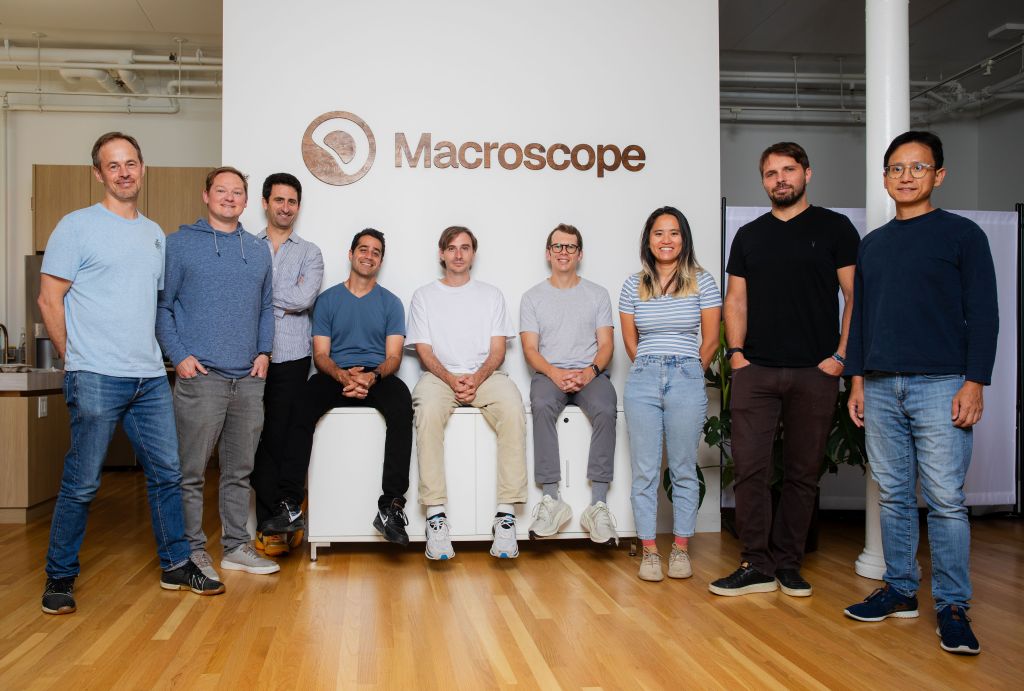
Ten years ago, Kayvon Beykpour and Joe Bernstein sold Periscope to Twitter. The product taught a generation of users to point a phone at the world and broadcast. The deal was reported at roughly $86 million. The next chapter was the predictable one - run a thing inside the company that bought you, watch the platform shift around you, eventually leave. Then a pause. Then a question. What does someone who spent a decade building tools for watching do with the next decade?
The answer arrived in July 2023 as a company name that flipped the old one on its head. Where Periscope let users zoom in on a single moment, Macroscope zooms out across an entire codebase. The lens is the same; the subject changed.
The premise is straightforward, almost embarrassingly so: engineering work is mostly invisible to the people who depend on it. Managers ask for status. Reviewers skim the diff. Bugs slip through because nobody had the patience to read all 1,400 lines on a Friday. Macroscope's bet is that an AI with a graph of your repository in its head can do the patient reading, write a useful summary at the end, and make the standup unnecessary by the time it would have started.
Michael Mignano signed the check. The round closed in July 2025 and was announced in September.
Thrive Capital and GV joined Lightspeed across the seed and Series A.
One of the smallest teams in its category by spend-per-employee. The founders prefer it that way.
Go, Rust, Swift, Python, Kotlin, Java, TypeScript, JavaScript - reviewed by the same engine.
Two of the three co-founders have worked together since college. The third was acquired into Twitter exactly one year after them. None of this is a coincidence.
Periscope, Twitter, Terriblyclever
Sold Periscope to Twitter in 2015. Ran Twitter's consumer product through 2022. Wrote the first commit to Macroscope in July 2023.
Periscope, Twitter
Beykpour's longest-running collaborator. Their first company together, Terriblyclever, was sold to Blackboard in 2009.
Magic Pony, Twitter
Co-founded the ML startup Magic Pony, sold to Twitter in 2016 - one year and one acquisition after Periscope.
Most AI reviewers shove a diff at a language model and ask it to find the problem. Macroscope builds a graph-based representation of the whole codebase first, then walks it. The difference shows up in the false-positive rate - the team published a case study with Parallel about exactly this.
Reads the pull request the way a senior engineer would - aware of conventions, aware of what the function being touched is used for, aware of subtle interactions four files away. Free for open source.
Generates a running summary of what the team shipped, where attention went, and what's still outstanding. Designed to make the recurring update meeting feel quaint.
An agent you can ask in plain English - "why did login start failing for partners last week?" - that walks the graph, finds the answer, and can open a PR with a fix.
The infrastructure choices are deliberately conservative for an AI startup launched in 2025. Production runs on Google Cloud with AlloyDB underneath, durable workflows on Temporal Cloud, and a polyglot codebase that mirrors the languages the product reviews.
FIG. 02 - Approximate technology mix from public profile data. Indicative, not audited.
Reference customers landed before the public launch, which is unusual. The list skews toward companies that ship a lot of code and have already invested in their own AI infrastructure.
FIG. 03 - Public reference customers as listed on macroscope.com.
Beykpour, Bernstein, and Bishop start the company. Aaron Wasserman and Jonathan Le join as founding engineers.
Roughly $10M seed round. Early customers including Opendoor and Perplexity quietly onboard.
$30M led by Lightspeed (Michael Mignano), with Thrive Capital, GV, and Adverb Ventures.
The TechCrunch piece, the CNBC piece, and the macroscope.com homepage all go live the same week. Pricing announced: $30 per active developer per month.
Return to the office south of Market. The clock has moved. The pull requests are still flowing. But the engineer who would have lost three hours reading them on Friday is doing something else now - building, mostly. The status meeting that was on the calendar for Monday has been quietly deleted. Nobody mourned it.
That is the small, specific thing Macroscope has changed: the half-hour you didn't realize you were spending. The question that didn't get asked because it wasn't anyone's job to ask it. The bug that would have shipped because nobody read line 1,184. Multiply that by 23 employees, 11 reference customers, eight languages, and however many pull requests are open right now, and you get the shape of a product that wants to be infrastructure.
The lens was always the same. The Periscope founders just turned it around.