The fish had a branding problem. It was plentiful, edible, rich in omega-3s and busy wrecking Midwestern waterways. But it was called Asian carp, a name that landed somewhere between an ecological warning and an insult. The Illinois Department of Natural Resources wanted Americans to eat it. M. Harris & Kern, working with Tetra Tech and design firm Span, helped give it a name that might survive a menu: Copi.
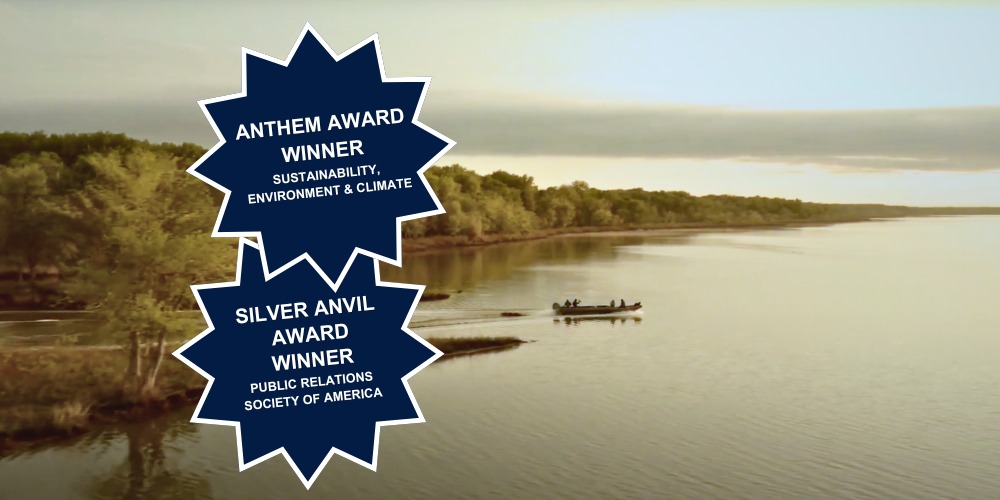
This is a funny assignment until you notice its precision. The product did not change. The obstacle did. A threat became dinner; a mouthful became two tidy syllables. The campaign traveled through every major U.S. media market. Merriam-Webster recognized the new word. The agency says more than 32 million pounds of the fish have since been removed from Midwest waterways. The work won Silver Anvil and Anthem recognition.
M. Harris & Kern is a Chicago marketing and creative firm, legally M. Harris & Co., founded in 2016 by Melissa Harris. Harris had been a Chicago Tribune business columnist. The newsroom inheritance is not decorative biography. It is the operating premise: find the actual story, strip away what competes with it, meet the deadline and make the reader care before the reader remembers having other plans.
The newsroom without a newspaper
The company sells the usual broad agency menu - brand and marketing strategy, naming, public relations, writing, websites, design, data visualization, video, animation and podcasts. Its customers are less usual as a group. They include the American Academy of Pediatrics, the Bulletin of the Atomic Scientists, the Illinois Department of Natural Resources, NORC at the University of Chicago, the manufacturing institute MxD, the water-innovation hub Current and the nonprofit AnitaB.org.
What joins pediatricians, nuclear-risk experts and manufacturers is not an industry. It is a translation problem. Each knows too much about a complicated subject. Each needs a public to notice one part of it and do something specific. A parent should call the pediatrician. A kayaker should check the river. A supplier should prepare for a cyberattack. A conference attendee should buy a challenged book.
“We push our clients to be bolder and briefer, or risk being ignored.”M. Harris & Kern
The staffing model follows the same thesis. The firm says there are no junior storytellers and that veteran practitioners do the client work. Its public roster reads like an expandable newsroom: editors, reporters, designers, producers, strategists and photographers assembled for a particular brief. Melissa Harris is CEO; Jara Kern is president. The company lists people in Chicago, Springfield, Baltimore, Los Angeles and Lincoln, Nebraska.
This is a services business, not a venture-backed product company. It earns money through projects, retainers and public contracts, then forms a senior team around the work. Prices are not published. One Illinois comptroller report lists a $38,000 advertising-services vendor payment in 2022, which is a glimpse, not a rate card. A résumé included in a 2026 Cook County procurement file says the agency had grown to $4 million to $5 million in annual revenue, with 18 employees and more than 20 contractors at that point.
Three outcomes, three different jobs
Bars are visual markers, not a shared quantitative scale. Each figure is the company's reported outcome for a different campaign.The first thing that failed was the routine
Early in the pandemic, the American Academy of Pediatrics saw parents skipping checkups and routine vaccinations. That was the first failure: an ordinary habit collapsed under extraordinary fear. The agency investigated the reasons and, within three weeks, produced the first of several digital campaigns. The graphics did not scold. They made the visit feel consequential and achievable, using the instruction #CallYourPediatrician.
The centerpiece was “Superhero Moment,” a public-service announcement in which parents taking children for immunizations turn into superheroes. M. Harris & Kern conceived, wrote, shot, edited and animated it, then placed it across YouTube, Google, Facebook and Instagram. It was viewed more than nine million times on Google and Facebook and, according to Nielsen figures reported by the agency, more than 30 million times on television.
What changed the argument was not more medical detail. It was a new role for the parent. The person who had felt exposed by entering a doctor's office became the protector for going there. That switch is the firm’s recurring move: do the research, locate the emotional bottleneck, then compress.
Find the behavior that has stalled and the reason behind it. Do not begin with the slogan.
Choose one idea sturdy enough to survive a billboard, headline, video and conversation.
Give people an action: call, check, subscribe, buy, eat. Attention without motion is decoration.
A bookstore that behaved like an argument
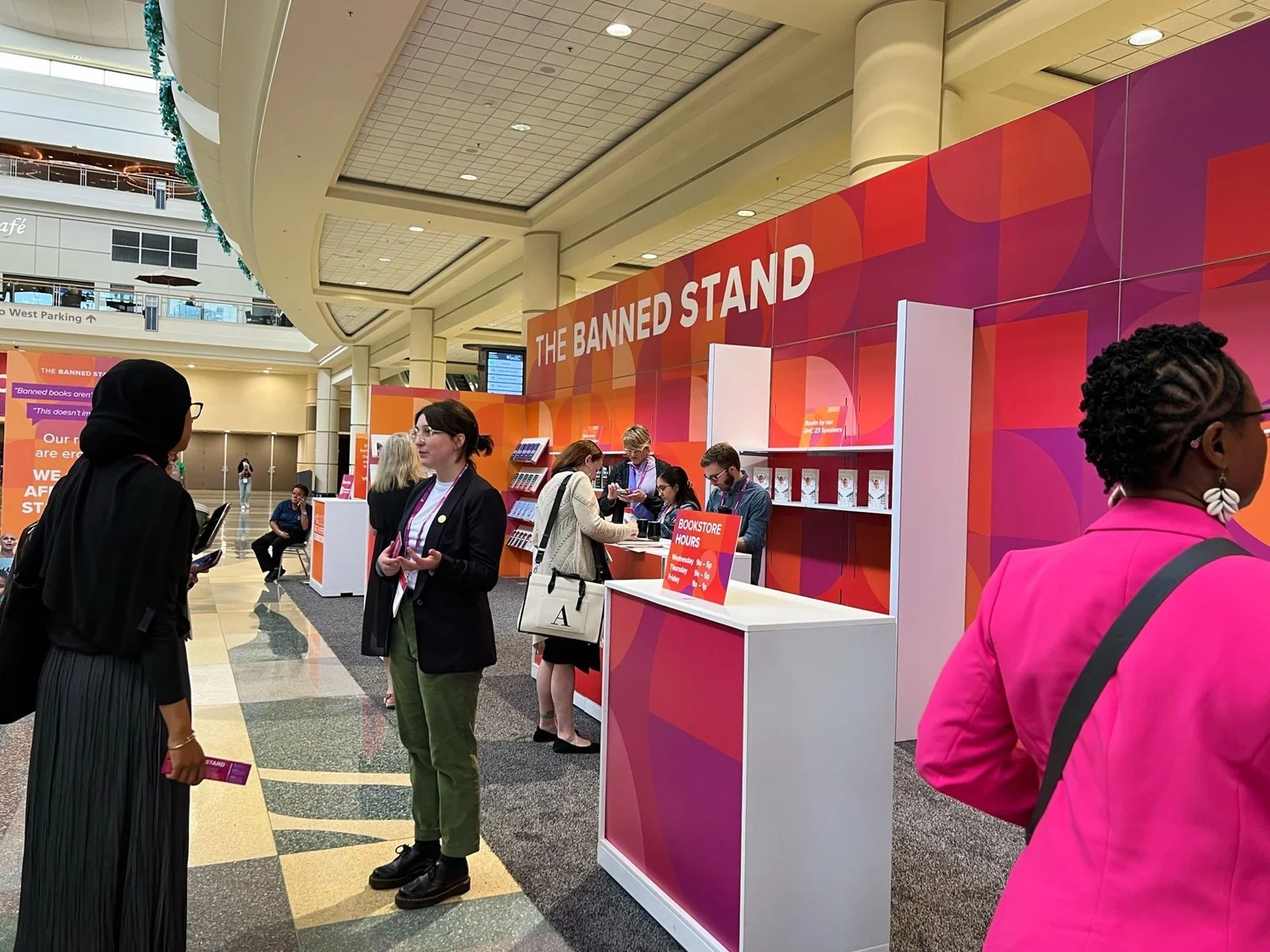
For AnitaB.org, the agency created the Banned Stand inside the Grace Hopper Celebration in Orlando. More than 20,000 women and nonbinary people in technology attended the conference. Florida was leading a wave of challenges to books in schools and libraries, and AnitaB.org wanted to state what it stood for before moving the event to what it considered a more welcoming environment.
A panel discussion could have conveyed the position. A press release could have documented it. The Banned Stand let visitors browse the controversy, hold it, buy it and walk away reading it. Every title sold out. The medium did not carry the message; the medium was the message with a cash register.
The same physical clarity shows up in quieter work. Current maintains probes that report fecal-coliform levels in the Chicago and Calumet rivers every 15 minutes. A web interface made those readings legible to boaters, anglers and kayakers; M. Harris & Kern handled publicity with designer Jonathon Berlin and other technology partners. The H2NOW project won a 2022 Chicago Innovation Award and reached the front page of the Chicago Tribune twice. Data became a decision: should I get in the water today?
Editing as a growth strategy
The Bulletin of the Atomic Scientists had no shortage of urgent material. Its territory includes nuclear risk, climate change and disruptive technology. Its problem was proportion. The firm studied website behavior to learn what readers wanted, tightened headlines and newsletter writing, adjusted timing, elevated the strongest analysis and built a paid digital plan. The newsletter audience grew by more than 217%.
That may be the most copyable part of the playbook. Start with observed behavior, not the client's favorite phrasing. Decide on one action. Remove rival ideas. Use language a person might repeat at dinner. Match the container to the point - a store for banned books, a heroic scene for a frightened parent, a compact new name for an unappetizing fish. Then measure the behavior, not the volume of applause in the presentation room.
The approach has limits. Compression cannot repair an untrustworthy claim, create demand for a useless offer or substitute for distribution. A provocative object without research is merely a stunt. And the model depends on clients willing to choose - because “bolder and briefer” requires giving up safe qualifiers, pet messages and the fantasy that everyone is the audience.
In 2024, Harris and the agency's creative director, Jenn Bane, turned the house philosophy into a Simon & Schuster book called Everybody Needs an Editor. The title reads like advice. It also reads like a business plan. M. Harris & Kern occupies the stretch of market between a public-relations firm, a creative agency and a senior editorial studio. Its advantage is not that it can make almost anything. It is that, at its best, it knows what the thing is for.