The revealing detail is a link that would not open. In a January 2, 2026 report to BBB Scam Tracker, a Florida applicant described applying through LinkedIn, receiving a message about advancing in the hiring process, and being directed to a background-check website. The message used the name Luxe Consult Solutions. When the destination failed to load, the applicant started investigating. A technical interruption had created room for a different kind of question: who was making the request?
- Luxe Consult Solutions presents itself as an operations and IT consultancy, with a brand-marketing pitch.
- Florida records document an LLC filed in February 2024.
- Applicants have reported questionable recruitment messages using its name. Those accounts do not establish who sent them.
A consulting pitch about the everyday
The company’s LinkedIn description concerns an ordinary business difficulty: turning decisions into work that actually gets done. Its stated offer includes clarifying priorities, stabilizing operations and improving execution. The intended customer is an organization seeking more dependable daily processes. Its industry label is IT services and consulting; its tagline also advertises marketing solutions for brands. That combination places its public positioning across operational advice and marketing services.
The interesting word in the company’s description is “repeatable.” A successful intervention, in that framing, should keep working after the initial conversation. The profile describes its approach as quiet, precise, and measurable
. These are statements of intent. For a prospective buyer, they suggest useful questions about the process to be improved, the person responsible and the result that would count as progress.
Read as an offer, this is a B2B consulting proposition: organizations buying help with how they operate or present themselves. The closest category alternatives are independent operations advisers, IT consultancies and marketing agencies. The emphasis on dependable execution provides a way to understand the pitch. A buyer would still need to test that emphasis against a concrete assignment.
The request that changed the conversation
The recruitment accounts introduce a separate story. On January 9, a Pennsylvania reporter told BBB that an application had advanced the following day, before an interview, phone screening or other conversation. The reporter described an external identity-verification link and an alternative Google Form. What bothered this applicant was the sequence: the request for verification arrived before any direct interaction with a recruiter.
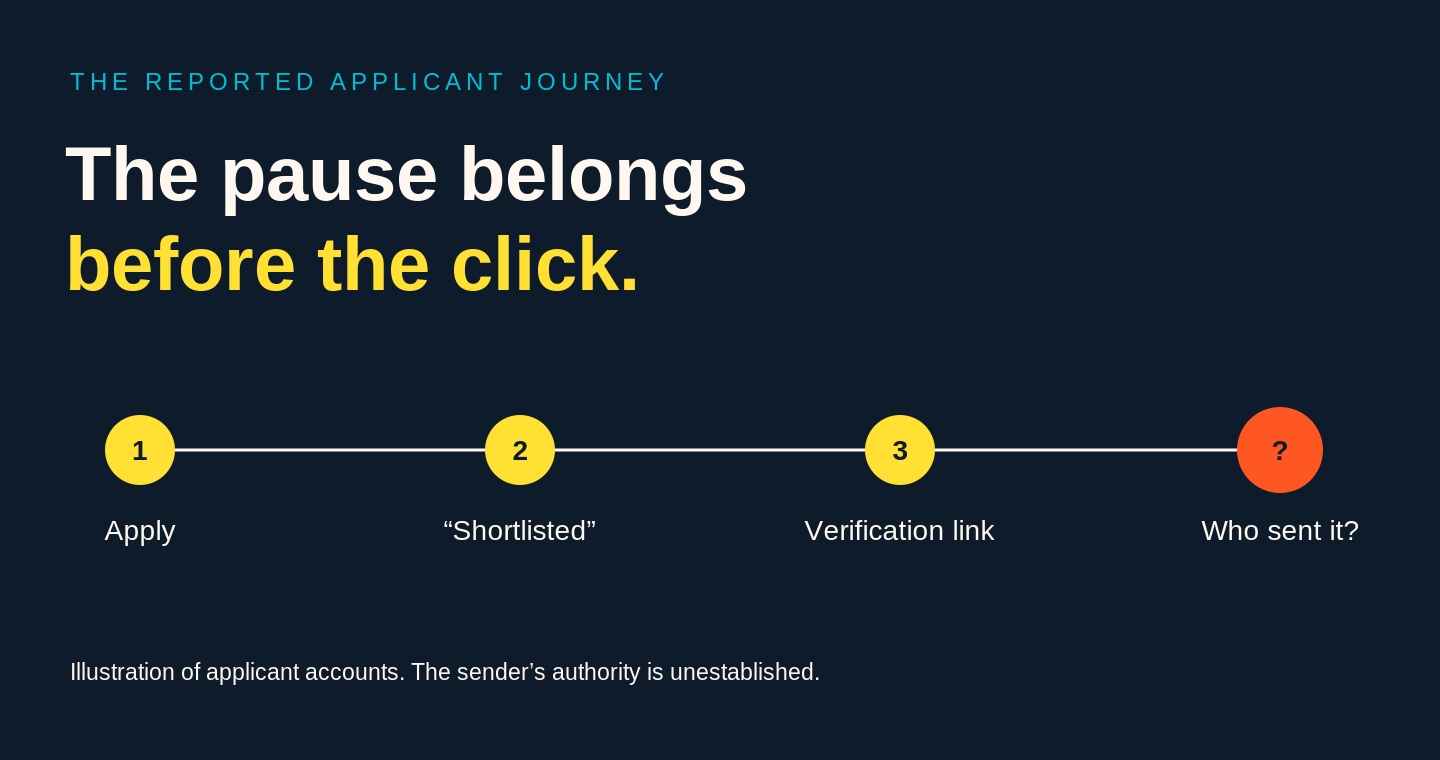
A Massachusetts report dated January 14 described a job application through FlexJobs followed by a message requesting identity verification before interview scheduling. January 16 reports from Pennsylvania and Tennessee reproduced similar language about a free identity verification
, an external destination and a backup form. These accounts document what people say they received. They do not independently authenticate the sender.
Then there is the price. In a public LinkedIn post, a user identified as Abdullah described a remote Data Entry Clerk message using the company’s name. The poster said a request to pay $29.99 for a background or credit check prompted suspicion. That figure is a reported charge request, rather than a consulting fee or a documented financial loss. The account’s useful detail is the moment the recipient reconsidered.
A requested check fee in one applicant’s public account.
Not a price for the company’s services.
A name can travel without its owner
There is a legal entity with this name. Florida’s corporate record gives Luxe Consult Solutions, LLC a February 23, 2024 filing date and a February 21 effective date. It lists Damaris Williams as an authorized member and registered agent. An April 27, 2025 annual report records an Ocoee principal address. The company’s LinkedIn page identifies Orlando as its headquarters. Those entries describe different public records and different address functions.
The distinctions matter because a registration answers a limited question: whether an entity was filed under that name. It does not authenticate a recruiter, an email or an outside verification page. BBB attaches a relevant caution to its reports: legitimate business names can be used by people conducting scams. Assigning responsibility to the registered LLC would require evidence beyond the appearance of its name in an applicant’s account.
A registration identifies an entity. A message still needs an authenticated sender.THE DISTINCTION THAT MATTERS
The public footprint also contains third-party listings bearing the name. HubMub displays an October 2, 2025 entry-level virtual data analyst posting. Weekday hosts analyst and customer-service descriptions. Such listings establish that a name appeared in recruitment material. Their presence alone cannot establish an authorized vacancy, a completed hire or the size of a working team.
Make the promise small enough to test
For someone considering the consulting offer, a practical starting point follows from the company’s own emphasis on execution. Ask for one process to be defined, one person to own the work and one observable measure to judge it. This is a suggested buying discipline, rather than a description of a verified Luxe engagement. It turns an attractive promise into a discussion that can produce a usable brief.
For example, a buyer might ask whether the problem is slow approval, inconsistent handoffs or unclear priorities. Those are illustrative questions, not customer case studies. The next question is what the consultant would deliver and how the buyer would recognize improvement. Advice about execution becomes hard to evaluate when nobody agrees which process needs changing, or nobody has authority to change it.
Trust has an order of operations
For an applicant, the decision is different. The Federal Trade Commission advises people to investigate prospective employers and avoid paying for the promise of a job. Its guidance also recognizes that employers may conduct background checks. The point is to examine the offer and the request carefully, including who is asking and what relationship has actually been established.
The memorable feature of the January 2 account is how little it took to interrupt the momentum. A link failed. The applicant searched. A message that had presented itself as progress became something to examine. Luxe Consult Solutions’ public record brings two questions together: what an organization says it can deliver, and whether the person invoking its name has the authority to speak for it. Both deserve an answer before the next click.