A reader opens a page. Somewhere behind it, an advertisement has won an auction. The reader came for a story; the machinery came to sell a little attention. Louis-David Mangin has spent years working on what happens when somebody uses that arrangement to slip something else through the door.
It is an awkward place to build a career. Successful protection leaves very little to admire. The page stays put. The browser behaves. Nobody is involuntarily dispatched to a dubious destination. A small, unremarkable rectangle remains a small, unremarkable rectangle. For the co-founder and CEO of Confiant, this uneventful outcome is the point.
Mangin, usually called LD, works where publishing economics meets computer security. His company serves publishers and advertising platforms, businesses that depend on letting outside material reach their audiences. The difficult question is how much authority those businesses retain once the material starts moving. He has been asking it since co-founding Confiant with Jérôme Dangu in 2013.
The apprenticeship was in media
Before Confiant, Mangin worked on the business of distributing advertising. He was director of network development at SeeSaw Networks, then general manager of the Fitness Network and vice president of business development at Outcast Media. He had studied at Boston College, where his education included computer science and economics. His later work would put both subjects in the same room.
The earlier jobs matter because his eventual customers were media operators with commercial obligations. Advertising had to support a business. Security had to work inside that business. Understanding the people responsible for partnerships, networks and revenue gave him a practical route into a problem that might otherwise sound like an argument between machines.
Colleagues remembered the human part. Cameron Burnham, who worked with him at SeeSaw, described his attention to partner relationships, responsiveness and detail. Another recommendation, from Tom Bowen Wright, emphasized energy, ambition, eagerness to learn and a direct way of speaking. These are colleagues' assessments, but they offer a useful portrait of the operator before the security-company title.
Confiant was his second co-founded business and the sixth startup he had joined. The biography comes with an offshore-sailing habit, too. There is something pleasing about a technology executive whose leisure plans can involve leaving the shore behind. His working life would require sustained attention to an entirely different network of currents.
A partnership, then a long build
Mangin credits meeting Dangu, Confiant's co-founder and CTO, as the opening to his security venture. Dangu brought the technical security knowledge. Mangin investigated the advertising ecosystem and heard publishers and platforms describe recurring trouble with malicious and poor-quality ads. The partnership put a technical problem beside a buyer who already understood its consequences.
Their chosen focus was the advertiser-shaped threat: criminals using advertising infrastructure to reach real people. In a January 2019 account of the business, Mangin explained why sophisticated criminal advertisers deserved attention alongside the familiar household brands. An advertising system built to deliver messages efficiently could also efficiently deliver the wrong message from the wrong participant.
Building the response took time. Mangin described a year spent figuring out the real-time approach, another spent building it, and a testing period before the May 2017 launch. The system operated in the interval after an ad auction and before the creative appeared. That interval became a place to inspect an impression and intervene.
The distinction has a simple consequence. A publisher needs help while the visitor is still on the page. Discovering an attack afterward may be useful for an investigation, but it cannot restore the interrupted visit. Mangin's business was being shaped around the moment a customer could still do something.
The nuisance with a business model
In the early public discussion of forced redirects, Mangin pointed to an uncomfortable incentive. Criminals could benefit from staying below the level of irritation that would provoke a comprehensive industry response. Too much disruption invited attention; less conspicuous disruption could keep earning. A nuisance, repeated economically, could become a durable operation.
That helps explain why a publisher might struggle to reproduce a reader's complaint. A redirect need not occur for every visitor. Conditions such as location, mobile carrier or time could influence when an ad misbehaved. A tidy test result and a furious reader could both be telling the truth. The advertising department had acquired a detective assignment without asking for one.
There was a commercial catch as well. Blocking ads could itself cost revenue. The people selling protection had to contend with that calculation, rather than assume that identifying a threat settled the purchase decision. Mangin's position placed security alongside monetization: protect the audience while allowing legitimate advertising to keep paying its way.
His language for the proposition was unusually compact: “We deliver control.” It is a useful line because it puts the customer back into the sentence. The publisher owns the relationship with the reader. The advertising system should leave that publisher able to act.
“We deliver control.”
Louis-David Mangin, 2018
What a customer actually notices
The conversation becomes more concrete in Mangin's discussion with Chris Gironda of Complex. Complex wanted to address redirects, slow-loading ads, intrusive video and phishing scams. Its advertising team was looking into complaints and wanted an automatic way to stop the activity behind them. Those are recognizable operating problems, rather than a theoretical catalogue of internet dangers.
Complex tried Confiant while reassessing its advertising relationships after bringing programmatic bidding in-house in 2019. Gironda later described alerts, reporting and support, including notice that an eGobbler attack had already been blocked. He also reported that escalated complaint emails requiring extended advertising-technology support had stopped. This was the customer's account of its deployment, with the scope that implies.
For Mangin, the exchange supplied a grounded description of what his company was selling. A team could adjust quality thresholds, see information about its own sites and make decisions. The value showed up in ordinary work: fewer complaints to investigate, clearer signals to act on, and a support relationship Gironda described favorably.
A funding round buys another stretch of work
In May 2019, Confiant announced a $4.1 million Series A led by River Bay Investments and Rubicon Venture Capital. River Bay's Tom Leonard joined the board alongside the founders. The announced purposes were product investment and hiring. The company also said it planned to double its headcount that year; a plan is useful evidence of intent, without becoming a retrospective headcount.
By September 2021, Mangin was discussing the business on Fireside with a VC with Andrew Romans. The conversation covered a move from $1 million to $10 million in annual recurring revenue over four years, investor selection and the role of investor feedback. Those were historical figures presented with the interview, rather than a claim about Confiant's revenue today.
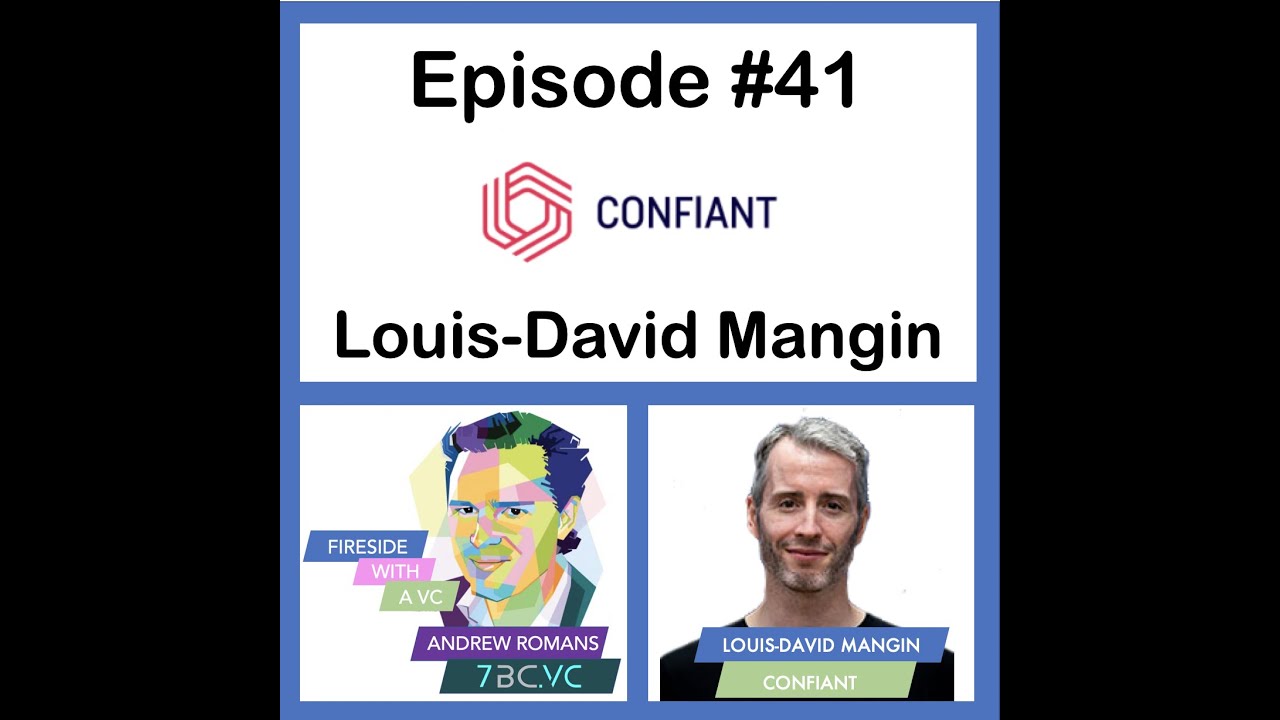
Hiring and retention were part of that discussion, too. A security business needs people who can keep learning while the threat changes around them. The interview explored employee development and corporate culture alongside engineering and privacy. Growth brought a management problem as well as a larger revenue figure: the organization had to keep its ability to respond.
A notebook in an automated industry
Asked in 2018 for one word describing his working method, Mangin chose “Triage.” His indispensable tool was a pen-and-paper notebook. He accepted that some work would never get done. For an executive surrounded by automation, this is an appealingly modest equipment list.
There is an editorial logic to that answer. A founder's attention is finite; choosing one task means postponing another. A notebook leaves those decisions visible without pretending to make them disappear. Mangin's description suggests an operator comfortable admitting that prioritization has casualties. The unfinished list is part of the method.
His colleagues' descriptions of detail and directness fit beside that self-portrait without proving a grand theory of personality. Together, they make him easier to picture: someone working through relationships and decisions, as well as a market thesis. The vocabulary is practical. The technology can be complicated; the next decision still needs to fit on a page.
By 2026, the question had widened
In August 2026, Mangin published an argument about advertising's growing complexity. Faster transactions and more automation had improved the machinery, he wrote, while making it harder for participants to understand everything passing through it. He connected that limited visibility to uncertainty and declining confidence. Efficiency could leave a business carrying risks its performance dashboard did not explain.
His questions concerned origin, responsibility and who ultimately absorbed the cost. The argument brought security into management: executives needed to understand the exposure traveling through their commercial systems. It was a wider version of the control problem he had described years earlier, extending from an individual ad to the relationships around it.
At Black Hat 2026, he also noticed the crowded field of well-funded AI companies and prominent booths. His comments acknowledged the money entering the sector while observing how vendor messaging could make substantive conversations harder to locate. For a founder selling security himself, the observation had a little edge. A busy exhibition floor can become another visibility problem.
Mangin's continuing ambition is to make advertising safer for the businesses delivering it and the people receiving it. His career has turned an ordinary annoyance into a sustained operating question: who can see what is happening, and who can act? The desired ending is still wonderfully uneventful. A reader finishes the story they opened. The page has kept its promise.