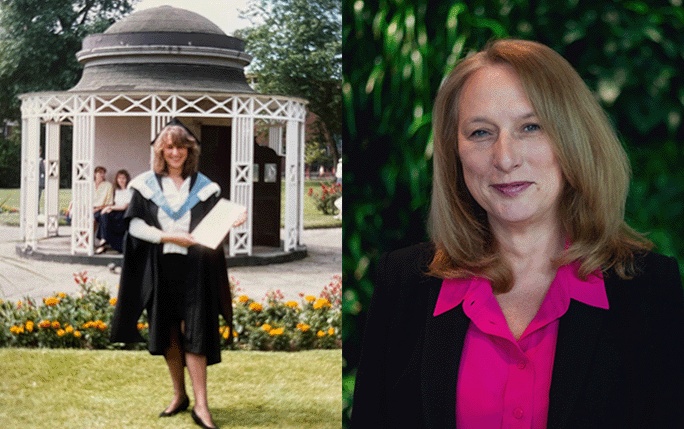
In 1990, Lorna Green celebrated her graduation in Liverpool’s Abercromby Square. Decades later, she described working in an office overlooking her old biochemistry building. Between those two views lay a career in commercial work, investment and the business of helping other people’s ideas survive. The distance on a map was modest. The professional route was rather longer.
There is a pleasing economy to that return. Universities send graduates out into the world; occasionally, one comes back with an investment company. Green co-founded LYVA Labs in 2021 and became its founding chief executive. Its territory is Liverpool City Region, and its work concerns an awkward question for any place rich in research: how do you turn what people know into businesses that can employ people?
The answer has involved early investment, advice, introductions and sustained attention to the people doing the building. Green’s career helps explain why those activities sit together. She has worked on the commercial side of companies, around a seed fund and inside an organisation concerned with enterprise and growth. She has seen more than one side of the meeting table.
A career with several sets of working instructions
Green graduated from the University of Liverpool in biochemistry. Her subsequent working life moved through public service and into private companies, where she spent a decade in sales, marketing and business development. Those functions are sometimes compressed into a line on a biography. They deserve a little more space here, because each concerns a different test of whether an idea has a future.
Sales brings the customer into the conversation. Marketing asks how a proposition will be understood. Business development deals with the relationships and arrangements that make expansion possible. A technically accomplished product still has to make sense to somebody who might buy it. These are ordinary business disciplines, with an inconvenient habit of mattering.
She later joined Alliance Fund Managers, advising the £27 million Liverpool Seed Fund, and went on to work for businesses in which it had invested. That sequence put the funding decision beside the consequences of the funding decision. A company’s life continues after the investment announcement, usually with considerably more work and fewer photographers.
In 2014, she became director of enterprise and growth at the Innovation Agency. By 2021, she was helping establish LYVA Labs. The progression gives her founding role a particular texture: an executive whose experience included commercial delivery and investment support was now building an organisation intended to provide both.
The money has an address
LYVA Labs launched publicly in 2022 with £10.5 million from Liverpool City Region Combined Authority. That original commitment gave Green and her colleagues a way to put capital behind the ambition to grow businesses locally. Regional development can sound remote until the money has to reach an actual company.
The organisation’s offer includes workshops for developing ideas, investment at the pre-seed stage and support for collaborative research and development. Taken together, those activities acknowledge that founders arrive with different problems. Some need to establish what they are trying to build. Others need finance or a partner with capabilities they cannot supply themselves.
Green’s role therefore sits between the language of regional ambition and the demands of a young business. A city region wants investment and jobs. A founder wants to make the next stage possible. The two interests can meet, but somebody has to work through the details.
That is part of what makes her story worth following as a personal one. She has chosen to lead an organisation whose success depends substantially on what other people manage to build. The visible product is a portfolio of businesses; the chief executive’s work includes making the conditions around those businesses more useful.
The return ticket matters
By September 2022, Green was speaking about another part of the job: bringing people back. LYVA Labs had recruited team members who had studied elsewhere or gained experience beyond the region. She connected those appointments with a wider ambition to retain graduates and encourage other businesses to do the same.
“They have all noticed the immense, unique opportunities here in the city region,” she said of colleagues whose experience had taken them elsewhere. It was a recruitment observation with a regional argument inside it. Liverpool could be somewhere to bring experience, as well as somewhere to acquire it.
Her own university connection gives that argument a human scale. The graduate in the square and the executive looking towards an old teaching building belong to the same story. In 2024, when she shared those memories, the geography of her working life had folded back towards its educational beginning.
For a graduate deciding where to work, the existence of a local company matters more than a general invitation to be ambitious. Green’s interest in keeping talent in the region is tied to the availability of work, businesses and practical routes into them. Affection for a place becomes more persuasive when it comes with an opportunity.
“They have all noticed the immense, unique opportunities here in the city region.”Lorna Green, on recruiting talent, September 2022
Who gets through the door?
In May 2024, Green became chair of Liverpool City Region’s Female Founder Regional High Growth Board. Claire Lewis, co-founder and chief executive of Baltic Ventures, joined as vice-chair. The board formed part of a wider effort to improve access to high-growth entrepreneurship for women outside London and the South East.
The practical concerns were familiar: funding, mentors, networks and opportunities to scale. They also connected directly with Green’s day job. Helping somebody build a business requires attention to who can reach the people and resources that make building possible.
The board’s ambitions included increasing capital reaching female founders and encouraging more regional funds to sign the Invest in Women Code. These were stated goals, with work still to do. Green’s own comment at the appointment was suitably unfinished: “there is much more to be done.”
At the launch, she reported that 56% of LYVA Labs’ investment funds deployed to that point had supported female founders. The date matters. It was a figure attached to a particular stage of the organisation’s life, and it gave her participation in the board a concrete investment history.
The Liverpool board now presented by The Whole Point brings together people from investment, universities, business support and companies. Its membership includes Carmel Booth, Delyth Edwards and Katie Nicholson. Green’s chairing role places her among people with different ways to help a founder move forward. The usefulness of such a group lies in what its connections allow someone to do next.
A ledger of opportunities
LYVA Labs’ 2025/26 reporting gives a sense of the activity around Green’s leadership. It records £1.6 million invested in 17 regional start-ups during the year and five innovation programmes delivered to 64 founders. Those are organisational results, produced by a team and its partners.
They are useful details in a profile because they put scale around an otherwise elastic word: support. A programme has participants. An investment has a recipient. The company’s work can be considered through those transactions and relationships, rather than left as an aspiration.
LYVA Labs · reported annual activity · 2025/26
In March 2026, Green received the Outstanding Contribution Award at the 2025 Bionow Awards, held on 5 March at the Concorde Conference Centre. The award recognised a career contribution, placing the years before LYVA Labs alongside the organisation she now leads.
That distinction suits the shape of her career. The founding date supplies a clear milestone, while the knowledge behind it accumulated through earlier jobs. Starting an organisation can be a new undertaking and a use for experience that has been gathering for years.
The chief executive and the application form
A different view of Green’s work appeared in May 2026, when she led the opening session of LYVA Labs’ Entrepreneur Club. An experienced Innovate UK grant assessor, she offered guidance on funding applications. Founders then worked with advisers on their own proposals. There is something reassuringly concrete about an executive who can discuss the form as well as the fund.
The club followed requests from alumni for continued contact after programmes ended. It brought past and present participants together around the practical difficulties of growing companies. A programme’s closing session, evidently, did not mean its founders had run out of questions.
That continuation brings Green’s different roles into focus: founder, executive, investment professional and chair of a board concerned with access. Each involves helping people get from an intention to a workable next step. The work is specific enough to include an application, broad enough to involve a region.
Her Liverpool story has travelled from a graduation photograph to an organisation backing new businesses. The next chapter belongs partly to the founders she works with. Their companies will determine what those investments and introductions become. Green has built herself a job in which other people’s progress is a considerable part of the point.