To let a driver buy diesel, a fleet manager once had to tell a computer not to buy everything else. In OKKO’s desktop fuel-management system, that meant finding other fuel types and setting their limits to zero. The software understood the rules. The human had to work backward.
Linkup ST’s mobile redesign offered a different starting point: a “Diesel Vehicle” preset. Choose the familiar thing; let the interface arrange the restrictions. The backend stayed in place. In the company’s account, drop-offs fell from 28% to 9%. Sometimes the interesting engineering question is how much complexity a person should ever have to see.
- Linkup ST combines product design, software delivery and outbound lead generation.
- Its strongest examples start with a specific customer task.
- Buyers can hire one service or combine them around a business problem.
The investor’s awkward question
Founded in 2013, the business grew out of Andriy Sambir’s freelance work. Today, CEO Sambir and design co-founder Nataliya Sambir lead a company whose portfolio runs from marketplaces to healthcare interfaces. Its current offer has three tracks: customer experience, demand generation and technology scale.
The identity behind that offer took some arguing. In a January 2026 interview, produced with Linkup ST’s support, Sambir recalled investor Vitalii Gorovyi calling the business an outsourcing company. Sambir objected. Asked to show its own product, he realized that building products for customers still made it a service business.
“We can actually build what we talk about.”
Andriy Sambir · January 2026 interview
The resulting ambition is consulting with delivery attached: diagnose the need, select existing software where it fits, and add custom work where it matters. The ownership changed too. In July 2025, Gorovyi increased his personal stake to 45%, with Sambir holding 55%; InSoft Partners exited. The transaction value was undisclosed.
Australia, sorted by location
At Slattery Auctions, the revealing number was 77%. That was the share of old-homepage clicks captured by “Find by location,” according to Linkup ST’s case study. Advanced search attracted 0.05%. The hero image managed 0.07%. Buyers looking for industrial equipment were telling the designers where their attention belonged.
Linkup moved location and category selection beneath search, introduced broader navigation, and replaced static blocks with auctions ordered by closing time. Its post-launch account reports 16.7% more returning users. The practical lesson is wonderfully unglamorous: give the frequently used decision a prominent place. These are reported before-and-after results, which establish a useful direction rather than isolate every cause.
The yacht and the half-hour listing
YachtWay supplies a more expensive setting for the same problem. Brokers could spend as much as four hours uploading a vessel to older platforms, the studio’s case explains. Linkup designed and developed the marketplace from scratch on an eight-month schedule, organizing different journeys for buyers, brokers, dealers and shipyards.
The work included filtering, subscriptions, direct communication and analytics. Listing time came down to approximately 30 minutes, by the company’s account. That is a useful way to assess a marketplace: watch the person who has to supply it. A beautiful empty catalog remains an empty catalog.
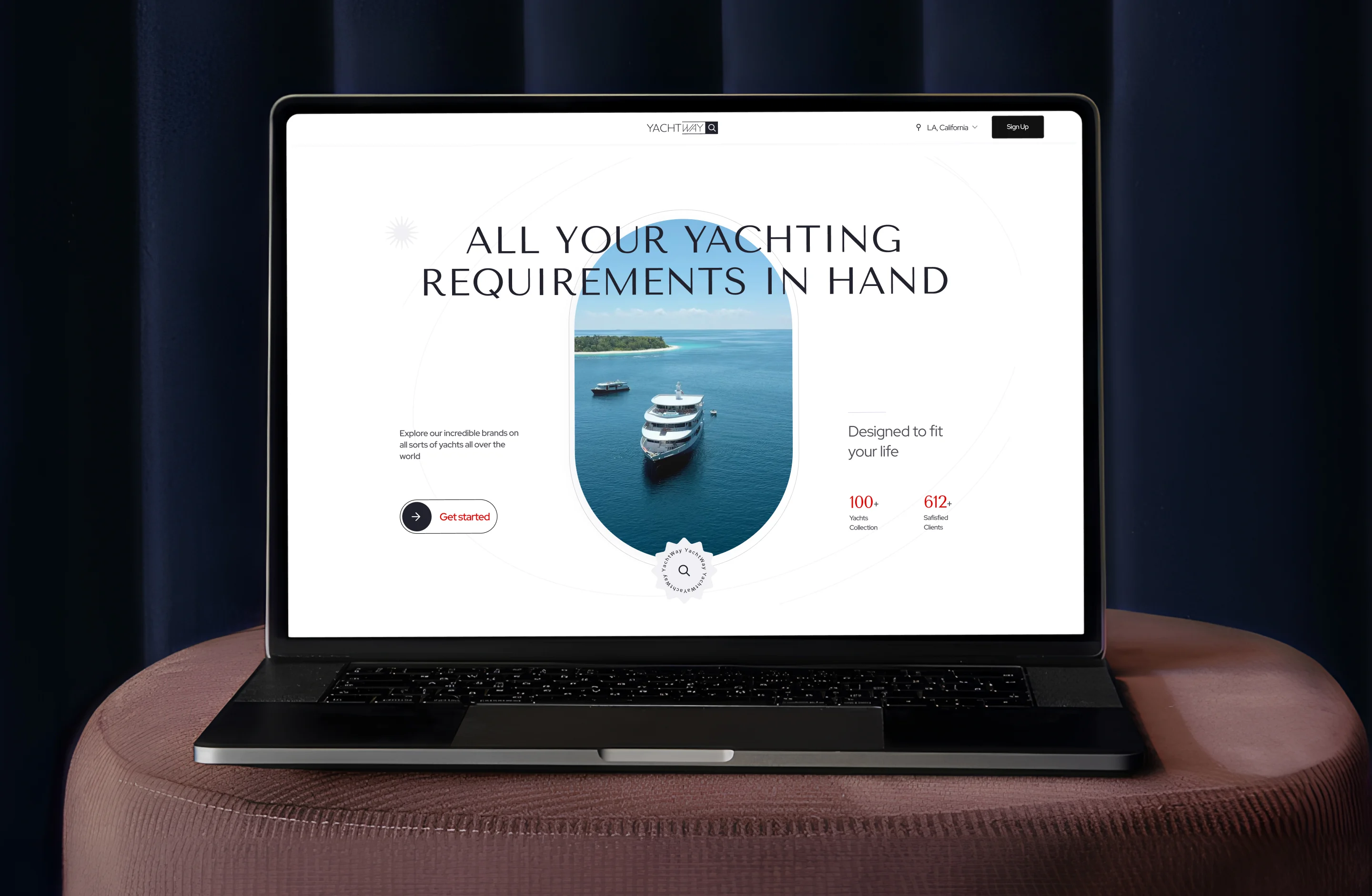
These are client products, rather than boxes of Linkup software waiting on a shelf. The business sells professional work: research, design, development, integration and continuing improvement. A startup can bring a product idea; an established operator can bring a system that has become harder to use than the job it supports.
An agency with its own paperwork problem
Linkup has also been the customer who needed a simpler system. A historical Hubstaff customer story describes Sambir assembling project reports by hand while employees tried to remember everything they had worked on. As projects accumulated, memory became an unreliable accounting tool.
An employee suggested Hubstaff. Time tracking and automated reports replaced the recollections and spreadsheets; some clients received access to tracked hours. The vendor’s account says the efficiency gains allowed a reduction from eight-hour days to six and a half. Treat that as a historical account of one operational change, rather than a promise about today’s working schedule.
There is a pleasing symmetry here. A company paid to build software bought an existing tool for its own problem. That supports its present argument for combining ready-made platforms with selective custom development. The judgment lies in deciding which work deserves invention.
Bring a bottleneck, and a budget
For a buyer, Linkup sits between a product design studio, a software development firm and a growth agency. Its distinction is the proposed connection between those jobs: attracting prospects, helping them act, and making the operation behind the transaction function. An internal team or separate specialists remain sensible alternatives when the brief is already precise.
Clutch lists a $10,000-plus minimum project and a $50-$99 hourly range. Those figures establish a buying bracket; a scope determines the bill. A useful brief would name the stalled task, show its current completion rate or handling time, and define the change worth paying for.
Its demand-generation service explicitly suits B2B sellers with a validated offer, sales materials and people ready to follow up. More outreach cannot supply those foundations. Similarly, an interface improvement has limits when the underlying service cannot deliver. Buyers should match the engagement to the constraint they can actually change.
There is external recognition alongside the case studies: Red Dot records the studio’s work, and Skinspotter’s mobile interface won a Silver A’ Design Award in 2025. The everyday test remains accessible to anyone with a product. Pick one important task. Watch someone attempt it. Count the unnecessary decisions. That is a starting point you can copy before buying anything. It also gives a future supplier something better to work with than a request for a prettier screen.
Keep following the work
Explore Linkup ST, its project library and company writing. Follow on LinkedIn, Instagram, X, Facebook and Behance.
Watch Andriy Sambir’s eight-step SaaS product walkthrough, or browse Building Digital Products. Read the ownership update and company-supported consulting interview.