A legal citation is a peculiar little object. A few names, a volume number, a page. It looks like punctuation for grown-ups. Yet the entire argument above it may depend on whether that case exists, what it actually decided, and what other courts have done to it since. The sentence can be elegant and still be useless.
This is the territory LexisNexis Legal & Professional occupies. It sells access to law, the tools to interpret it, and software that carries the work into a draft, a matter file or a legal department’s budget. As AI makes producing sentences easier, its older expertise in checking their foundations acquires a new purpose.
- Find the law: research cases, statutes and expert commentary.
- Do the work: draft, summarize and analyze documents with Protégé.
- Check the result: use linked authorities and Shepard’s, then apply professional judgment.
01 / A paper company buys a way out of paper
The origin has a pleasing irony. Mead, a paper manufacturer, bought Data Corporation in 1968. Two years later it established Mead Data Central. H. Donald Wilson and Jerome Rubin helped turn a legal information experiment into a commercial service. The ambition was full-text searching: let lawyers interrogate the documents themselves, rather than depend on somebody else’s index.
The early systems’ weakness was that dependence on summaries and indexing. Building something different took money. A published company history puts the development spend under Rubin at $14 million over 18 months. Lexis launched in April 1973 with four large New York law firms as its first subscribers. The customer no longer had to begin with the librarian’s categories.
Nexis added news and business information in 1979. Reed Elsevier, now RELX, acquired the business in 1994. Through changes in ownership and interface, the recurring commercial proposition remained recognizable: make an expensive professional search less laborious.
02 / The footnote becomes a feature
Today, Lexis+ with Protégé combines research, drafting and analysis. Protégé is the assistant inside the platform. Lawyers can ask questions in ordinary language, summarize uploaded material and develop drafts supported by linked legal sources. In February 2026, the platform replaced the Lexis+ AI name as LexisNexis expanded into connected workflows.
Consider a lawyer preparing a motion. Research supplies relevant authority. Drafting turns the material into a starting document. Shepard’s helps inspect how cited decisions have been treated. The lawyer still has to decide whether the authority supports this particular argument. These are different jobs, even when they appear on the same screen.
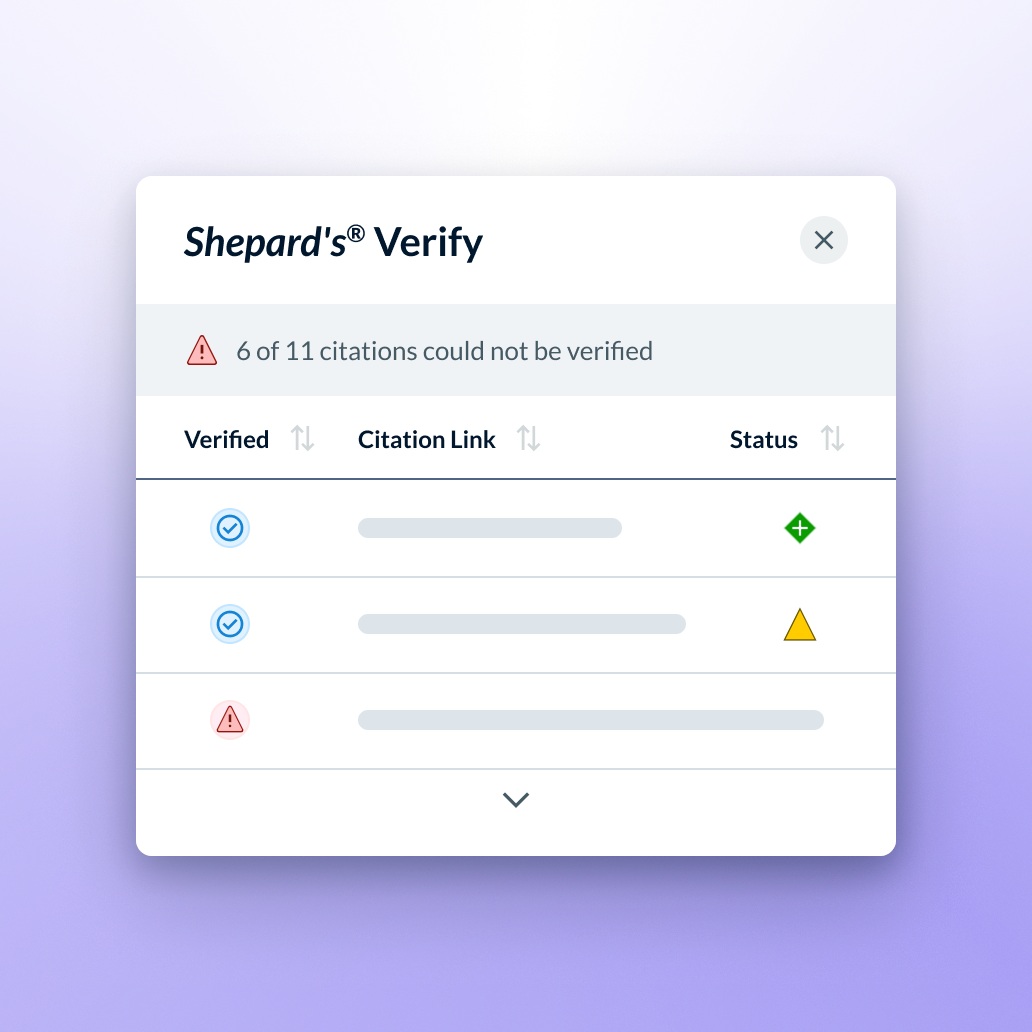
The surrounding products address adjacent chores. Lexis Create+ brings drafting into Microsoft 365. Lex Machina supplies litigation analytics. CounselLink+ handles matters, invoices and legal spending. Practical Guidance supplies practice notes and templates. Customers range from law firms and corporate legal teams to government and academia; business researchers use the Nexis side of the portfolio.
Its closest research rival, Thomson Reuters, offers Westlaw and CoCounsel. Both combine proprietary legal content with AI. LexisNexis’s particular assets include Shepard’s, its editorial material and its connections to a firm’s own documents. A buyer’s decision turns on those details, jurisdictional coverage and fit with existing work.
03 / Why the library wants your old contracts
A legal database can tell you what the law says. It cannot, by itself, tell you how your firm prefers to write an indemnity clause. That knowledge lives in previous agreements, templates and document systems.
LexisNexis completed its acquisition of Belgian drafting technology company Henchman in July 2024 to connect those internal materials with its own content and AI. Then-CEO Mike Walsh put the impetus plainly: “Customers asked for this capability.” The acquisition answered a request for personalization rather than merely adding another search box.
Cases · statutes · guidance
Templates · prior agreements
Adoption is another piece of the product. In a LexisNexis-published interview, Schenck Price’s John Ursin described moving from general training into small, practice-specific sessions. His verdict: “Their training has accelerated the usage of the product.” The transferable move is modest: teach a real task to a small group, then see whether people repeat it.
04 / The subscription behind the assistant
The economics belong to an established information business. RELX reported £1.806 billion of Legal segment revenue for 2025. Subscriptions supplied 85% of revenue, with transactions accounting for the rest. That makes continued usefulness commercially consequential: the relationship depends on renewal.
What does a customer pay? Lexis+ with Protégé is priced by organization size, capabilities and content access. CounselLink+ also uses customized pricing. The useful buying exercise is to specify the work first: which jurisdictions, which documents, which users, which integrations? A demonstration should include the time spent checking and correcting the output. An impressive first draft can conceal an expensive review.
05 / The answer still needs a reader
There is evidence for taking that review seriously. A Stanford-led evaluation published in 2024 found that the then-current Lexis+ AI produced incorrect information more than 17% of the time on its benchmark. That finding concerns an earlier product version and a particular test set; it is not a score for today’s Protégé. It does establish why retrieval and citations cannot substitute for supervision.
The practical limits follow. A team needs appropriate source coverage, permission to use its documents and reviewers who can recognize mistakes. A tool that confirms a case exists has answered a narrower question than whether the case proves the point. Without those conditions, fluent output can make weak work look finished.
“Legal AI must do more than produce plausible answers.”
Sean Fitzpatrick, CEO, LexisNexis Global Legal · May 2026
The recent developments make the direction tangible. In August 2026, LexisNexis opened a New York Customer Innovation Lab where lawyers and engineers build and test together, with collaborators including OpenAI and AWS. In October, it announced a localized Middle East launch of Lexis+ with Protégé, starting with the UAE and supporting work across Arabic and English source materials.
Both moves return to the original difficulty: useful information depends on the person asking, the documents available and the jurisdiction involved. LexisNexis has spent decades organizing that context. Its AI proposition will be judged one checked sentence at a time.