Lew Cirne had a table in his office with six chairs around it. The furniture came with a rule: if a meeting could not fit around that table, he would not attend. This was his account of running New Relic in 2014, when the company had roughly 600 employees. A business that size can generate rather more than six opinions before breakfast. Cirne preferred to leave the larger meetings to colleagues who were better suited to them.
The rule sounds like an executive perk until you hear what he wanted the time for. He wanted to write software. Having founded Wily Technology and then New Relic, he had discovered that success could promote him away from the work that made him start a company in the first place. More employees brought more decisions, more coordination, and more opportunities to spend a perfectly good afternoon discussing next Tuesday.
There is a small puzzle here. Application performance management, the field in which he built his businesses, helps people understand what their software is doing while it runs. His own career required a similar investigation. What was the founder doing while the company ran? Which activities justified his presence? The six chairs gave those questions a wonderfully physical answer. Even ambition, apparently, could benefit from a seating plan.
Christmas, 1982: a very effective disappearance
The beginning was a Commodore VIC-20, a Christmas present in 1982. Cirne was twelve. In a 2015 conversation, he said the computer was still beside him in his office. Many childhood presents have the decency to disappear into a cupboard. This one kept turning up in the story, long after its processing power had ceased to impress anyone.
His mother supplies the family version of events: she bought him a computer and, he jokes, has not seen him since. What caught him was the ability to create things. A machine offered a place where an idea could become something that worked. That attraction helps explain why the later business achievements never quite displaced the keyboard. The activity had already become its own reward.
He grew up in Port Hope, Ontario, and went to Dartmouth, graduating in 1993 with an A.B. in computer science. His interests extended to Latin and classical studies. He has argued that engineers benefit from a liberal arts education because the person using an application, or even an API, deserves understanding. Software may be written in a programming language; someone still has to live with the result.
Apple and Hummingbird supplied early engineering experience. Before the better-known companies, he also tried a venture with a friend from his hometown, turning the friend's board-game idea into a computer simulation. It went nowhere. That is a useful little episode to keep beside the later milestones: the appetite to make something appeared before there was evidence that anybody would buy it.
Wily taught him where the work was hiding
Wily Technology, founded in 1998, addressed a problem that becomes urgent when software leaves the developer's desk. An application may behave well in testing and badly when real people depend on it. Its symptoms are visible. The reasons are often buried. Wily's monitoring software helped teams diagnose bottlenecks and other problems in running applications.
By 2006, CA had agreed to acquire Wily for $375 million in cash. Cirne, then its founder and chief technology officer, was to join CA. The deal supplied a substantial commercial outcome. It also left him with an education in building a company around an invention, including the experience of handing the chief executive role to a professional manager.
His first stretch as a founder had involved learning management on the job. He later described trying to fit an imagined CEO mold, becoming an expert in everything because that seemed to be what the title required. His next company would need a different arrangement. Building products and recruiting capable people were activities he wanted to keep; the job could be constructed around them.
Wily also exposed the weight of traditional enterprise software sales. Large contracts, a demanding sales process, and substantial effort getting customers started could surround a useful product with considerable ceremony. Cirne would return to that problem with a practical question: how much of the ceremony could the software itself remove?
“Life’s too short for bad software.”
Lew Cirne, Stanford, 2014
The first minute mattered
The first iPhone gave him a clue. In the summer of 2007, he was struck by the attention Apple had paid to the beginning of the experience, including unboxing and activation. Enterprise software often asked customers to imagine the benefits awaiting them after a long installation. The phone demonstrated the commercial value of making the opening encounter feel considered.
New Relic began as a prototype through which Cirne taught himself Ruby on Rails. He recognized that Ruby offered a way to build a monitoring agent quickly, carrying lessons from Wily into a different technical and business setting. The company was founded in 2008. Its unusual name is an anagram of Lew Cirne, a piece of corporate naming with an unusually economical author credit.
The first-minute idea joined engineering to distribution. A customer who could see useful information quickly would need less persuasion and less assistance. That placed an obligation on the product: it had to earn attention before the user wandered off. Ease of adoption was something to build deliberately, rather than a compliment to hope for after release.
Cirne took that approach into a company whose identity celebrated developers. In March 2014, he went to South by Southwest to speak about being a CEO who still coded. The title of his session, “The Case for the Coding CEO,” made the point openly. He wanted craftsmanship to reach from the code into the customer's experience. Keeping the founder involved in development was part of his chosen way of doing that.
A second act needs somewhere to begin
The cabin belongs in this story because it was a workplace. Cirne used coding retreats to make prototypes, then brought them back to colleagues who could turn them into products. He worried about the difficulty software companies face after their original idea succeeds: the organization becomes good at selling and extending what it already has. A new idea needs attention before the old one exhausts its possibilities.
New Relic Insights became one expression of that ambition. Launched into public beta in March 2014, it expanded the company's work into real-time analytics. Its custom database and SQL-like query language let developers and business users ask questions of the events generated by applications. At launch, more than 275 customers had participated in private beta, and the system had stored over a trillion events during the preceding month.
The practical attraction was a shorter distance between a question and an answer. Application data could help someone investigate customer behavior as well as technical performance. This was a broader use for information the software was already producing. The invention still belonged to the same family of problems: useful evidence existed, but people needed a more convenient way to inspect it.
December 2014 brought New Relic's initial public offering. The offering closed with 5.75 million shares sold at $23 apiece, an aggregate offering price of about $132.3 million. Those numbers describe an important financing milestone. They also mark a change in the founder's surroundings: an enterprise that began with a prototype was now operating under the obligations of a public company.
- 1998Wily Technology begins
- 2008New Relic is founded
- 2014Insights launches; New Relic goes public
- 2021CEO handoff to Bill Staples
- 2025The Gamaliel Project founder role
The company outgrew the founder’s title
The later years complicate any tidy tale of a programmer finding the perfect job. In 2020, New Relic began moving to a consumption-based model. In April 2021, Cirne explained changes to sales and customer adoption, reduced spending in parts of the business, and greater investment in product development. The changes included cutting nearly 120 US jobs and up to 40 internationally.
Those consequences belong alongside the talk about delighting users. A product strategy changes the work of people who build, sell, and support it. Cirne described that day as the hardest part of the transformation. The six-chair rule could protect a founder's focus; it could never make the rest of running a company painless.
On July 1, 2021, Bill Staples succeeded him as CEO, and Cirne became executive chairman. In November 2023, Francisco Partners and TPG completed the acquisition of New Relic at $87 per share, giving it an equity valuation of approximately $6.5 billion. The company became private. The acquisition announcement described Cirne as founder and non-executive board chairman at that time.
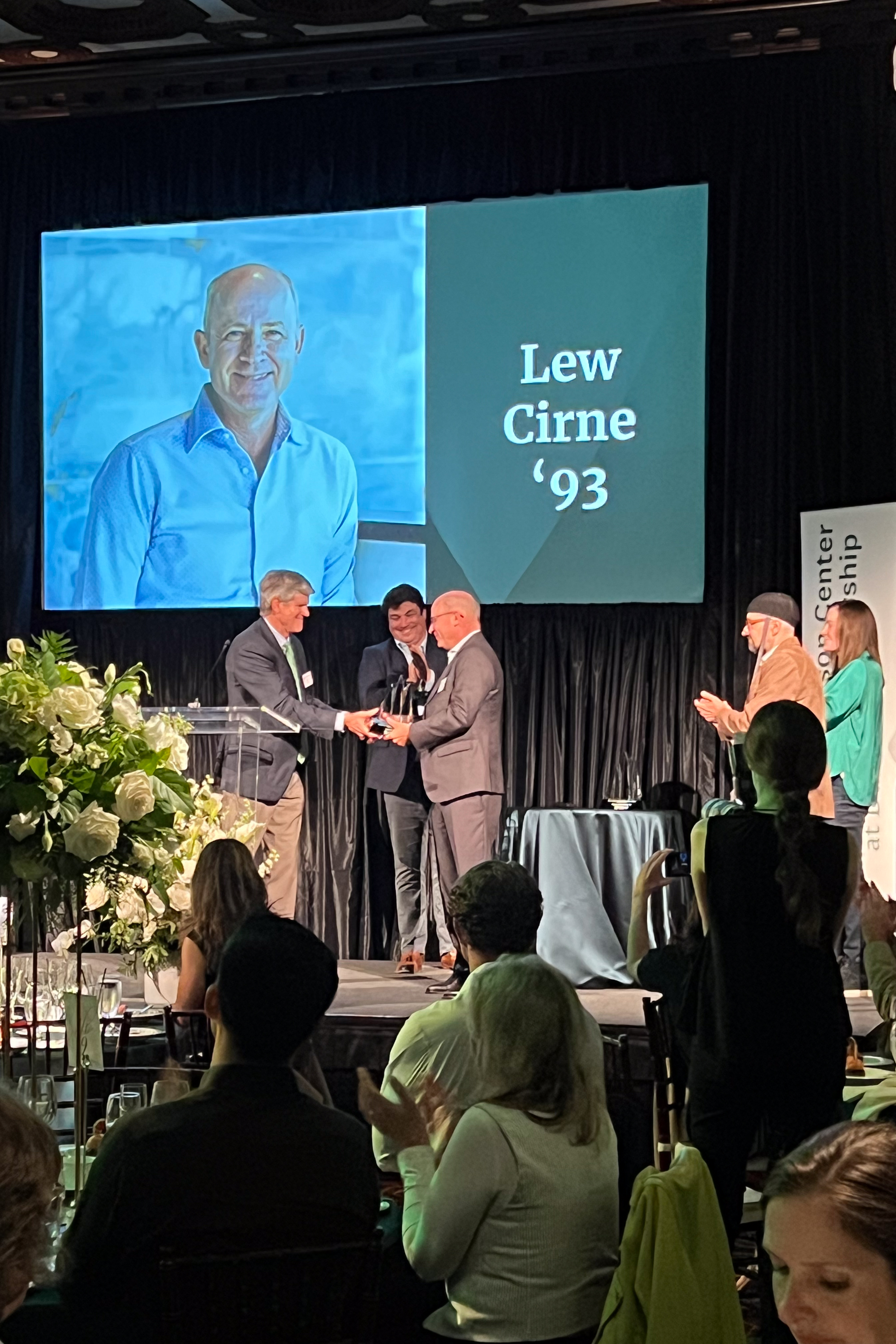
Dartmouth honored him in September 2024 with induction into its Entrepreneurs Hall of Fame. The ceremony brought him back into the orbit of the college where he had studied computer science decades earlier. An award makes a career look settled. His newer work suggests he has a rather different understanding of what comes after a milestone.
New questions, the same keyboard
Cirne now presents LKC Studios as an incubator for his software projects. Its list includes Gamaliel, an AI Bible reader; Braintunnel, a personal assistant working across email and documents; Monte Cristo, a reader with character guides for novels; and Reeve, remote tech support for families. The list is pleasantly domestic after enterprise application monitoring. Someone, somewhere, still has to answer the family computer question.
With his wife, Kirsten, he co-founded the Beloved in Christ Foundation and Belóved Gallery. The gallery opened in Marble Falls, Texas, in April 2023, sharing Akiane Kramarik's Prince of Peace painting with visitors free of charge. Their faith has become an explicit part of their public work, expressed through philanthropy, art, and now software.
In October 2025, he announced his role as founder and chairman of The Gamaliel Project. His family's foundation funded the free Bible study companion. Its launch announcement begins with his own questions while reading Scripture. He describes coding as the tool he habitually reaches for, then explains a plan to make the system's prompts and theological guidelines open to review.
That choice gives users something concrete to inspect. The project's public repository contains prompts, profiles, and guidelines, with an invitation for the approach to develop through community involvement. It applies his interest in understanding a system to a new subject, while making the project's religious purpose plain.
The calendar has moved a long way from Christmas 1982. The description of a satisfying day has moved rather less. On his studio site, Cirne writes, “My happiest days are coding days.” Once, he made room for those days by limiting the chairs around a table. Now he has a studio full of projects, each beginning with a question he wants software to help answer.