A song arrives as three minutes of feeling. Behind it sits a rather less hummable collection of permissions. Who wrote it? Who owns the recording? Who can put it in a film, collect its income, or approve its next commercial life? Leslie “Les” Ware has built a career in that territory, where something people love or use becomes something somebody must know how to own.
Ware is the co-founder and CEO of Outlander Capital in Dallas. His route into music ran through patent law, licensing portfolios and the business of turning intellectual property into revenue. A chorus and a technical invention have very different audiences. Each, however, can send money through a complicated chain of ownership. That connection helps explain why a lawyer associated with technology rights appears in the business of songs recorded by Rihanna, Miranda Lambert and Sam Hunt.
The interesting part of this career is its continuity. Music looks like a change of scene. Read the agreements, and an old professional concern reappears: how to give an idea a useful commercial life after somebody has created it. Ware’s companies have pursued that question through patents, publishing, entertainment and blockchain applications. The scenery has become considerably more tuneful.
A Dallas education, twice over
Ware was born and raised in Dallas. He earned a political science degree at Southern Methodist University in 1989 and a law degree at its Dedman School of Law in 1992. He founded The Ware Firm, whose Dallas and Marshall offices handled patents, intellectual property and telecommunications law. PanOptis followed as a patent acquisition and management business.
That sequence matters because his later investments grew out of a specific professional vocabulary. An intellectual property lawyer has to ask what a right actually covers, who controls it and how it can be used. A catalogue acquisition brings those questions into another industry. The music may cross borders in a second; administering the rights takes a more organized itinerary.
His connection to SMU also became personal. He and Amy Abboud Ware met through the university, married and raised four children. In December 2012, the couple’s $1 million gift established an endowed law professorship. It would bear Amy’s name. She had practiced criminal defense and been among the first women to lead the Dallas Criminal Defense Lawyers Association.
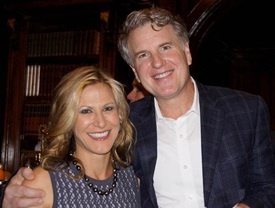
“I wanted to honor her legal accomplishments,” Ware said. An endowment announcement can be a dry document. This one contains a husband’s quite precise choice about whose work should be remembered.
Their support also included an emergency loan fund for law students. Its application specifies zero percent annual interest. Alongside the permanent academic appointment was a practical mechanism for a temporary financial problem. Years later, in 2016, SMU appointed criminal law scholar Jenia Turner to the endowed Centennial Professorship bearing Amy’s name. A donation had become an actual teaching position, with an actual professor and students on the other side of the desk.
The business before the music
Ware co-founded Marconi, a patent management firm whose work has included licensing tens of thousands of patents for major intellectual property owners around the world. This is a business conducted at a scale far removed from the popular image of a lone inventor holding a drawing. It involves portfolios, multiple technology companies and arrangements for using protected inventions.
That background supplies a useful way to read his move into other kinds of rights. There is an inventor or creator at one end, a company or audience using the work at the other, and an agreement connecting them. The agreement determines how commercial access works. Ware’s professional experience has been concentrated on that middle distance, where the invention meets the institution with a reason to use it.
He also sits on Crow Holdings’ board of directors and is a Hudson Institute trustee. Those roles place him in real estate investment governance and a public policy institution alongside his work in intellectual property. They are reminders that Outlander belongs to a broader Dallas business career, even when its transactions reach Nashville, Stockholm or the Netherlands.
A conceptual map of Ware’s work: identify the creation, establish the rights, then arrange its commercial use. The contracts differ across patents, songs and digital assets.
One thousand songs make an entrance
In April 2021, Outlander and the Dutch music company CTM announced a strategic alliance. Its stated ambition was to invest $1 billion in music publishing and master rights over five years. That figure described a plan. The first transaction was tangible: the acquisition of TEN Music Group’s publishing assets, a portfolio of more than 1,000 songs associated with artists including Rihanna, Shakira, Panic! At the Disco and Zara Larsson.
CTM brought a partner with a different professional history. André de Raaff had built a career in music entertainment and publishing. Outlander brought capital and experience in intellectual property. Mike McKool, another leader of Outlander, brought a legal background that included representing musicians, composers and producers. The partnership assembled people who approached the same asset from different directions.
“We have carefully studied the music IP market for some time now.”Les Ware, April 2021
Ware’s announcement emphasized technology’s rapid changes to the music market and the decision to apply existing expertise there. It was a measured explanation for an ambitious spending plan. He presented the TEN acquisition as a foundation for further purchases. There would soon be recognizable names attached to that intention.
In November 2021, CTM Outlander announced a deal with Natalie Hemby covering music rights from the preceding decade and an exclusive agreement for future compositions. The announced catalogue included 189 released songs and eight number-one songs. Here was the two-direction structure that would recur: purchase an interest in work already written while making a commitment to the work still ahead.
The catalogue keeps writing
Shane McAnally’s June 2023 agreement made that structure particularly visible. CTM Outlander acquired his publishing catalogue alongside other works from SMACKSongs writers. The transaction included certain producer royalties connected to more than 200 master recordings and an exclusive four-year agreement for future co-publishing. SMACKSongs and SMACKBlue also entered global administration arrangements.
Even the Broadway musical Shucked appeared in the details: the agreement included non-dramatic rights to certain songs from the show. That qualification deserves attention. Rights transactions can sound sweeping in a headline, while the agreement distinguishes one use from another. A musical, its songs and a potential screen adaptation can involve different permissions. For a lawyer moving into entertainment, the qualifications are part of the attraction of the work.
In July 2023, the venture added a catalogue from British songwriter and producer Fraser T. Smith. In November came Sam Hunt’s publishing catalogue and a publishing agreement covering his future work. Across these transactions, the geographic reach widened while the basic concern stayed recognizable: manage existing work and participate in what comes next.
Natalie Hemby agreement
Fraser T. Smith · Sam Hunt
renewed and expanded
the songwriter roster
The Hemby relationship offers a later test of that approach. In November 2025, CTM Outlander announced a renewed and expanded co-publishing partnership, acquiring the majority of her remaining publishing rights and writer’s share while extending the relationship for future compositions. Four years after the first agreement, the parties were doing more business together.
On September 30, 2026, the venture welcomed Nashville songwriter Sara Davis, whose credits include GAYLE’s “abcdefu” and work in international pop and K-pop. The announcement places another working songwriter in the picture. For Ware, this is now a continuing music enterprise with relationships extending beyond the original acquisition programme.
The autograph needs an agreement
Outlander’s blockchain work takes the ownership question into another setting. The company describes an “Invisible Wallet” designed to let customers receive digital souvenirs through a web experience using an email address. It also develops NFC-based KeyTags for uses such as authenticating signed memorabilia. A fan may want an object and its story. The business must work out how the physical item and the digital record correspond.
Ware has pursued authentication as an inventor, too. A United States patent granted on December 9, 2025, names Les Ware as inventor and Outlander Capital LLC as assignee for a blockchain-powered art authentication system. The described approach compares a scan of an artwork with a trusted reference and transfers the trusted scan through a blockchain transaction.
That patent is a particularly neat intersection of his interests. Art has a physical surface. Ownership has a legal history. A digital record can help document a relationship between them. The patent describes a proposed technical method; its grant by itself says nothing about customer adoption. What it does establish is Ware’s participation in designing a mechanism, alongside his work managing other people’s rights.
In January 2024, discussing a planned film version of Shucked, he pointed to the commercial possibilities of carrying intellectual property across media. That is the same question in an entertainment setting: how can a work find another audience, and what permissions allow the journey? The object changes from a painting to a show. The attention to ownership travels remarkably well.
What survives the last note
Ware’s career can look eclectic when reduced to a list of industries. Patents, country songs, Broadway, digital souvenirs and art authentication rarely sit together in a school careers brochure. Follow the work, though, and the list becomes more coherent. Each depends on establishing what somebody created and arranging what somebody else may do with it.
There is a human counterpart in the SMU gift. An endowed professorship gives a career a continuing institutional presence; naming it for Amy made the recognition specific. In the commercial work, a catalogue agreement can also extend a relationship beyond the moment that first created its value. These are different kinds of commitments, but both give the future a place in the arrangement.
The listener gets the chorus. The writer gets a body of work. Somewhere behind the performance, Ware has made a business of attending to the agreements that let a creation keep moving. Fine print is unlikely to bring a crowd to its feet. It can, however, have quite a long encore.