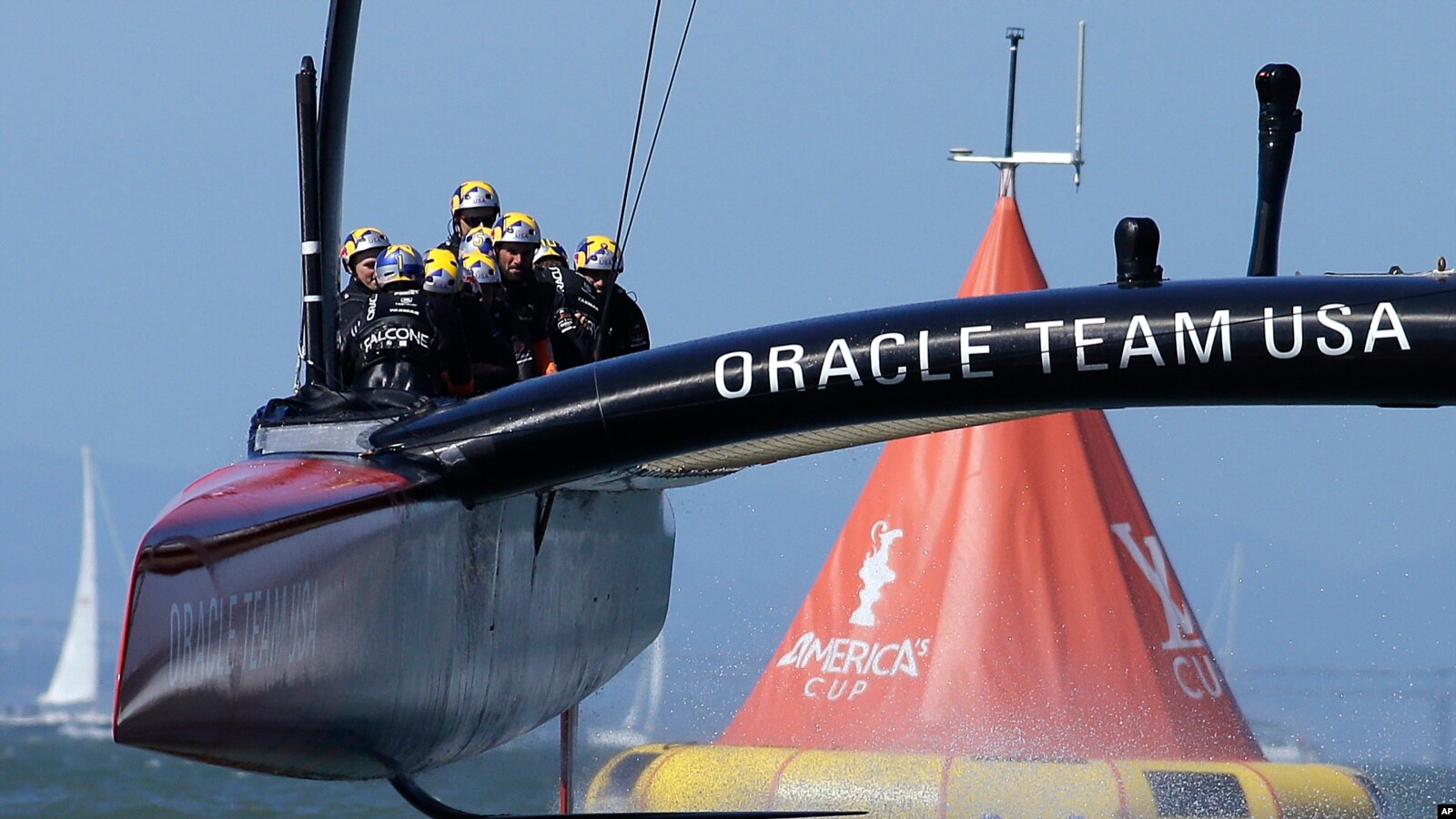
In September 2013, Larry Ellison had a scheduling problem. Oracle OpenWorld was underway in San Francisco, with thousands of customers gathered to hear about the business of software. Out on the bay, his sailing team was trying to rescue its America's Cup campaign. He missed a scheduled keynote to watch the racing. Customers could reasonably expect the chief executive to turn up. The wind had declined to make an appointment.
Oracle Team USA had been down 8-1 against Emirates Team New Zealand. The challenger needed one more point. Ellison's team needed eight consecutive wins. A two-point penalty for illegal modifications in an earlier competition had made the arithmetic particularly unfriendly. It was an awkward position for a businessman accustomed to talking about the weaknesses of his rivals.
By September 25, Oracle had won the deciding race and retained the Cup, 9-8. Ellison joined the crew for the celebration. Skipper Jimmy Spithill and the sailors had done the racing; Russell Coutts had led the team. The owner's money had helped assemble the enterprise. All three distinctions matter. A fortune can purchase a formidable boat and still leave its owner watching somebody else cross the finish line first.
The episode offers a useful way into Ellison's life. He likes a contest with identifiable opponents, technical problems and a result that cannot be talked into existence. He also likes being able to change the conditions of competition. His boats, his company and his sporting investments suggest the same recurring interest: find an arena, study its machinery, spend what it takes to enter.
Eight consecutive wins. Oracle's two-point penalty meant it needed 11 race victories to reach nine points.
An idea with somebody else’s name on it
Lawrence Joseph Ellison was born in New York on August 17, 1944, and grew up in Chicago with his adoptive parents, Lillian and Louis Ellison. He attended the University of Illinois and later the University of Chicago, leaving both without a degree. The familiar dropout label compresses years of uncertainty into something that sounds like a strategy. His eventual success does not make every earlier departure a carefully plotted move.
California gave him programming work and a way to earn a living through a skill rather than a credential. His early employers included Ampex. The work concerned databases, which sounds dull until you consider how much of institutional life depends on knowing where things are, who owns them and what happened to them.
The crucial intellectual contribution came from Edgar F. Codd, an IBM researcher. His relational model treated information as tables whose relationships could be queried. Ellison did not invent that model. He saw a commercial opportunity in implementing it. Giving him credit for the business requires leaving the scientific credit where it belongs.
In 1977, Ellison, Bob Miner and Ed Oates founded Software Development Laboratories. Their first office in Santa Clara measured 900 square feet. In 1979, the company released Oracle V2, a commercially available SQL relational database. The number was a small piece of theatre: the first release carried the reassuring suggestion of a second attempt.
Think of a business with separate lists of customers, orders and products. A relational database lets it ask which customers ordered which products without designing a new filing system for every question. The commercial value lies in the questions it makes possible. Ellison's opportunity was to sell a useful implementation while a new approach to information was still becoming an industry.
The invoice arrives
Oracle went public in 1986. Its early growth gave Ellison money, visibility and an expanding field of rivals. Those achievements also made the company's operating habits consequential. In 1990, aggressive sales practices and revenue accounting helped bring Oracle close to bankruptcy. It cut jobs and had to confront the distance between selling software and reporting a sound business.
That episode belongs beside the founding story. Growth had outrun discipline. The correction required more than another persuasive presentation. Customers, employees and shareholders paid attention to the accounts because accounts are where a company's promises acquire dates and numbers. A founder may enjoy uncertainty; the people depending on him still need the payroll to clear.
Ellison remained chief executive until September 2014, when Safra Catz and Mark Hurd became CEOs and he became executive chairman and chief technology officer. Software and hardware engineering continued to report to him under the announced arrangement. The change in title preserved a direct connection to the product while moving other responsibilities to colleagues.
He had spent 37 years as CEO. That span complicates the image of the impatient entrepreneur. Oracle demanded the repetitive work of maintaining products, supporting customers and persuading large organizations to buy again. Whatever pleasures the public battles supplied, the enterprise survived through work that rarely gets a champagne shower.
A microphone is also sporting equipment
Ellison's public style makes technical rivalry unusually visible. When he joined Twitter in 2012, his first message attacked SAP's cloud position. Oracle confirmed the account belonged to him. Some executives use a new communication channel to thank their teams. Ellison used his to identify an opponent. The introduction was economical, if unlikely to earn him a manners prize.
There is a quieter counterpoint in his interviews. He has described wanting employees willing to challenge his judgment. He has also recommended programming as a discipline because a computer follows instructions with unforgiving logic. “Computers are unforgivingly logical, and they'll do exactly what you tell them.” The attraction is understandable: the machine supplies feedback without needing to manage the boss's feelings.
His admiration for Japanese culture adds another wrinkle. In a 1995 conversation, he discussed the value of subordinating individual ego to a group on engineering projects. “I love Japan. I love the culture.” Coming from a founder with such a recognizable public persona, the interest in collective discipline is revealing. His teams have needed both the visible sponsor and the people willing to spend their evenings correcting what the sponsor promised.
Steve Jobs was a friend. Their connection is a reminder that Ellison's world included people who could meet him as a peer rather than a customer or employee. The software industry often markets itself through lone founders. Its history contains friendships, collaborators and rivals who made the founders' work possible, or at least made their evenings more interesting.
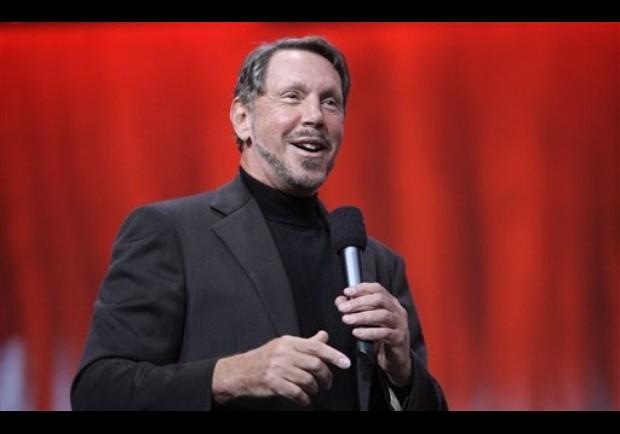
Why buy a seat when you can buy the tournament?
In 2009, Ellison bought the Indian Wells tennis tournament and its venue. Tennis furnished a different kind of ownership from software: players competed on court, spectators occupied seats and the event needed a reason to bring everybody back the following year. The purchase turned a sporting interest into responsibility for a place and its recurring spectacle.
The America's Cup victories in 2010 and 2013 carried similar attractions, with more engineering and wetter shoes. Sailing puts design decisions into immediate contact with weather. A clever argument has little use when a rival boat is moving faster. For someone who sells technology, the sport offers the appealing cruelty of a public demonstration.
Coutts and Ellison went further in 2018, founding SailGP. The circuit uses identical F50 catamarans and national teams in races held close to shore. Identical boats give spectators a clearer contest between crews. A repeating circuit also offers something an occasional trophy challenge cannot: a sporting product that can build habits among viewers.
By June 2026, all 13 SailGP teams had private owners following the Black Foils transaction. In July, the league published a growth strategy running to 2030. Those developments extend the story beyond Ellison's personal recreation. He and Coutts helped create an organization that other investors wanted to join. Ownership becomes more interesting when it produces something other people can own too.
The island has neighbours
Ellison bought approximately 98 percent of Lanai in 2012. The percentage is so startling that it tends to end the conversation just when the useful questions begin. Land is a different asset from a racing boat. People live on it. Decisions about development, access and employment have consequences beyond the owner and his guests.
His property interests make the scale of his wealth visible in ways a stockholding cannot. Yet calling Lanai a private island can obscure the community there. Owning most of the land does not turn every resident into a supporting character in a billionaire's biography. The island remains a place with its own daily life.
His declared principal residence is now Manalapan, Florida. Reporting published in February 2026 traced that change to a domicile declaration filed in May 2023. It is a useful distinction between an event and the date the public learns about it. Ellison's geography has changed; the tendency to make substantial commitments to particular places has endured.
The next opponent is a construction schedule
Ellison remains Oracle's executive chairman and CTO. Clay Magouyrk and Mike Sicilia became co-CEOs in September 2025, with Catz moving to executive vice chair. His present work sits inside a company that is turning its long experience with enterprise data toward cloud infrastructure and artificial intelligence.
Oracle was named an initial equity funder of Stargate in January 2025. The project announced an intention to invest $500 billion over four years in American AI infrastructure. That figure describes an ambition, rather than a completed expenditure. Buildings, electricity and equipment have to follow the announcement before the ambition becomes usable capacity.
The latest quarterly figures make the wager more tangible. For the quarter ended August 31, 2026, Oracle reported $7.4 billion in cloud infrastructure revenue, up 121 percent from a year earlier. It also reported negative free cash flow of $5 billion as it invested in expansion. Those numbers capture the attraction and the bill arriving together.
The work is physically demanding in a way the word “cloud” politely conceals. Computing needs sites, power and machines. A customer contract cannot cool a server. The company must deliver enough capacity, on time and at a workable cost, to turn demand into a durable business. Ellison's appetite for the contest has found an opponent with no interest in being mocked at a keynote: a construction schedule.
At 82, he is still attached to the technical job. His life has included a modest office, an accounting reckoning, tennis grounds, an island and boats that made their owners look either very clever or very foolish within minutes. The latest chapter asks an old question at a new scale: can the enterprise deliver what its founder sees? The answer will arrive in operating results, completed facilities and customers who choose to return. Ellison has given himself another reason to watch closely.
“I love Japan. I love the culture.”Larry Ellison / 1995