The Profile / Founders
Krishna
Dosapati
Built the networking app that doesn't ask you to post. 500,000 people showed up anyway.
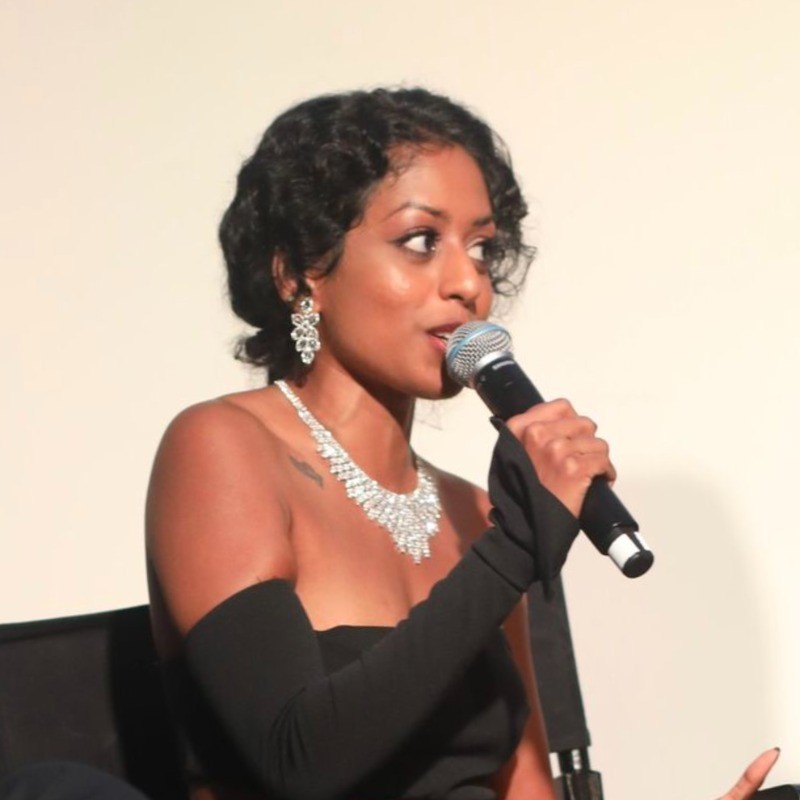
FILE: K. DOSAPATI / MANHATTAN / NETWORKING'S QUIET REVOLT
Built the networking app that doesn't ask you to post. 500,000 people showed up anyway.
Krishna Dosapati runs a networking app with no feed, no posting requirement, and no infinite scroll. In an industry addicted to content, that's the entire feature.
Clockout sits on the App Store somewhere between Tumblr and Meetup. It has cleared 500,000 downloads, hit a #19 ranking, and pulled in seven figures of recurring revenue inside ten months. The user count is the easy headline. The harder one is the product philosophy underneath it: Krishna would rather you put down the phone and meet someone in a bar in Tribeca than watch a thought-leader video about meeting someone in a bar in Tribeca.
She does not pretend this is a small bet. Clockout has expanded across the United States and into Canada. London is queued up. The investors who wrote checks - Evite, Gaingels, Baytech Ventures - did so because she sold them on a thesis most of social media has abandoned: that Gen Z professionals are tired of being audiences, and ready to be participants again.
It is a quiet revolt, dressed in a clean app icon and a confident press tour.
Networking should feel natural, local, and rewarding - not transactional.- Krishna Dosapati, on building Clockout
App Store + Google Play, climbing past Tumblr, Meetup, Skype, and Linktree along the way.
Peak charting in a category historically dominated by giants with calendar-decade head starts.
Hit on the strength of paid memberships and partner activations, not ad inventory.
Evite Corporation, Gaingels, Baytech Ventures. Seed round closed in June 2025.
National syndication broadcast Clockout's launch story to a startlingly large daytime audience.
USA, Canada in market. UK arriving next, with London as the first European pin.
Krishna's path to Clockout reads less like a straight founder origin and more like a switchback trail. NYU Stern came first - a finance education at the school that mints them. Then Unilever, which is where many people learn what scale looks like before they ever build it. Columbia followed, for a Master of Public Administration - a degree that signals as much about how she thinks (systems, civic life, the public good) as where she's been.
The instinct showed up early. While other Stern graduates were sliding into banking analyst seats, she kept looking sideways - at how communities form, why some cities feel social and others don't, and what happens to a generation that learned to network through screens during a pandemic.
Clockout was not invented in a lab. It was assembled in a city that demands one. Manhattan asks young professionals to perform two contradictory roles: be ambitious enough to climb, be available enough to play. The platforms that grew up alongside her career mostly served the first half. The second half got delivered through group chats and rumor mills.
The product she and co-founder Manasa Grandhi built fills that gap. Clockout sends members to social events, into nonprofit boards, onto sports leagues, into interest-based communities. The AI does the matching. The humans do the showing up. There is no leaderboard for thought leadership.
It launched in New York with about 4,000 members, a number Krishna treated like a focus group rather than a milestone. The product evolved fast. Clockout 2.0 shipped in 2024. By 2025, the chart positions and ARR figures were what the press wanted to talk about. By 2026, the question had shifted from "does this work" to "how big does this get."
Her answer is unhurried. The London pin matters because it's a different city, different professional code, different idea of what after-work looks like. If Clockout works there, it works in most places.
Estimated downloads, illustrative.
A viral claim alleged Clockout required an $80,000 salary to join. Krishna went on the record, repeatedly, to clear it up. The only requirement, she said, is being a working professional. Few founders get to debut on national TV by debunking a price tag they never set.
Her public Instagram handle, @travelwithkrishna, leans into travel rather than the founder grind. In an era of LinkedIn humblebrags, that quiet edit is itself a brand statement.
Clockout's earliest version launched with roughly 4,000 NYC members. Krishna and Manasa treated them like a focus group, not a metric. Most of the product DNA people now love was written from that loop.
True networking isn't clicking a button. It's about building meaningful relationships.- Krishna Dosapati
Built Clockout alongside Manasa Grandhi. The two of them framed the product as an antidote to pandemic-era professional isolation, not a LinkedIn killer.
Evite Corporation. Gaingels. Baytech Ventures. The Evite checkmark is the most telling - a card company that understands invitations as social objects.
ABC News, Bloomberg, Fox News, CBS, KRON4, The Cut. The 68-station Fox syndication delivered an unusually large daytime reach for a seed-stage social product.
New York, California, Texas, Arizona, Boston, Washington D.C. Then Canada. The model: dense urban professional populations first.
NYU Stern undergrad. Columbia MPA. A finance pedigree, a public-policy lens - and the patience to take five years between the two.
Community over content. People over feeds. Real rooms over reaction images. A simple ideology that turns out to be hard to ship.
Clockout's founder makes her case for why LinkedIn is failing Gen Z - and what a better networking primitive looks like.