Kotaro Adachi noticed a queue at a TechCrunch event in the United States. In a room full of founders and investors, people were waiting to exchange business cards with editors. He asked why. They wanted their companies covered. For an entrepreneur who had spent years working out how Japanese office equipment could find customers overseas, this was a different sort of distribution problem: a young company needed a route into somebody else's attention.
The scene stayed with him. Coverage could make a business visible; an event could put its founders within speaking distance of people who might help it grow. Back in the Philippines, those activities became part of the thinking behind TechShake, the company he co-founded in 2016. A line for an editor had suggested a business with several doors.
Today Adachi is TechShake's CEO and co-founder, working across Japan and Southeast Asia. His career connects some unlikely settings: secondhand office-equipment stores, a Madrid business school, startup interviews and conference halls. The continuity is his interest in getting a business across a boundary. Sometimes that boundary is a country's import rules. Sometimes it is the few feet between two people who have yet to meet.
First, find a buyer for the copier
Adachi's first commercial map included Russia and China. While he was a student, his sister was studying in Moscow and pointed him toward Officebusters, a young Japanese company exporting used office supplies. He joined in 2003. His work included selling Japanese equipment to Russia and sourcing products from China, an early education in how prices, supply and geography fit together.
The Philippines gave that education a place to settle. In 2006, he began developing Officebusters' local business, working with LICA Group. Before there could be a network of stores, there had to be a fairly plain answer to a fairly plain question: would people buy these secondhand computers and copiers? An office machine has limited patience for a persuasive presentation. Eventually, somebody must want to put it in an office.
Adachi spent seven years building the operation. His later career biography records 15 branches and more than 120 employees. The scale matters because this was work involving outlets, products, staff and sales channels. Long before he advised other companies on entering Southeast Asia, he had taken responsibility for making an overseas operation function.
There is a useful earthiness to that beginning. Talk about international business can drift toward maps decorated with arrows. Selling used equipment brings the discussion back to customers and local conditions. In Adachi's subsequent work, the recurring emphasis on partners has that same practical quality: expansion needs somebody who understands the place where the customer lives.
the business
later career account
later career account
Madrid, and the people who replied
He then paused his corporate career for an MBA at IE Business School in Madrid. By December 2014, he was discussing the experience alongside fellow Japanese graduates Miki Matsuoka and Takashi Inaba. He had considered the degree for years and spent about two years preparing for admission. The intention was already to start a business of his own in Asia.
What he valued in Madrid included the people beyond the classroom. He had met more than 50 IE graduates in the Philippines before choosing the school. Later, when seeking an internship, he contacted members of its international community and found people willing to answer. He described the network of professors and graduates across more than 60 countries as an asset.
That detail gives his present occupation a personal antecedent. He had experienced what an accessible network could do for an individual trying to make a move. A reply from someone abroad made the next step more imaginable. A community became useful at the moment one of its members answered an email.
The MBA period also preceded an internship at Pegasus Tech Ventures and the American visit during which he encountered the queue for TechCrunch editors. He returned to the Philippines with operating experience, a wider circle and an idea about combining media with gatherings. It was an unusual collection of ingredients, though each addressed a problem he had already met.
“My goal is to be a bridge person”
Kotaro Adachi · 2024
Give Manila a room of its own
TechShake's early work put Adachi on the interviewing side of the table. In May 2016, an interview with ProudCloud founder Jay Fajardo carried his name. Fajardo described the development of the Philippine startup community, including RoofCamp, a gathering for people interested in building things together. Adachi was helping document a scene that was still working out how to assemble itself.
His co-founders brought complementary experience. Fatima Pasion Yambao's background included operations and user experience; Paolo Dominic Rentero worked in entrepreneurship and partnerships. The company's work expanded across stories, events, startup programs and consulting. Its current team has dedicated responsibilities for innovation programs, market entry, events and communications. Useful introductions take administration, however effortless the handshake may look.
IGNITE, launched in 2017 with partners including Dentsu and Brainsparks, gave the effort a recurring physical setting in Manila. Bringing international participants to Philippine founders changed the geography of access. For someone building a company locally, meeting a visiting investor or corporate representative could begin with attending an event at home.
The event also placed Adachi among people making decisions about which businesses deserved a closer look. A July 2017 Seedstars announcement listed him on its judging panel in the Philippines. He was participating in the machinery around young companies: asking questions, examining pitches and helping create occasions where a founder could be heard.
By 2024, his conference appearances included a SusHi Tech Tokyo panel with Techsauce co-founder Oranuch Lerdsuwankij and Startup Island TAIWAN's Allen John Ku. The conversation crossed the same boundaries as his business. A conference schedule is a small document, but the names alongside one another reveal how a regional professional circle takes shape.
- 2006Build the operationOfficebusters · Philippines
- 2016Tell the storiesTechShake · Startup media
- 2017Convene the roomIGNITE · Manila
The introductions acquire an address
As the network grew, Adachi helped put more formal arrangements around it. In May 2025, TechShake joined KUMPUL of Indonesia, Techsauce of Thailand and InnoLab Asia of Vietnam in launching ATLAS in Tokyo. The alliance brought organizations with different local relationships into a shared regional structure.
A month later, Adachi represented TechShake at the launch of SEA Business Connect in Jakarta. TechShake joined as a community partner, supporting a platform intended to help companies expand in Southeast Asia. The sequence is revealing: he was working through organizations that already had their own relationships, adding links between existing circles.
In April 2026, TechShake incorporated its Japanese business and opened an office in Tokyo's Takanawa Gateway district. Adachi led the expansion alongside Rentero and Noriyasu Fujikura. Japanese partners gained a registered local counterpart, while the company retained operations in Singapore and Manila. An international relationship now had somewhere in Japan to receive visitors.
The Tokyo office began hosting activity around market entry, including an ASEAN forum co-organized with LiSH, JR East's Link Scholars' Hub, during SusHi Tech Tokyo 2026. The work around it includes consulting, recruitment, training and programs linking corporations with startups. For Adachi, the question of who meets whom increasingly comes with the further question of what support they need afterward.
A corridor works in both directions
On May 29, 2026, Adachi and Brunei Innovation Lab representative Qawiem Yacob signed an agreement at LumineLabs in Pasig. The planned cooperation included joint promotion, market and investment insights, innovation tours and market-entry programs. Adachi described access for Bruneian founders to the Philippines alongside a route for Philippine startups into Brunei and the wider BIMP-EAGA region.
In July, the Thailand-Philippines Business Forum supplied another setting. SEA Bridge exchanged agreements with five Philippine organizations, including TechShake. Their work together would include joint market-entry programs and reciprocal access to SEA Bridge's Gen SEA Summit and TechShake's IGNITE. Adachi's description was concrete: bring Thai companies to IGNITE and match them with Philippine startups and corporations.
These are agreements to do work, with their value depending on what follows. Still, the shape of the ambition is clear. A Philippine founder should have access outward; a visiting business should have help finding its way in. Each side brings something the other might need, and each needs a local counterpart who can make an introduction meaningful.
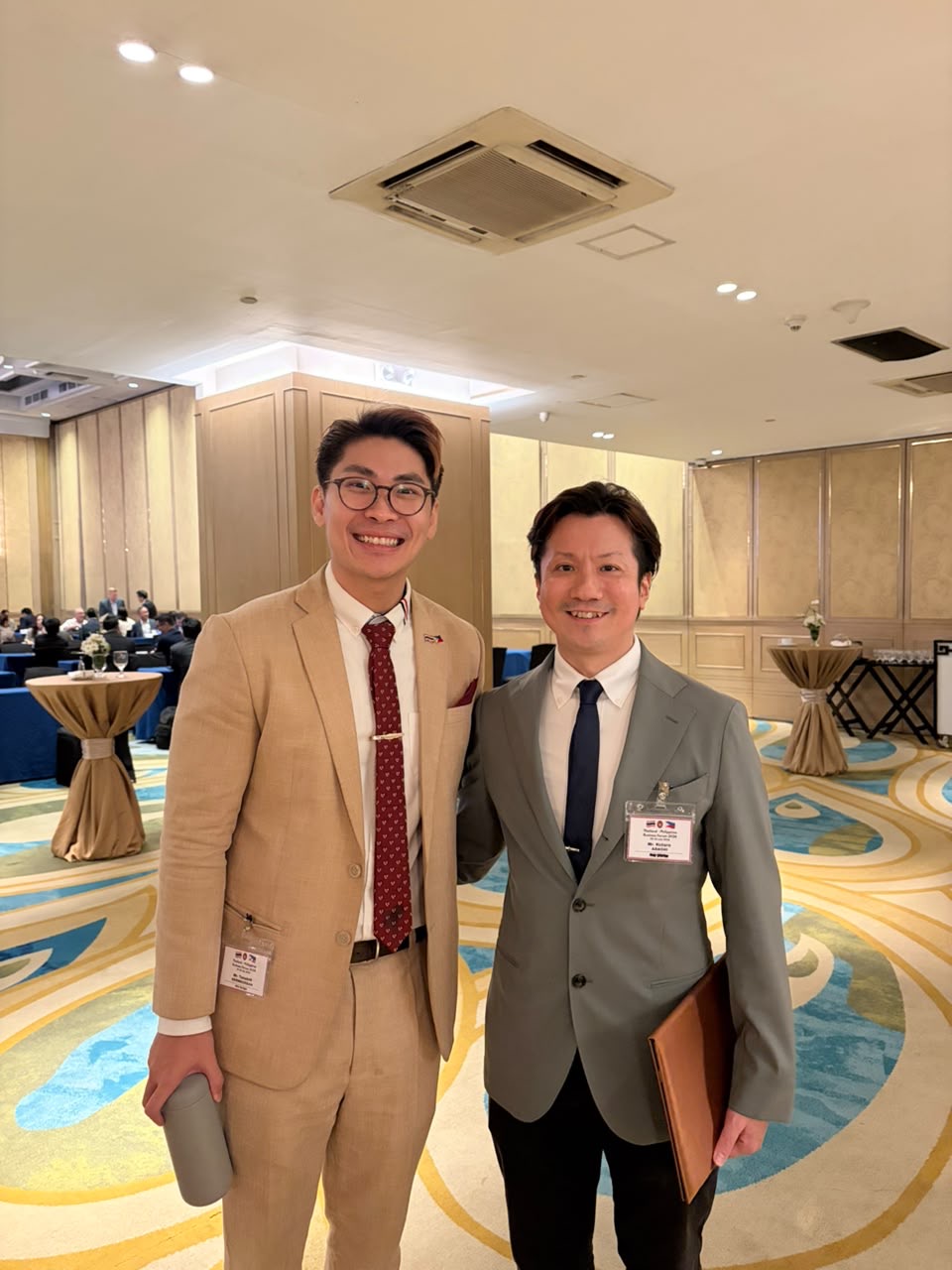
That outlook also makes room for a broader cast than the founders who occupy conference stages. Corporate teams, public institutions, investors and program operators all appear in Adachi's work. Their interests differ. Putting them in a photograph is relatively straightforward. Designing an activity that gives them a reason to return requires more care.
A career he wants to keep
Adachi's public community profile offers a modest description of his interests: business development, sales and strategic partnerships. It also lists mentoring and sharing expertise among the things he wants to do. These are apt ambitions for someone whose work depends on other people's willingness to take a conversation further.
He has expressed an interest in venture investing, along with a desire to keep working in venture businesses throughout his career. His stated aim includes helping Southeast Asian startups while contributing to Japan. The attraction appears to lie in continuing the work: more businesses to understand, more people to connect, more unfamiliar markets to make approachable.
There is a pleasing circularity in the journey from selling office equipment to arranging the meetings held around it. The products changed, and the circle widened. Yet the practical questions remain recognizable. Who needs this? Who understands the market? Who should be in the conversation? Adachi once stopped to ask why people were standing in a queue. He has spent much of the time since helping decide who ought to meet at the front of it.