A Canadian payroll company was already halfway through changing its software when it needed another engineer. The architecture had been chosen. Work had begun. Customers were still using the product. Arriving with a grand new plan would have been rather like stopping a dinner service to redesign the kitchen.
Kitrum sent a senior engineer into that unfinished migration. According to its case study, the assignment was to understand the existing decisions, continue the refactoring and keep releases moving. There was no dedicated quality assurance team. Minor regressions appeared and were fixed. It is a small, unusually revealing story: useful engineering sometimes begins with resisting the urge to start over.
- Built for live products, legacy systems and vendor handovers.
- Choose full delivery ownership or engineers inside your team.
- Published AI code audit range: $15,000-$25,000.
01A company for the second act
Kitrum is a software engineering services company with Ukrainian roots and a Florida headquarters. Its current target is a business with a product in production, an engineering team and consequences when something goes wrong. Its LinkedIn profile describes mid-market and enterprise customers, typically with 200 to 500-plus employees. A payroll error or broken checkout gives “technical debt” a less abstract meaning.
The menu includes legacy modernization, product enhancement, data engineering, testing, mobile development and AI work. Customers include digital lender Lulalend, commercial property financing platform StackSource and fitness technology company Proteus Motion. These are different businesses with a shared requirement: software must keep doing its job while somebody improves it.
That positions Kitrum within a crowded market of outsourced engineering firms. Buyers can also recruit internally, hire individual contractors or engage another development company. Kitrum’s distinction is its emphasis on inherited systems and responsibility in production. That is a positioning claim buyers can test: ask who owns an incident, how a release is reversed and what the incoming team needs before touching code.
02The robot on the touchline
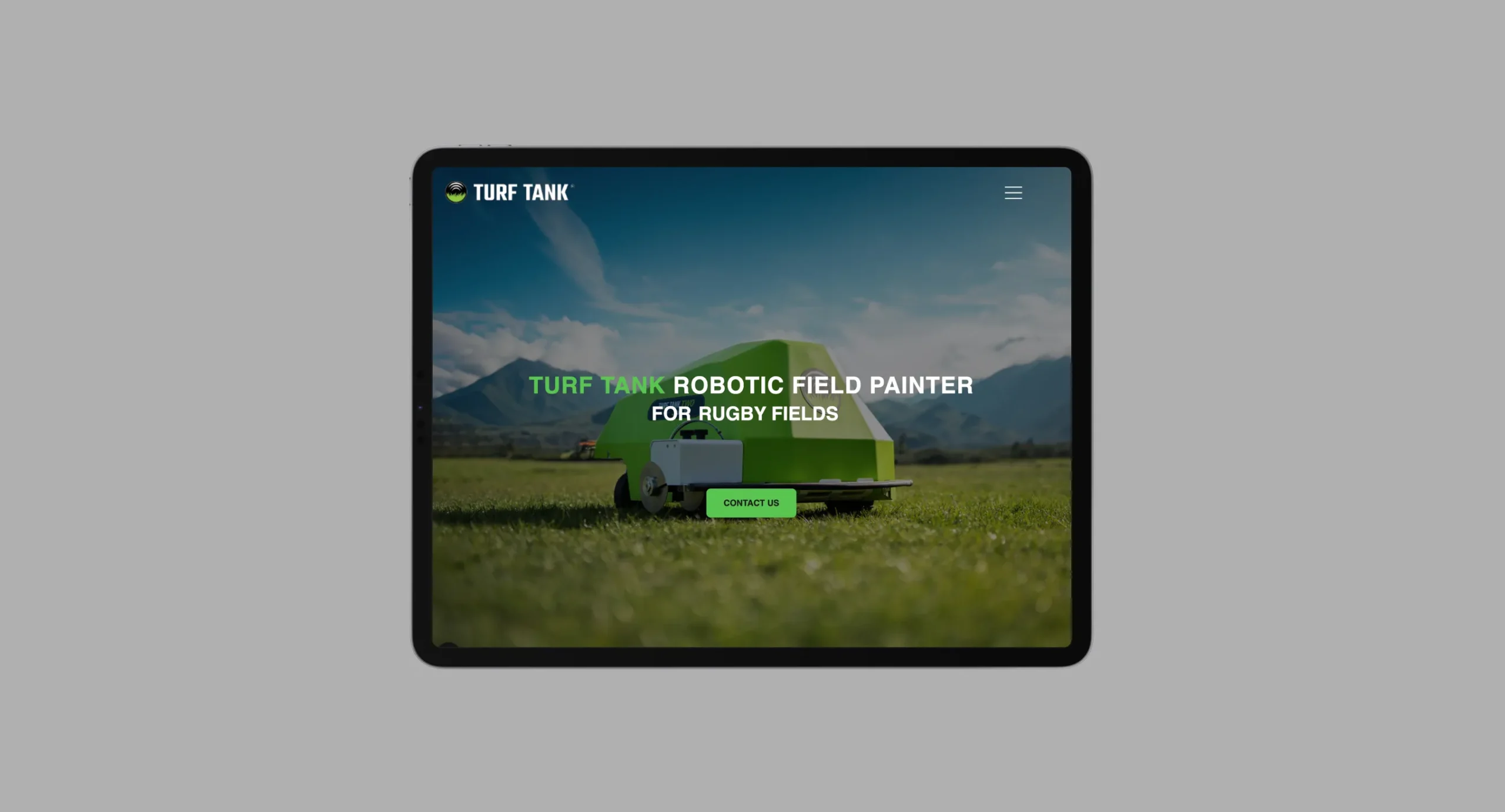
To see the range, consider Turf Tank, a Danish company whose robots paint athletic fields. Kitrum’s account traces the machine’s beginnings to a Lego prototype. By the time its engineers became involved, the task was to help take control of the robot into a mobile application, working alongside Turf Tank’s own developers.
The work combined Flutter, .NET, Azure and the customer’s APIs. Users could manage fields and robots, track machines through GPS and switch to a manual joystick. Geometry was part of the job. So were accounts, interfaces and software layers that could be tested independently. A football pitch turns out to be a reasonably good antidote to vague talk about digital transformation.
The distinction matters for customers evaluating expertise. Listing programming languages tells you little about whether an engineer understands a workflow. Here, the workflow ends in paint on grass. In lending it ends in a financial decision. The technology earns its place by helping someone complete that particular task.
03Who holds the steering wheel?
Kitrum offers two broad relationships. In managed delivery, it takes responsibility for an initiative. In augmentation, its engineers join the customer’s team. The choice determines who makes decisions, coordinates work and carries delivery responsibility. A company with strong technical leadership may need specialist capacity. Another may need a partner to organize and deliver an entire stream of work.
The commercial arrangements can include time and materials, fixed price, a monthly run rate or a hybrid. On Clutch, Kitrum lists a $25,000 minimum project and hourly rates of $50 to $99. Those are directory figures, rather than a quote for a particular system. Scope, staffing and the condition of inherited code determine the actual bill.
04First, stop losing the messages
One enterprise engagement shows what this work looks like below the interface. A customer wanted real-time activity analytics from a legacy system whose existing data contracts could not change. Kitrum describes adding a .NET component that observed activity, then passing events through Kafka and processing them with Flink before loading Redshift.
The crucial step came before dispatch. An outbox recorded events durably so a messaging interruption would not simply swallow them. Kitrum says this mechanism proved useful repeatedly in testing. The published result is a design intended to prevent message loss; it should not be read as an independent guarantee against every conceivable production failure.
The transferable lesson is precise: identify the information that must survive, then design for the interruption. Buying more developer hours does not settle that question. Neither does adding another dashboard. Reliability starts with deciding what happens between two systems when one of them stops answering.
- ObserveLegacy activity
- RecordDurable outbox
- DeliverKafka → Flink
- AnalyzeRedshift
05A price for understanding the code
AI adds a newer version of the inheritance problem. Kitrum markets a handoff service for AI-generated codebases, beginning with an assessment and a decision about which modules to keep, repair or rebuild. Its published ranges are $15,000 to $25,000 for a two-to-three-week audit, followed by $20,000 to $50,000-plus for stabilization, depending on risk and complexity.
The sequence is useful even for a buyer who never hires Kitrum: pay to understand the system before committing to replace it. A small prototype with no users and little operational risk may need a much lighter intervention. This offering makes more sense when customers, revenue or an approaching review make uncertainty expensive.
06What the company chose to keep
The business itself has had to choose. In a 2019 interview, co-founder Vlad Kytainyk said Kitrum had abandoned unprofitable projects it owned during 2018 and concentrated on B2B services. That is a more concrete explanation of focus than a new slogan. The account identifies the commercial disappointment; it does not assign it an invented dollar loss.
Kitrum’s current company history begins with two people on a Ukrainian balcony in 2016. Its 2024 anniversary account says 124 team members were relocated after Russia’s full-scale invasion and work moved online. Its culture page describes flexible schedules, language classes and reimbursement for coworking. Behind those ordinary benefits sits a practical dependency: clients need engineers who can keep working.
The company announced ISO 27001:2022 certification in March 2025, after preparation beginning in late 2023. An October 2026 update discusses maintaining that security system between audits and adapting training as AI changes risks. For a buyer, certification is one check in procurement; the daily habits are what make it useful. Kitrum’s most persuasive proposition lives there, in the maintenance of things people already depend on.