A cybersecurity engineer who took the long way to fintech - from Amman to San Francisco, with a stop at the CyberTalents podium - now runs Fintesa, the SaaS that hands any business a passport to 200+ payment corridors in roughly ten minutes.
Fintesa is what happens when a security engineer looks at international payments and decides the friction is a bug, not a feature. Khalid Alomari runs it out of San Francisco's 415 Mission Street stack, with a team that pings between California and Jordan and a customer list that stretches across continents.
The pitch fits on a sticky note. Any business. 200+ countries. Cards to manage merchant spend. Cashback. No conversion fees on 143 currencies. Compliant in ten minutes. That last word - compliant - is where most fintechs get tired and Fintesa gets interesting. Cross-border payment law is a maze of know-your-customer rules, settlement windows, and licensing quirks. Khalid's bet is that the maze can be wrapped behind a sign-up form.
That sentence has been on his profile since he traded an enterprise cybersecurity title for a founder one. It is plain. It is also the entire roadmap. Fintesa sits underneath the kind of merchant who has a customer in Riyadh, a contractor in Manila, and an invoice to settle in euros by Friday. The competition is not glamorous - it is the existing patchwork of correspondent banks, the spreadsheet, the wire confirmation email. Khalid is selling a sign-up button.
The capital story is unusual. Public records list $250,000 in disclosed funding. Fintesa's own materials describe turning that seed into roughly $500,000 of net profit on top of more than $100 million in GMV. In fintech, where founders routinely raise nine figures to chase margins, Khalid is running a payments company the way a corner store runs - small float, high turnover, tight discipline.
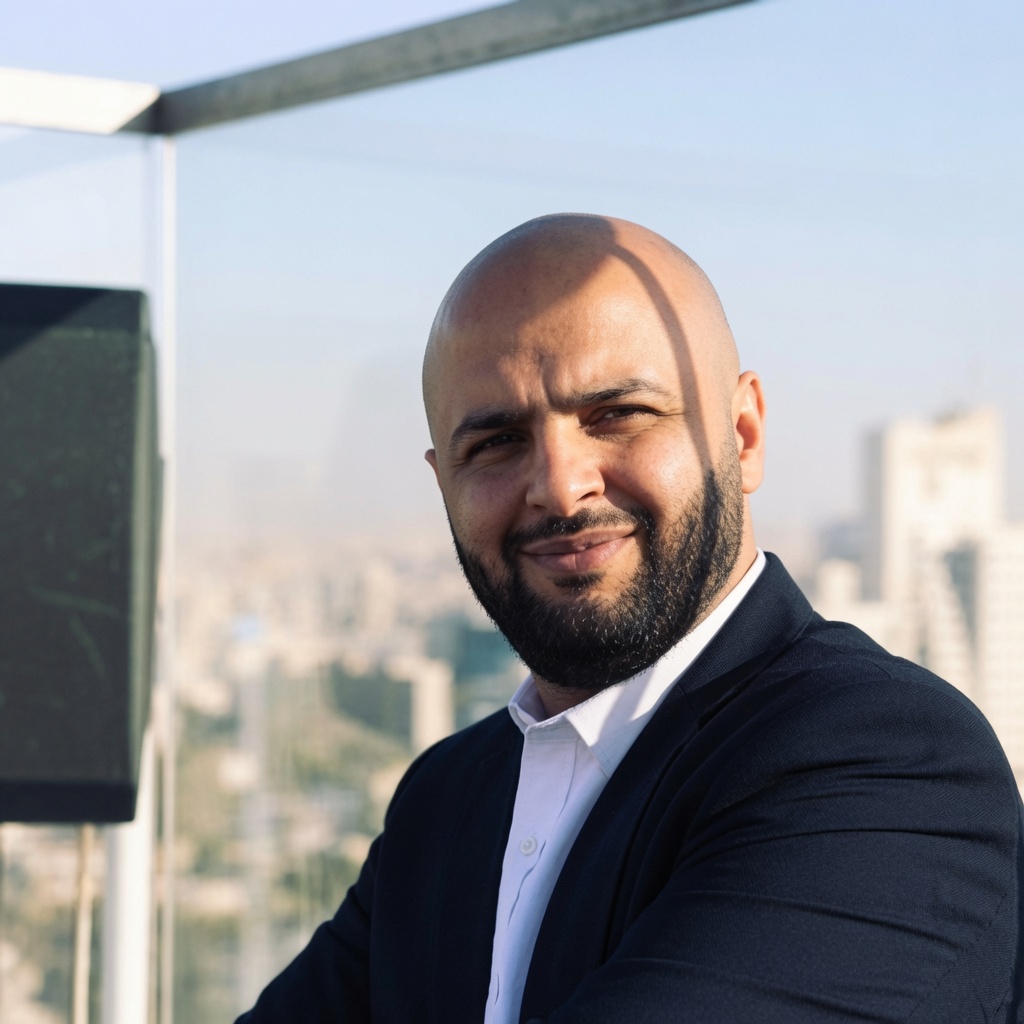
In 2019, while most computer science undergrads were grinding LeetCode, Khalid was ranked third in the world at CyberTalents - the regional ethical hacking competition that doubles as the Middle East's pipeline into security careers. He also took first at his university's graduation projects competition that year, and got named as one of the region's strongest security teachers. None of that screamed "payments."
His resume reads like a tour through the technology stack of modern enterprise: Microsoft, ArabiaCell, CyberTalents as an engineer, then TPG TeleManagement as Director of Engineering and Head of Cyber Security. He picked up the CompTIA trifecta - A+, Network+, Security+ - and the Microsoft and ethical hacking certifications that signal a person who actually likes earning credentials.
Then came TPD, where he served as CEO. TPD was acquired by Fintesa. Which is a clean sentence that hides a strange detail: by the time the dust settled, Khalid had effectively bought his own company into the new one. Founders normally cash out and leave. He stayed and rebuilt.
The move to San Francisco followed. 500 Global picked Fintesa for its S23 cohort. Y Combinator brought him through Startup School. The Jordanian engineer who used to teach ethical hacking now exhibits at Dubai's Step Conference one month and pitches at Demo Day the next.
Banks, processors, BaaS providers feeding the Fintesa rail.
Total payment volume that has moved across the platform.
Reported on $300K of invested capital. Most fintechs burn that in a month.
Lean enough that the CEO still answers Intercom tickets.
Backend, frontend, design, QA, project. The shape of a real product team.
From signup to first compliant transaction, per Fintesa's own marketing.
Khalid grew up in a region where small businesses live and die by their ability to take a card from someone three time zones away. Jordan is a place where remittance flows and freelance dollars matter as much as enterprise sales. When the engineer who watched all that built his own company, the first instinct was not to make another challenger bank. It was to build the boring plumbing that every challenger bank ends up needing.
The fintech category is crowded with companies racing to brand themselves. Fintesa is the rare one comfortable being a wholesaler. It is a B2B platform that sells the unsexy promise of working payment rails. The product page says it. The investor materials say it. The CEO's bio says it. Consistency is its own marketing.
Editorial estimate based on Fintesa's stated corridors.
Founders give themselves away in details. Khalid's bio carries his certifications next to his title - rare for a CEO, common for an engineer who refuses to stop being one. He still lists CompTIA A+ alongside Y Combinator. The man does not throw old credentials away.
His Instagram handle is @khalid.fintesa. Not his name. Not a personal brand. The company. That is either a marketing person's dream or a founder who lives at his job. Probably both.
Fintesa's tech stack reads like a startup engineer's pragmatic shopping list - Bootstrap and Create React App on the marketing side, React Native and Android for mobile, Stripe rails for the payments layer, Intercom for support, Apache for the box. No vanity infrastructure. Nothing on the page that does not earn its keep.
Then there is the cohort detail. 500 Global S23. Not Y Combinator proper, but YC Startup School. Two of the most recognizable founder programs in the world, used as a one-two punch rather than a single bet. He uses the brands the way an investor would.
The Mountain View accelerator that picked Fintesa for its S23 cohort. Sanabil 500 MENA Seed Accelerator is part of the same family - a useful bridge between Riyadh and Sand Hill Road.
Listed among Fintesa's lead investor relationships. The Silicon Valley platform that has historically been a magnet for fintech distribution deals.
Khalid is a Startup School graduate. Not the equity cohort, but the network that shapes how a generation of founders think about iteration speed.
Ask a founder what they want and most will hand you a TAM slide. Khalid's stated aspiration is more modest and more useful: make compliant cross-border payments a ten-minute setup instead of a six-month project, for any business, anywhere.
If Fintesa pulls it off, the upside is not glamorous. It is invisible. The win condition is a thousand small companies in a hundred small markets quietly running their checkout on top of his pipes. The kind of victory that does not trend on Twitter but shows up in settlement logs.
There is a second, quieter aspiration buried in the resume. A founder who grew up in Amman and built a security career in the Middle East before crossing to San Francisco is, by definition, building a bridge. The Fintesa team still spans both cities. The customers do too. In a fintech sector where the cross-border story is usually a marketing claim, Khalid's version is a logistical fact.
Seven words. No adjectives. The clearest mission statement in fintech this year.
Inside the capital efficiency of a payments company that refuses to burn.
Why Fintesa bet on speed over features and made compliance feel like email signup.
The career pivot from ethical hacker to fintech founder.
The TPD-to-Fintesa story, and what M&A looks like when both companies are yours.
The 500 Global S23 cohort and what changed when Khalid moved west.
A close read of the product design choice at the center of Fintesa's pitch.
Company: fintesa.co
LinkedIn: in/khalidalomari
Instagram: @khalid.fintesa
Company LinkedIn: Fintesa
Org chart: TheOrg profile
Crunchbase: Fintesa company page