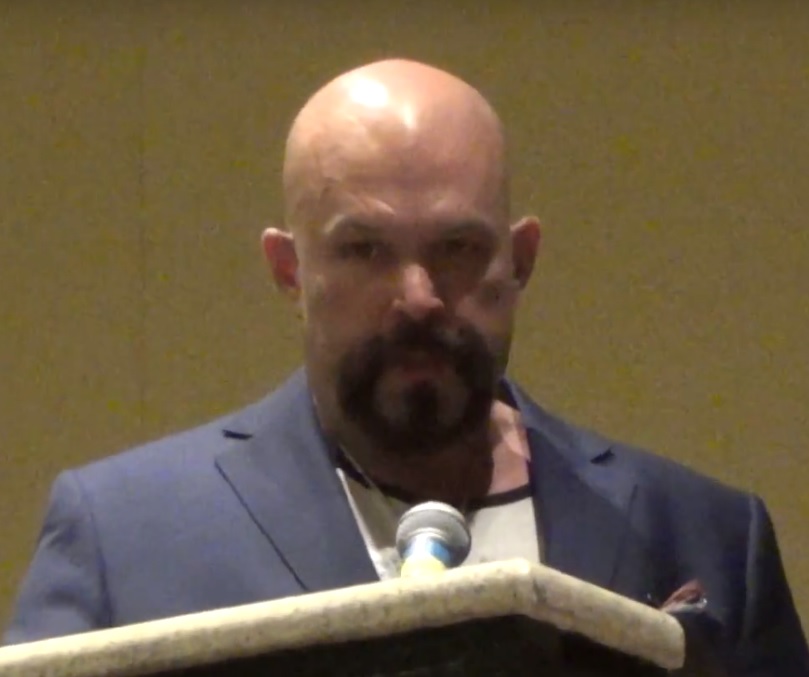
Most Monday mornings a newsletter called Wanderland lands in subscribers' inboxes, datelined from somewhere that does not usually carry a dateline. The name is a small joke that means it: wandering of the feet and wandering of the mind, given equal billing. Kevin D. Williamson writes it as national correspondent for The Dispatch, and the conceit is the whole method. He treats the country as a place to be visited rather than a thing to be argued about from a desk.
Alongside it runs Econ for English Majors, a column whose title is a confession. Williamson did not arrive at supply curves and price signals through a finance degree. He studied English literature and linguistics at the University of Texas at Austin, and he writes about economics the way a reader of novels writes about anything: looking for the human incentive hiding inside the spreadsheet. It is an unusual qualification for an economics columnist. It is also why people who do not normally read economics read his.
"The end is near and it's going to be awesome." — the title of one of his books, which tells you most of what you need to know about the temperament.
The long road in
The route is the story. Williamson was born in Amarillo, Texas, in 1972, and his career did not begin where ambitious American writers usually try to begin. It began at a newspaper group in Bombay — the Indian Express — about as far from the New York-Washington axis as a young reporter can get. From there came the unglamorous, irreplaceable apprenticeship of local journalism: the Lubbock Avalanche-Journal in Texas, editing jobs in Pennsylvania and Colorado, a stint editing a Philadelphia daily called The Bulletin that no longer exists.
Before he was a political writer he was a theater critic, serving as deputy managing editor at The New Criterion, a magazine of arts and ideas. He also ran journalism programs at the Institute for Humane Studies and taught at The King's College in New York. The portfolio reads like a man assembling tools rather than climbing a ladder: criticism, reporting, editing, teaching. By the time he became a national voice, he had done nearly every job a newsroom contains.
Fifteen years roving
National Review hired him, and he stayed roughly fifteen years, eventually as the magazine's roving correspondent — the title that fit him best. Roving meant leaving the building. While much of the commentariat hardened into people who reacted to the same wire copy from the same few cities, Williamson kept filing from the places the copy was about. His essay collection Big White Ghetto reported on rural poverty and decline in Appalachia and the rest of the country the coverage maps tend to skip.
He is not a comfortable partisan. A registered Republican until 2008, he became one of the conservative movement's most pointed internal critics, willing to publish a book called The Case Against Trump and to keep arguing his corner long after it stopped being fashionable on his own side. The Smallest Minority, his 2019 book, is essentially a treatise against the tyranny of the crowd — written, fittingly, by someone who has spent a career being out of step with one crowd or another.
In 2018 he was hired by The Atlantic and let go within weeks after a backlash over past remarks, an episode he wrote about himself rather than letting others narrate it. He landed at The Dispatch in 2022, the writer-founded outlet that gave him exactly the franchise the rest of his career had been pointing toward: a regular column, a roaming brief, and a long leash.
The style is the argument
What holds the bibliography together is not a policy program but a sensibility. Williamson writes long, reads widely, and reaches for the literary reference and the price of eggs in the same paragraph. He is a writer in residence at the Competitive Enterprise Institute, has published in The Wall Street Journal, The Washington Post, Commentary, Playboy, and the magazine where he once reviewed plays. The throughline is a belief that economics and culture are the same subject seen from two angles, and that the job of a correspondent is to go look.
He is, by the evidence of the work, suspicious of nostalgia, allergic to mobs, and more interested in how Americans actually live than in how they are supposed to vote. Seven books, fifteen years roving, one newsletter a week, and a column that admits in its title that the author is an English major doing economics anyway. The catch-up is worth it. He has been mid-stride for a long time.