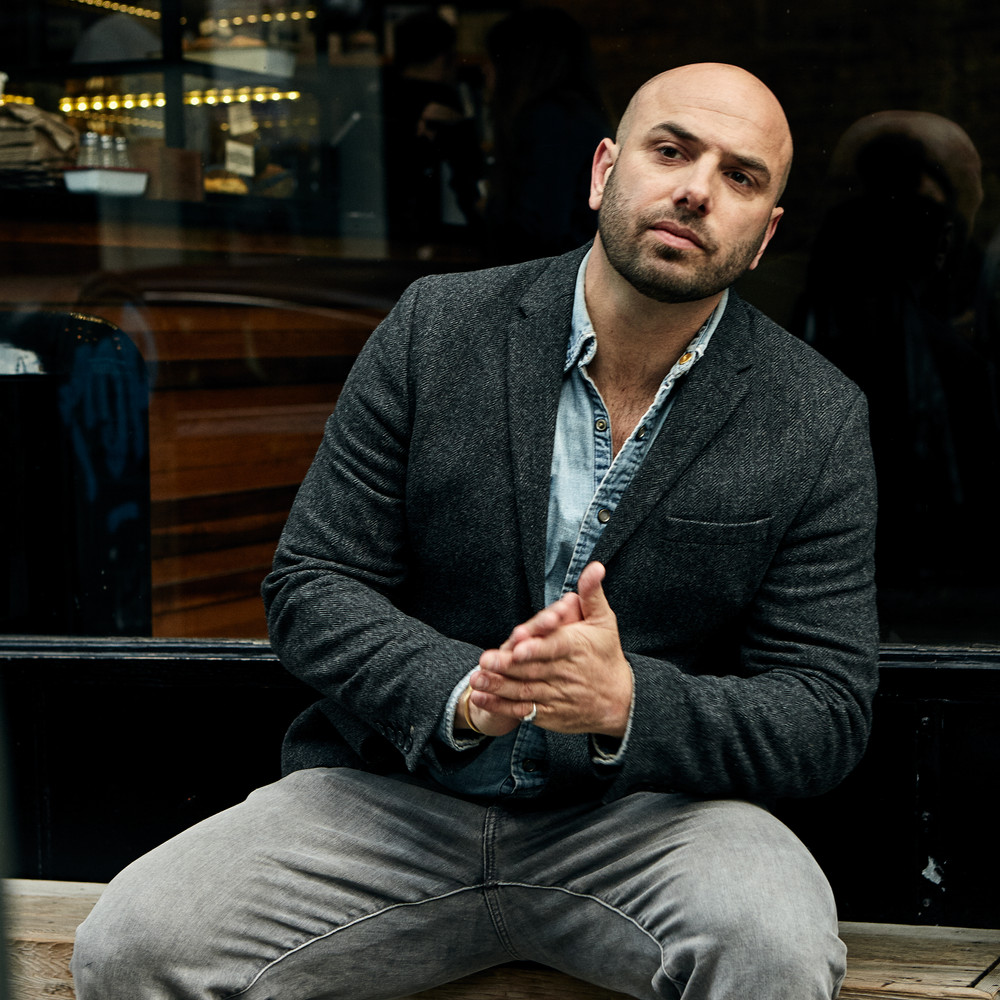
A correspondent who learned to build instead of just report
Most people who win a press award for exposing how banks help the rich dodge taxes spend the next decade chasing the next scoop. Alex Ragir went and built a company that pays the people who chase the scoops. That choice is the whole story.
Today Ragir is co-founder and co-CEO of Glimmer, a content-production platform with a vetted network of more than 40,000 filmmakers, journalists, photographers and creatives spread across 192 countries. The company has moved over $125 million in payments through 180 countries. If a Fortune 500 brand needs a drone operator in Nairobi, a director of photography in Seoul, and a showrunner in Mexico City - all by Friday - Glimmer is the rail that finds them, contracts them, and wires the money. Ragir built that network from zero.
He runs the company with co-CEO and CTO Doug Wehmeier, an unusual two-in-the-cockpit arrangement that splits the storyteller's instinct from the engineer's. Ragir is the one who has spent his life in the field. He knows what it feels like to be a freelancer waiting ninety days for an invoice to clear from the other side of the planet. That is not a market study to him. It is a memory.
"We've spent over a decade building infrastructure that allows creativity to flourish at global scale."
The Brazil years
Before any of the software, there was a notebook and a press pass. Ragir was a foreign correspondent and investigative journalist, reporting from Rio de Janeiro for Bloomberg News and from Sao Paulo for the Associated Press. He covered emerging markets at Bloomberg from 2006, and contributed to Businessweek and Bloomberg Markets. He was the kind of reporter who reads court filings for fun.
That habit paid off. In 2010 he won the Overseas Press Club award for the best reporting in Latin America. The work that earned it was not soft: he surfaced federal police evidence showing that major banks had helped wealthy Brazilians evade taxes and launder money. It is the sort of reporting that makes powerful people very uncomfortable and makes a young journalist's reputation.
Brazil did more than shape his byline. It shaped his life. He still keeps a foot in the country. He co-founded Cultiva, a Rio de Janeiro NGO built around urban farming and environmental education - teaching people to grow food in a dense city. And he serves as the US representative for Perolas Negras, the Black Pearls Academy, a regenerative sports-talent agency and Brazilian soccer team that supports refugees. The journalist who came to write about a place stayed to plant things in it.
There is a tidy symmetry in a financial-crimes reporter building a company whose hardest problem is money: moving it cleanly, legally, and fast across 180 countries, to people who are owed it. Ragir spent years documenting how money hides. He now spends them making sure it shows up where it should. The reporter learned exactly how broken cross-border payments are by watching the powerful exploit the gaps. The founder built a network that closes them for everyone else.
From Storyhunter to Glimmer
In 2012, in Brooklyn, the company that would become Glimmer was born as Storyhunter. The premise was simple and, at the time, slightly heretical: build a marketplace for producers, by producers. Newsrooms and brands needed video from everywhere; talented video journalists everywhere needed work and a way to get paid. Storyhunter put them in the same room.
For more than a decade it quietly became the industry standard. Storyhunter freelancers cranked out roughly 10,000 videos a year for some of the defining media franchises of the 2010s. Ragir was the architect behind digital-video operations for CNN, Al Jazeera, Discovery and Meta. Along the way he forged more than 200 creative partnerships with Fortune 5000 companies - the unglamorous, relationship-heavy work of getting big institutions to trust a distributed crew they will never meet in person.
A journalist's marketplace became enterprise software. The story stayed the same: get good people paid for good work.
10,000 videos a year. 100+ billion views on Meta alone. One vetted network behind it.
$210 billion a year. That's what global corporations spend producing content - mostly without financial controls.
Storyhunter chased stories. Glimmer chases the spark. Same founder, sharper aim.
In 2023 Storyhunter rebranded as Glimmer. Then, in October 2025, the company relaunched in earnest at Advertising Week in New York, repositioned as a global content-production platform rather than just a talent marketplace. The pitch grew up. Glimmer now sells itself to CFOs as much as to creative directors: AI-powered matching to find the right crew, plus the financial visibility and controls that finance departments have wanted for years. The company added creator campaigns, live events, social content, and a curated tier called Glimmer Select for production companies and specialist agencies.
The relaunch came with an advisory bench that signals how seriously the industry takes the idea. It includes Sandy Climan, producer of The Aviator and a former head of CAA; Alan Schulman, former Chief Creative Officer of Deloitte Digital; Robin Wood Sailer, a former Bloomberg and Dow Jones executive; and Dan Longhi of Sundial Ventures. Glimmer's client roster reads like a who's-who: Meta, CNN, Warner Bros. Discovery, Morgan Stanley, Bloomberg, the NYSE, Hearst and Starbucks.
"This is a platform where skilled cinematographers and creators can connect with Fortune 500 companies that need their talents."
Press freedom, not just paychecks
For all the enterprise polish, the mission has a stubborn idealistic streak that traces straight back to Ragir's reporting days. In 2017 the company partnered with UNESCO on the "We Are the Media" campaign at World Press Freedom Day in Jakarta, Indonesia. That is not the kind of collaboration a pure ad-tech marketplace bothers with. It is the kind a former foreign correspondent insists on. The early Storyhunter network was, in large part, independent video journalists in places where local reporting was thin, dangerous, or both. Empowering them to tell the stories that matter - and to make a living doing it - was the founding promise, not a marketing afterthought.
The business case grew up around that idealism rather than replacing it. Storyhunter raised venture capital in modest, deliberate increments - more than $4 million in early financing, including a $1.3 million round in 2017 - and spent over a decade compounding trust instead of torching cash. By the time it became Glimmer, the company had something most creator startups never get: a real network, a real payments engine, and a real list of repeat enterprise clients. That patience is itself a Ragir signature. Investigative journalism teaches you that the story worth having is the one you build slowly, source by source, until it is undeniable.
Glimmer's current shape reflects that maturity. There is the core marketplace; there is Glimmer Select, a curated tier of production companies and specialist agencies for clients who want more hand-holding; and there is the financial layer that turns scattered freelance spend into something a CFO can actually audit. Sixty-plus creative services now run through the platform, from drone operators and directors of photography to showrunners and full production studios. The thesis is that the future of corporate video is not one big agency - it is thousands of vetted independents, orchestrated by software.
The throughline
It is tempting to file Ragir under "journalist turned tech founder" and move on. But the more interesting truth is that he never really stopped doing the same job. Journalism is the business of finding the right person, getting them to tell the truth, and putting it in front of an audience. Glimmer is the business of finding the right creator, getting them under contract, and putting their work in front of a global audience. The medium changed from his own byline to other people's cameras. The instinct - go find the talent, clear the path, make sure they get paid - did not.
He also still keeps his hand in the work directly. Through Ginga Media and his consulting practice, he operates as a fractional chief revenue, operating or chief executive officer for other media and tech companies - business development, go-to-market, marketing strategy, PR. He is, in the most literal sense, a dealmaker. He likes the room where the partnership gets agreed.
Ragir lives between New York City and Miami Beach, with that recurring pull back to Brazil. Off the clock, the bio gets human fast: he is into nature, making music, and comedy. It tracks. The same person who can read a money-laundering case file can also riff. The investigative rigor and the creative looseness are not in tension. They are the two halves that make him good at building a home for other people's creativity.
"This platform provides financial visibility and controls that CFOs have desperately sought for years."
What is striking about Ragir's arc is how little he had to abandon to make the jump. The foreign correspondent who once persuaded sources in Sao Paulo to hand over sensitive documents is, functionally, doing the same persuasion now - convincing a global marketing chief to route a multi-country shoot through a network they cannot see, and convincing a freelancer in another hemisphere that the money will actually arrive. Trust is the product. The software is just how it scales. He has spent two decades collecting the kind of credibility that does not show up on a balance sheet, and then he turned it into one.
The bigger bet underneath all of it is a thesis about work itself. The world's best creative talent does not live in a few zip codes. It is scattered across 192 countries, often locked out of the biggest budgets by geography, currency, and the simple friction of getting paid across borders. Ragir's wager is that if you remove that friction - the contracts, the compliance, the payments, the vetting - creativity flourishes in places the old production model never reached. He has spent over a decade building the unglamorous plumbing to prove it. The award-winning reporter turned out to be just as good at the story you cannot see: the infrastructure under everyone else's.
What the network moves
Glimmer's footprint, in the figures Ragir and the company cite publicly. The scale is the point - a creator marketplace only works once it is everywhere at once.