Profile · Figure8 · Co-CEO
Maryellis Bunn
She built a pool of plastic sprinkles in the Meatpacking District in eighteen days. It sold out before opening. Then she named the category.
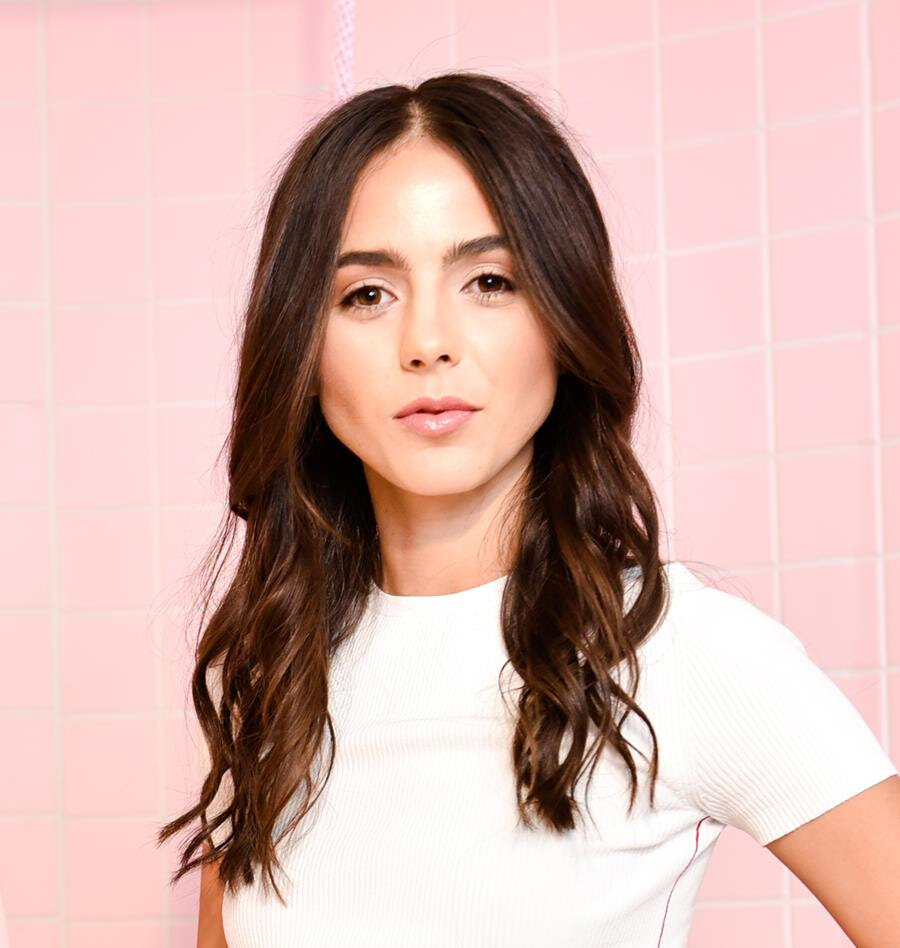
She built a pool of plastic sprinkles in the Meatpacking District in eighteen days. It sold out before opening. Then she named the category.
Maryellis Bunn runs a company whose main product is a room. The room is pink. At the far end of it sits a sunken pool filled with rubbery plastic sprinkles, into which visitors, having paid, remove their shoes and jump. The company - Figure8 - is valued in the neighborhood of two hundred million dollars, raised a forty million dollar Series A in 2019, and now operates permanent Museum of Ice Cream locations in New York, Austin, Chicago, Singapore, Miami, and Boston, with Las Vegas scheduled for 2026 and a ground-up California building announced in late 2025. Bunn is the co-founder and co-CEO. She built the first version herself, in a 3,000-square-foot vacant retail box in the Meatpacking District, in eighteen days, without prior construction experience. The opening sold out before it opened. People slept on the sidewalk to get in.
The framing you are supposed to use here is "attention economy" or "experiential retail." Bunn prefers "experium," a word she coined and which did not previously exist. This is not a small detail. Naming a category is a way of owning it. Every deck since 2017 that has tried to sell the physical world back to a smartphone-native generation is, in one way or another, a footnote to a phrase Maryellis Bunn made up.
Before Figure8, Bunn was the Head of Forecasting and Innovation at Time Inc., which is a job title that sounds invented and largely was. From that perch she watched a magazine try to translate itself into a phone. She left. She consulted for a while - Facebook, Instagram, Staples, Fortune, which is a portfolio that reads like a diagnostic of the exact problem she would eventually try to solve. Then she and Manish Vora, her co-founder, built the sprinkle pool.
The productive contradiction at the center of the business is that Bunn does not entirely believe in it. In a 2019 interview with Madame Architect she said, plainly: "Psychology tells us that as soon as you take a photograph with the intention of sharing it, it diminishes your ability to actually enjoy that experience." The Museum of Ice Cream is a business built on people taking photographs to share. Bunn appears to be aware of this. The move, then, is not to defeat the phone but to design around it - to build rooms so specifically constructed for the camera that the camera is no longer the point. You take the picture and then you jump in the sprinkles. The picture is the pretext. The jumping is the product.
Bunn grew up in Laguna Beach, California, the daughter of an artist. She moved to New York for school, took an undergraduate degree at NYU and a joint degree in business and design at Parsons. This is a fairly precise educational preparation for what she went on to do, which is to run a company that has to be simultaneously legible to visitors, landlords, and venture capitalists. The Parsons half explains the sprinkle pool. The NYU half explains the term sheet.
What she is working on now is scale. Museum of Ice Cream, for its first several years, ran on the pop-up logic that a temporary thing is more urgent than a permanent one. The pivot to Figure8 in 2019, backed by the Series A, was a bet that the experium could become infrastructure - a repeatable, permanent, city-specific format. Six years on, that bet is being tested at Museum of Ice Cream Miami (opened September 2024), Museum of Ice Cream Boston (December 2024), and the announced Las Vegas and ground-up California locations. The ground-up California building is the interesting one. Every previous MOIC has taken over a shell someone else built. This one will be a purpose-designed structure. It is the first time the experium gets its own architecture.
The company's stated inputs are more than fifty in number: entertainment, hospitality, event design, brand activation, experience architecture, immersive environments, bespoke experiential design, creative consultancy, visitor engagement, distraction-free spaces, beyond-inhibition environments. This is either a manifesto or a keyword strategy. In Bunn's telling, it's both, which is the honest answer.
Bunn has been named to the Forbes 30 Under 30 list in Art & Style (2018), to Ad Age's Creativity 50, and Museum of Ice Cream has been named to Fast Company's Top 10 Most Innovative Companies in Live Events. She uses a hiring test that she has described in podcasts: at the leadership level, she looks for people who teach her something on a daily basis. If they stop teaching her something, that is information. On what drives her forward, she has said the answer is "small morsels of everyday humanness" - a stranger saying hello after an exercise class, the kind of specific unremarkable moment that the phone is very good at not noticing. This is the emotional register of the company. Not spectacle. Presence, dressed up as spectacle so people will show up.
People are spending more time online because they haven't been given enough fruitful and meaningful creative experiences and spaces that are more engaging. — Maryellis Bunn, Madame Architect, 2019
Bars indicate order and relative maturity of each MOIC market, not visitor volumes.
The story Bunn tells about the first Museum of Ice Cream in 2016 has the odd quality of being both foundational and uncorroborated by any prior credential. She had never framed a wall. She had a 3,000-square-foot vacant retail box, a co-founder, a concept, and eighteen days. She built it herself. The opening sold out before it opened. People slept on the sidewalk to get in. From a distance this reads as founder mythology. Up close it reads as the thing the entire company has been executing on ever since: figure out what the room needs to be, decide the deadline is closer than reasonable, and build it with your hands until it works.
The other useful anecdote, from the same interview: she describes a period of "wandering" between leaving Time Inc. and starting the museum. Nobody's route to a $40M Series A is straight. Hers has a gap in it. That gap is where the sprinkle pool got designed.
She is the co-founder and co-CEO of Figure8, the New York experience company that runs the Museum of Ice Cream.
A word Bunn coined for immersive, multi-sensory physical spaces that sit between exhibit, retail, and theme park. Museum of Ice Cream is the reference implementation.
A New York-based experience company that became the parent to Museum of Ice Cream in 2019. It raised a $40M Series A that August.
New York University, followed by a joint degree in business and design at Parsons School of Design.
Permanent locations include New York, Austin, Chicago, Singapore, Miami, and Boston. Las Vegas is planned for 2026, and a ground-up California building was revealed in 2025.