The code comes with company
A software developer can borrow a library in seconds. Understanding everything that arrives with it takes rather longer. There are licenses to honor, dependencies to track and, eventually, updates to make. The invitation says open source. The guest list can run to hundreds of names.
Kevin Wang has spent much of his working life with that guest list. Before founding FOSSA, he created TLDRLegal, a website that explained software licenses in plain English. The name was a small joke with a serious purpose: people building things needed to understand the terms attached to the things they borrowed. A useful answer should survive contact with an actual reader.
FOSSA carried that concern into the development process, tracking open source components and helping companies manage their obligations. Wang ran the company as CEO before moving to chairman in 2026, with Aaron Williams taking over the chief executive role. His stated intention is to spend more time on innovation within the team. The title has changed; the problem still has his attention.
There is an appealingly practical continuity here. His early project helped people read a license. His company helped them discover which licenses applied. Its newer direction tackles the engineering work required to keep dependencies current. Each step asks a little more of the machinery, and a little less of the person who would otherwise have to untangle the mess by hand.
- Understand the termsTLDRLegal / readable license summaries
- See what you useFOSSA / dependencies and obligations
- Finish the updateEdgeBit acquisition / engineering automation
Plain English, before the pitch deck
In July 2012, the Illinois Mathematics and Science Academy included Wang in its board meeting's good-news items. He was a member of the graduating class of 2012, working at Excelerate Labs in Chicago's 1871 technology center and planning to study computer science at UC Berkeley. TLDRLegal had already attracted attention for translating complicated software licenses into understandable language.
That is a useful place to begin his story. Before the venture rounds and enterprise customers, there was a student making something that addressed a tedious, recognizable difficulty. Plenty of programmers know how to use a package. Fewer relish spending their afternoon deciphering the conditions under which they may distribute it. The useful product sits in the distance between those two activities.
Wang's early technical work also included the HBase Browser at Cloudera. HBase is a database; a browser gives people a way to inspect and work with its tables. His own professional profile lists that project alongside TLDRLegal. Both deal, in different ways, with making an underlying system accessible to the people who need to use it.
He attended Berkeley for computer science and left before completing the degree. In 2013, he became a Thiel Fellow. The credential makes an economical line in a biography, but the projects explain more. Wang was already building interfaces to difficult material. Software licensing would turn out to offer enough difficult material for a career.
The spreadsheet had a good run
Wang has described FOSSA's origin as his own experience trying to use open source while satisfying the compliance and security requirements of the teams he worked on. Those requirements were real. So was the need to get software built. A process that treated every borrowed component as a fresh administrative expedition was going to have trouble keeping up.
By September 2019, he could announce an $8.5 million Series A from Bain Capital Ventures, Costanoa Ventures and Norwest Venture Partners. FOSSA had released its command-line scanning tool as open source, and Wang reported more than 10 million scans on the platform. Customers included Zendesk, Uber and Verizon Media. The product had moved well beyond a personal frustration.
The work involved several constituencies. Engineers needed a process they could use while developing software. Legal teams needed visibility into license obligations. Security teams needed to understand the components that might expose an application to risk. A spreadsheet can be wonderfully accommodating, but it has no particular talent for noticing that yesterday's dependency tree has quietly changed.
In October 2020, FOSSA announced a $23.2 million Series B, new security management capabilities and expansion into Europe, the Middle East and Africa. The company reported more than 90 million scans. These were cumulative platform counts at two different dates, rather than a measure of revenue or a count of individual customers. They do show how much inspection the business had come to perform.
The amount of code under inspection
Credibility, minus the private jet
Building the product also required Wang to learn how to explain the business. He has recalled the early fundraising experience bluntly: “Fundraising for me in the early days was not easy.” He lacked a completed college degree and an established network. The business thesis had to do work that a familiar résumé might otherwise have done.
Later, investors tried more elaborate approaches to getting involved, including celebrity calls, private-party invitations and offers of travel by private jet. Wang's account ends with a rather less glamorous preference: “It’s not sexy, but credibility is what sold me.” A person who could help with customers, hiring or a specific market question had something he could actually use.
His description of a good investor relationship makes room for both independence and help. He wanted to retain autonomy while working with investors prepared to support the leadership team's decisions. The practical challenge was learning to be candid after learning to pitch. Once money is committed, a polished presentation cannot be the only conversation the founder knows how to have.
There is dry comedy in this progression. First, the founder must persuade people that the company deserves to exist. Later, he must persuade himself that he can tell those same people what needs fixing. Wang's emphasis on credibility gives the relationship a workable standard: bring something useful to the discussion, and leave enough space for the people running the company to run it.
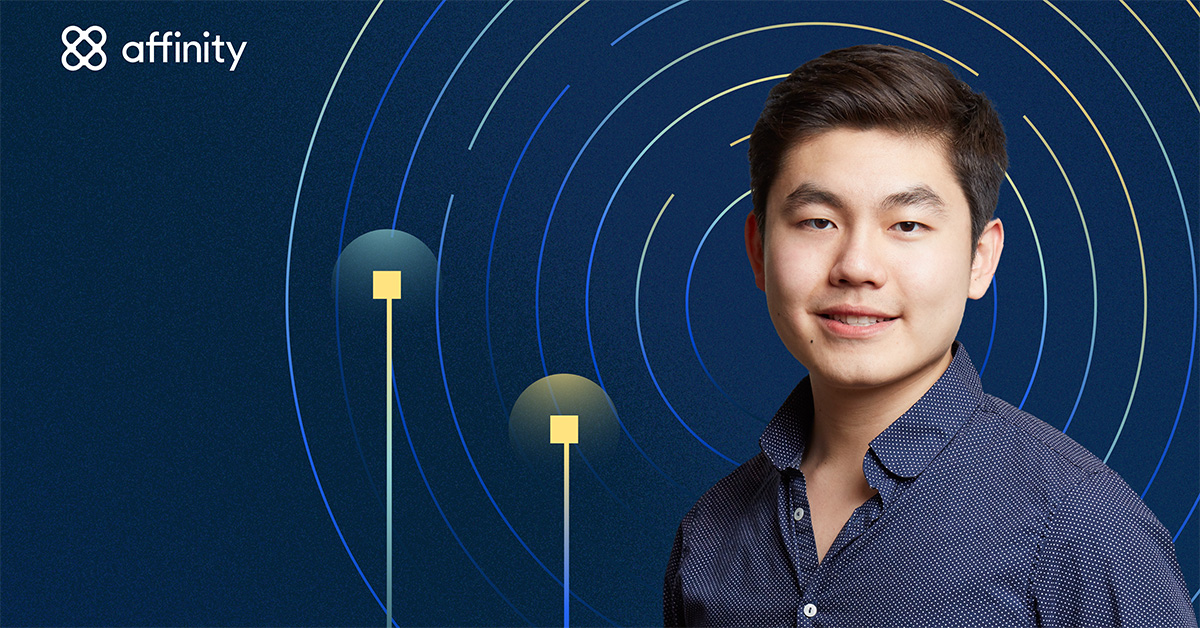
It’s not sexy, but credibility is what sold me.
Kevin Wang / on choosing investors
A community is part of the machinery
Wang also serves as a strategic advisor at OSS Capital, helping founders of open source projects commercialize and scale. The role places him alongside people facing a familiar question: how does freely available software become a business that can keep paying for its development? His experience crosses both sides of that question, from public licensing resources to a company selling tools for enterprise use.
In August 2024, FOSSA acquired StackShare, the community where developers discuss tools and describe their technology stacks. At the time, Wang reported more than 1.5 million users and over 250,000 stack profiles. His announcement emphasized preserving conversations between developers and improving visibility into the tools companies use. Those conversations mattered to the acquisition's rationale.
That choice widened the subject from libraries to the surrounding toolchain. A company may understand its official technology choices while having a much hazier picture of what its developers actually use. Wang connected that gap to the difficulty of managing software supply chains. The purchase also came with a concrete tradeoff: StackShare's enterprise product would be wound down as investment shifted toward its community and FOSSA.
In October 2025, he welcomed Allan Friedman as a senior advisor to FOSSA. Friedman had led the US government's software supply chain security program from 2021 to 2025. The connection brought experience with software bills of materials, or SBOMs, into the company's work. An inventory becomes more useful when the people producing it and the people asking for it agree on what it should contain.
An alert still leaves the work to do
By September 2025, Wang was writing about a further change in direction. FOSSA acquired EdgeBit, whose technology applied static analysis to dependency updates. Its founder, Rob Szumski, joined as FOSSA's head of research and development. Wang framed the acquisition around moving from scanning and triage toward fixing and automation.
A warning is only the beginning of an engineer's problem. Replacing a dependency can change how an application behaves. Someone has to understand the proposed version, identify incompatible changes and work out which parts of the application are affected. A pull request may announce the upgrade beautifully while leaving all those questions unanswered.
Wang's proposal was to give automation a deeper account of how software actually uses its libraries. Static analysis examines code without running it. In his description, that information could provide context for an AI coding agent attempting an update. The immediate focus was JavaScript and TypeScript, languages whose flexibility makes detailed analysis difficult. The aim was to reduce the effort needed to complete an upgrade safely.
This direction asks a harder question of a developer tool: how much work has it finished? Finding a problem has value, and so does deciding which warning deserves attention first. But the application still needs to change. Wang's argument puts the engineering task itself at the center, with the quality of the proposed change becoming the thing that matters.
A Thanksgiving spent making mountains
Away from the enterprise announcements, Wang's personal blog offers a different view of the builder. On December 1, 2019, he published a tutorial on procedurally generated SVG landscapes. He had spent Thanksgiving weekend returning to coding after a long hiatus. A domain he had bought years earlier needed a first post and some artwork, which proved a convenient excuse.
He worked with layered waves, gradients and lighting effects, taking inspiration from landscape illustrations. The tutorial explains choices rather than presenting an immaculate finished object. He describes using trigonometric functions, experimenting with color and adding details such as trees and fog. There are plans for more: a day-night cycle, parallax and little structures on the terrain.
The scale is charmingly domestic beside a company serving enterprise teams. Here the requirement was simply to make a website look interesting. It is also a reminder that developer tools are built by people who sometimes want to open an editor for the pleasure of making something. A sunset can be a sufficient business case for the weekend.
Chairman, with unfinished business
Wang's move to chairman gives the story a new working arrangement rather than a neat ending. He has said he wants to return to hands-on innovation, while Williams leads the company as CEO. His announcement highlighted dependency updates, static analysis as context and the copyright questions raised by AI-generated code. The agenda remains technical and specific.
On GitHub, Wang describes himself as “Searching for Dependency Heaven.” It is a suitably modest address for an ambition that keeps acquiring new complications. There are always more packages, more versions and more questions about where the code came from. His career has followed those questions from a plain-English website into the daily machinery of software development.
The attraction of Wang's work is easy to miss if one looks only for spectacle. It lives in the moment a developer can understand a license, locate a component or finish an update without losing the afternoon. The borrowed code still brings company. Wang keeps working on a way to make the visit easier to manage.
Keep following the questions
- FOSSACompany website
- Kevin Wang on LinkedInProfessional profile and chairman announcement
- @kevinverse on XPublic social profile
- Kevin Wang on GitHubProjects and contributions
- The personal blogSVG landscapes and the weekend coding project
- Kevin Wang’s FOSSA essaysAcquisitions, SBOMs and dependency updates
- The investor conversationAffinity interview
- FOSSA’s Series A and Series B2019 and 2020 company announcements
- The 2020 scan milestoneFunding and software inspection totals
- Open Source Startup PodcastA 2025 conversation on enterprise customers and security
- Software Engineering DailyOpen source management interview
- Watch: bridging the legal-engineering divideYouTube panel with Kevin Wang, Collibra and Nexthink
- OSS CapitalWang’s strategic advisory role
- Forbes profileRecognition and early career
- The 2012 student milestoneIMSA’s contemporaneous record