Five clinics can share a name and still behave like five separate countries. Each has its own routines, its own landlord, its own staffing puzzles and, inevitably, its own preferred way to refill the printer. The distance between a handful of sites and a real network is not measured in miles. It is measured in systems. Kevin Cross has spent much of his career working in that distance.
In January 2012, the company then called WellNow Urgent Care acquired five clinics in Middle Tennessee. The locations were in Portland, White House, Hendersonville, Murfreesboro and Nolensville. The launch came with $35 million in committed capital from SV Life Sciences, Petra Capital Partners and River Cities Capital Funds. Cross, the chief executive, described a plan to build and buy more clinics in underserved markets across the Southeast.
The ambition sounded like a map: more dots, more towns, a wider footprint. Underneath it sat a less photogenic proposition. A regional company could take purchasing, contracting and other administrative weight off clinicians. The local staff could remain local; the machinery behind them could become shared. Cross said the point was to give clinicians more time with patients. It was a founder's pitch made from an operator's vocabulary.
The first network was made of magnets
Cross did not arrive at urgent care as a blank-sheet entrepreneur. He had spent roughly six years as chief operating officer at Touchstone Medical Imaging, a Brentwood-based outpatient imaging company. Contemporary trade coverage described him as a partner and, at different moments, as COO, chief operating and development officer, and even CEO. Titles varied. The operating problem did not.
Touchstone had built centers around high-end services such as MRI and CT. Then insurers and referring physicians increasingly wanted a broader menu. The company began adding ultrasound, plain film and, in some locations, mammography. Those services carried lower reimbursement and created losses during the ramp-up. They also made a center more useful. A patient or physician could use one location for several kinds of imaging instead of navigating a scatter of specialized sites.
Cross acknowledged at the time that the transition brought disruption. He nevertheless argued that the multimodality model was the better long-term position. Touchstone reported growth in MRI and CT after adding the other services. The apparent paradox is important: the lower-margin addition helped the higher-end core because convenience and continuity made the whole center more valuable.
There was another test. Ahead of federal reimbursement cuts in the mid-2000s, Touchstone's leadership acted as though the reductions were already certain. Cross and CEO Pat Rice worked with corporate and regional teams, renegotiated vendor contracts, adjusted staffing and kept growth projects alive. Rice later said those moves covered most of the expected shortfall. The response paired thrift with expansion. Cutting alone would have produced a smaller company; expanding alone would have produced a more vulnerable one.
A forecast disguised as a company
WellNow's founding thesis extended the same logic into a different outpatient business. Independent clinics faced rising administrative demands. Larger networks could centralize the burdens that did not need to live at each site. Cross predicted that more primary-care operators would partner with urgent-care companies for exactly that reason.
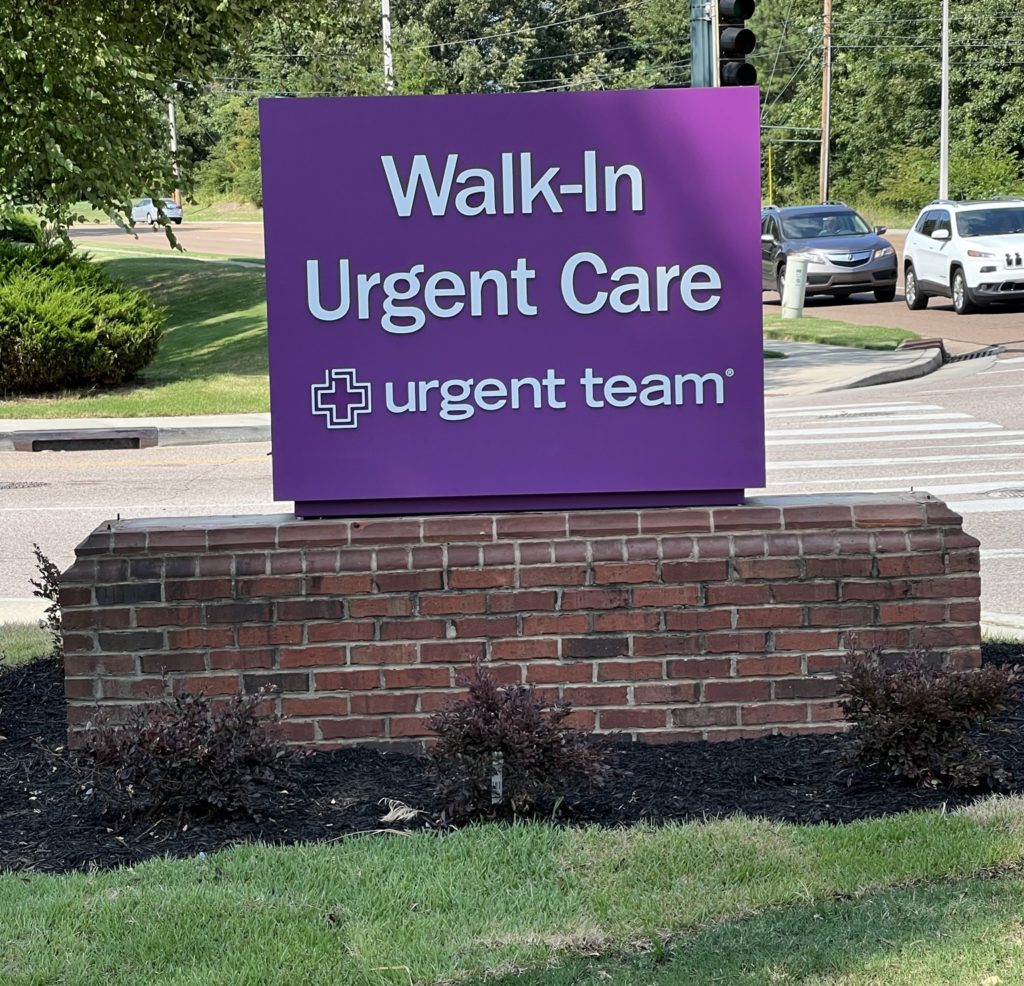
The company soon adopted the Urgent Team name. By 2016 it operated 23 facilities across Tennessee, Arkansas and Mississippi. Its growth plan combined acquisitions with newly developed centers, roughly 60 percent of the former and 40 percent of the latter. It also sought joint ventures with hospital systems and kept its search within practical reach of Nashville. Scale, in this version, had a driving radius.
Cross had moved into executive vice president duties for business development. Chairman and CEO Tom Dent called him the “point of the spear” for acquisitions. The phrase is jaunty; the work behind it is forensic. A promising clinic group arrives with payer contracts, leases, equipment, payroll, local reputation and a culture that may not fit neatly into a diligence folder. Buying it is a transaction. Making it part of a system is a second transaction conducted one operating decision at a time.
TMI = Touchstone Medical Imaging. UT = Urgent Team. *41 owned facilities plus nine leased locations.
By 2018, Urgent Team owned 41 facilities under four brands in Arkansas, Mississippi, Tennessee and Alabama, and leased nine more. A new $18 million financing combined debt and equity from existing backers. The company was twice the size it had been two and a half years earlier. Its website now reports more than 80 centers across Alabama, Arkansas, Georgia, Mississippi and Tennessee, operating through eight brands and a mix of stand-alone and health-system relationships.
The financing history also corrects a common founder-story illusion. Capital appears in a headline as though it were the achievement. In a multi-site service business, it is closer to permission to begin a long list of chores. Money can fund an acquisition, a build-out or new equipment. It cannot make two scheduling systems agree, turn a collection of vendor contracts into purchasing leverage or persuade a respected local practice that joining a group will improve rather than dilute its work. Urgent Team's backers supplied repeated rounds of capital. The company still had to convert each round into functioning locations.
The 2016 plan reveals how deliberately the company tried to do that. It would buy small groups of four to ten centers, develop new ones and pursue individual practices when they fit. Large metropolitan markets were approached with health-system partners rather than as solitary land grabs. The company watched federal reimbursement but drew most revenue from commercial business. This was expansion with constraints, a strategy that recognized the difference between a map that can be colored and a market that can be operated.
That last detail matters. Urgent Team did not erase every local identity and replace it with one giant sign. The current portfolio includes names tied to Baptist, Huntsville Hospital, Washington Regional and Ascension Saint Thomas, alongside Urgent Team and other brands. A network can standardize what happens behind the counter while keeping a familiar name above it. The arrangement is less tidy than a single national banner and often more legible to the community.
The repeated move
Cross's public résumé after Urgent Team looks broad at first glance. He founded Midsouth Dental Group. In 2018, he founded Merge Growth Advisors, a small Nashville firm that describes its work as bringing like companies together for growth and eventual exits. Rivers Health lists him as chief development officer in a team designing infrastructure for rural providers. Comfort Imaging lists him as CEO and points to his experience scaling startups and multi-site operations.
The sectors shift, but the move repeats. Find a fragmented service. Identify the burden that makes each local operator less effective. Centralize enough of that burden to create negotiating strength and operating discipline. Preserve enough local autonomy to keep the service close to its market. The work is part finance, part logistics and part diplomacy.
Merge Growth makes the pattern unusually plain. The firm describes itself as an independent advisory and investment group specializing in combinations of like companies, with growth and eventual exits in view. This is not the language of novelty for novelty's sake. It assumes that several sound, similar businesses may become more durable when joined. Cross's operating background gives that proposition a practical edge: the value of a combination is not secured when signatures dry. It depends on whether the combined business can behave like one company where unity helps, and like a local company where proximity matters.
Operations and development at Touchstone Medical Imaging.
Founded WellNow, launched with five clinics, then adopted the Urgent Team name.
Led business development as Urgent Team pursued acquisitions, new sites and hospital partnerships.
Founded Merge Growth Advisors in Nashville.
Publicly listed in development and executive roles at Rivers Health and Comfort Imaging.
Cross's education adds a small, useful wrinkle. He studied history at the University of Tennessee in Knoxville from 1982 to 1986. There is no public grand theory connecting the degree to the career, and none is needed. Still, healthcare services reward an attention to sequence: what happened, which incentives produced it, and how institutions behave when the rules change. His record at Touchstone during reimbursement pressure and at Urgent Team during consolidation is, if nothing else, an education in consequences.
He is not a prolific public personality. There is no crowded shelf of keynote videos, memoirs or personal manifestos. Most of the available record is company launches, filings, trade coverage and operating biographies. That scarcity changes the shape of the portrait. Cross is easier to see through the organizations he has assembled than through a polished collection of personal stories.
The distance between dots
A growth map flatters the eye. Each new dot feels like proof. It conceals the harder questions: Can a manager still get an answer? Can a clinician spend less time on administration? Can a new site benefit from the group without feeling managed by a faraway abstraction? Can several brands share a backbone without losing their faces?
Cross has kept choosing businesses where those questions cannot be avoided. Imaging centers, urgent-care clinics, dental groups and rural networks are physical, local and operationally fussy. Software cannot wish away the waiting room. Capital cannot sign the lease, hire the staff and earn community trust by itself. Someone has to connect the pieces.
The five clinics of 2012 were modest as an empire and complicated as a beginning. They contained the entire problem in miniature. The story since then is not simply that the number grew. It is that Cross found a durable career in everything required to make the number mean something.