A glass of water is a small thing to ask someone to reconsider. Until you explain where it came from. In San Diego, the proposal to purify recycled wastewater for drinking carried a question that no engineering diagram could answer by itself: would people accept it? Katz & Associates made a business out of helping public agencies work through questions like that.
The firm’s contribution to Pure Water San Diego included tours, presentations, multilingual materials and community events. Later came brewing collaborations. In 2017, a city letter thanked Sara Katz and her staff for helping coordinate Pure Stone with Stone Brewing and a homebrewers competition. The same letter recalled how the phrase “toilet to tap” had damaged earlier reuse efforts. A water-supply argument had become a branding problem. Now beer was part of the conversation.
It is a memorable entrance to a company whose everyday work is rather more painstaking: explaining projects, collecting questions and keeping neighbors informed when the digging starts.
A tour can do what a diagram cannot
Katz’s water practice grew around an awkward gap. A public agency could have a technical explanation for purification while residents had entirely different questions about its necessity, safety and consequences. The firm’s published account of the demonstration project describes a tour program, a speakers bureau, research surveys, videos and online communications. The variety mattered: there was more than one way into the subject.
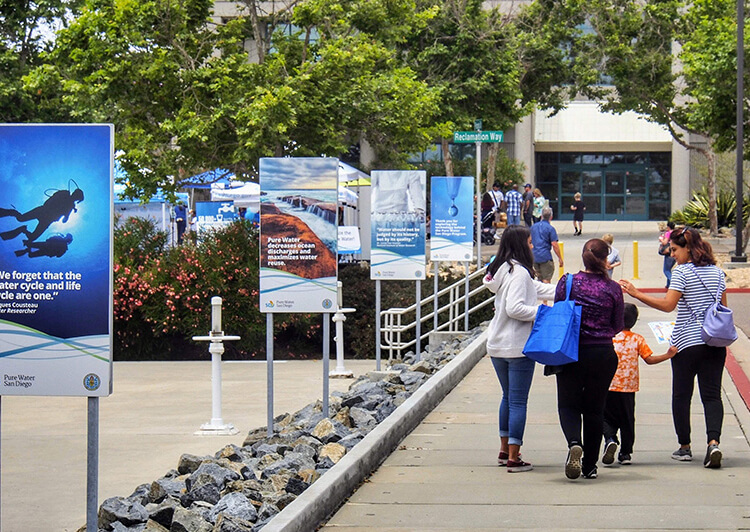
Katz reported that approval of water purification rose from 26 percent in 2004 to 73 percent in 2012. Those historical polls describe a change in public opinion; they do not establish how much credit belongs to one consultant. The City’s demonstration project subsequently received a 2015 U.S. Water Prize. Outreach was part of a larger undertaking involving public officials, technical teams and community organizations.
There is a practical insight here. A facility visit gives people something concrete to inspect and someone specific to question. A campaign that merely repeats a conclusion asks the audience to accept the answer before it understands the process.
That access later moved online. San Diego’s 2020 review explains that a virtual tour was initially intended to accommodate interruptions to visits during construction. Released in October, it also served a city dealing with the pandemic. The ten-minute film followed staff through the five purification steps. An answer to one access problem became useful for another.
The public has a construction schedule, too
Accepting the idea of a new water supply does not settle how a neighborhood will live through its construction. In 2018, San Diego convened four Pure Water working groups. Their remit was explicit: help minimize construction impacts, without reopening the approved environmental review or considering alternative alignments. Katz staff appeared on the project teams, including in facilitation roles.
The groups produced 120 recommendations. The City recorded 83 as adopted or to be used to inform the construction outreach plan, 28 under evaluation and nine not adopted. Topics included traffic, noise, access and notifications. Participation had a defined boundary and a record of the response.
The distinction is useful. Asking people to influence a construction plan is a different invitation from asking them whether a pipeline should exist. My reading of this record is that a credible engagement process must make that difference legible. Otherwise, attendance can be mistaken for influence.
Katz’s own construction advice is refreshingly specific. Sarah Rossetto argued in a 2014 article that outreach staff should sit in contractor meetings, where they can raise community concerns before work creates a problem. A later firm article described the familiar frustration of sending notices and holding meetings, only to receive surprised calls when construction begins. Delivery of a notice and receipt of its meaning are two different events.
“help others communicate about things that matter”
Katz & Associates’ stated mission, 2015
For a project manager, the implication is operational: put the person answering neighborhood questions close enough to the construction team to get useful answers. For a resident, the value is equally concrete. A question about access needs somewhere to go besides an unattended inbox.
What $100,000 was meant to buy
Consulting becomes easier to understand when a scope has numbers attached. A February 2023 Sites Reservoir staff report proposed adding $100,000 to Katz’s communications task order, taking the annual budget from $551,801 to $651,801.
The proposed increment split into $45,000 for outreach, $40,000 for informational materials and media, and $15,000 for environmental public involvement. Work included a virtual open house, stakeholder contact, a presentation, a virtual reservoir tour and short videos. Payment was for actual work at previously authorized billing rates. These were proposed budget limits, not evidence that the full amounts were spent.
- $45,000Outreach support
- $40,000Materials & media
- $15,000Environmental involvement
This is a professional-services business with a substantial human component. Clients purchase planning and execution over time. The meaningful unit is the assignment: a program to explain, a community to reach, a set of inquiries to manage. The quality of the work depends partly on whether those assignments connect to decisions the client can actually make.
The agency inside the project team
Public agencies are central to Katz’s market, alongside engineering firms and private developers. Its project portfolio includes Caltrain electrification, the Port of Long Beach master plan update and water-reuse initiatives. The service mix reaches from stakeholder planning and facilitation to construction relations, media work, digital engagement and graphic design.
The embedded role is especially revealing. A Katz qualifications document describes Pure Water support through two on-site communications specialists, off-site senior counsel and additional project help. That arrangement places the consultant inside the rhythm of a public program. It gives the buyer extra capacity as well as advice.
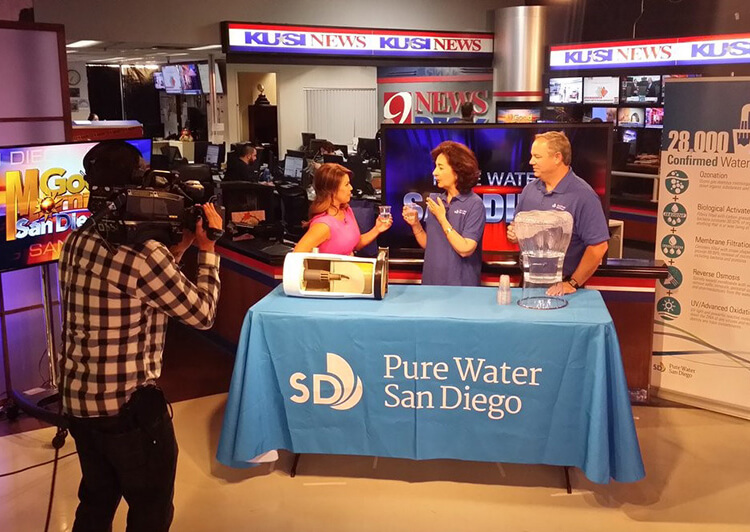
The firm’s distinguishing emphasis is sustained infrastructure communication, particularly water, rather than a single proprietary product. Buyers can also use internal communications staff or specialist public-involvement agencies. Katz’s record is most relevant when the assignment combines technical explanation, public participation and years of project delivery.
Its methods also traveled beyond water. In Encinitas, JPW Communications and Katz worked on outreach for Leucadia Streetscape and the El Portal pedestrian undercrossing. JPW describes adapting engagement to pandemic conditions, including virtual meetings and stakeholder presentations. It reports more than 800 outreach contacts and 83 percent positive or neutral sentiment in public inquiries. That is a measure of the inquiries received, not a citywide approval rating.
A condo, an ampersand and a bigger company
Sara Katz started the firm in her San Diego condo in July 1986. Its first logo was mauve on cream. Decades later, the company’s account of its identity refresh explained why it emphasized “K&A”: the business was evolving beyond its founder, including an employee-ownership system introduced in 2014.
Culture appears in career histories, too. A 2024 company announcement promoted Sarah Rossetto to vice president, nearly 15 years after she arrived as an intern. It described her leadership of the firm’s largest practice area. The detail makes professional development more tangible than a recruitment slogan.
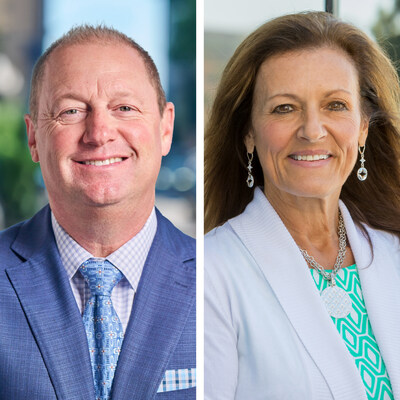
Southwest Strategies announced its investment in Katz in 2023. The initial arrangement retained the Katz name while combining services and preparing to integrate operations. Sara Katz described broader client services and staff development opportunities as reasons for the deal. It was an expansion of the practice’s platform.
On February 23, 2026, the accumulated agencies adopted one name: Bodewell Group. Its announcement reported roughly 140 employees across the combined firm. That number belongs to the group, not to Katz alone. Sara Katz’s current biography identifies her as a strategic advisor, principal in charge and partner.
Keep the question attached to the decision
The transferable lesson is to make participation specific. Show people the process. Tell them which choices are open. Record what they recommend and explain the response. Keep communications involved as the project moves from a proposal into a worksite.
These methods depend on access and follow-through. A tour is useful when someone can answer questions. A working group is useful when its remit is honest. A construction liaison is useful when the project team can respond. My conclusion from Katz’s work is that communication earns its place through those connections. The resident asking about tomorrow’s road closure is already giving the project a very practical test.