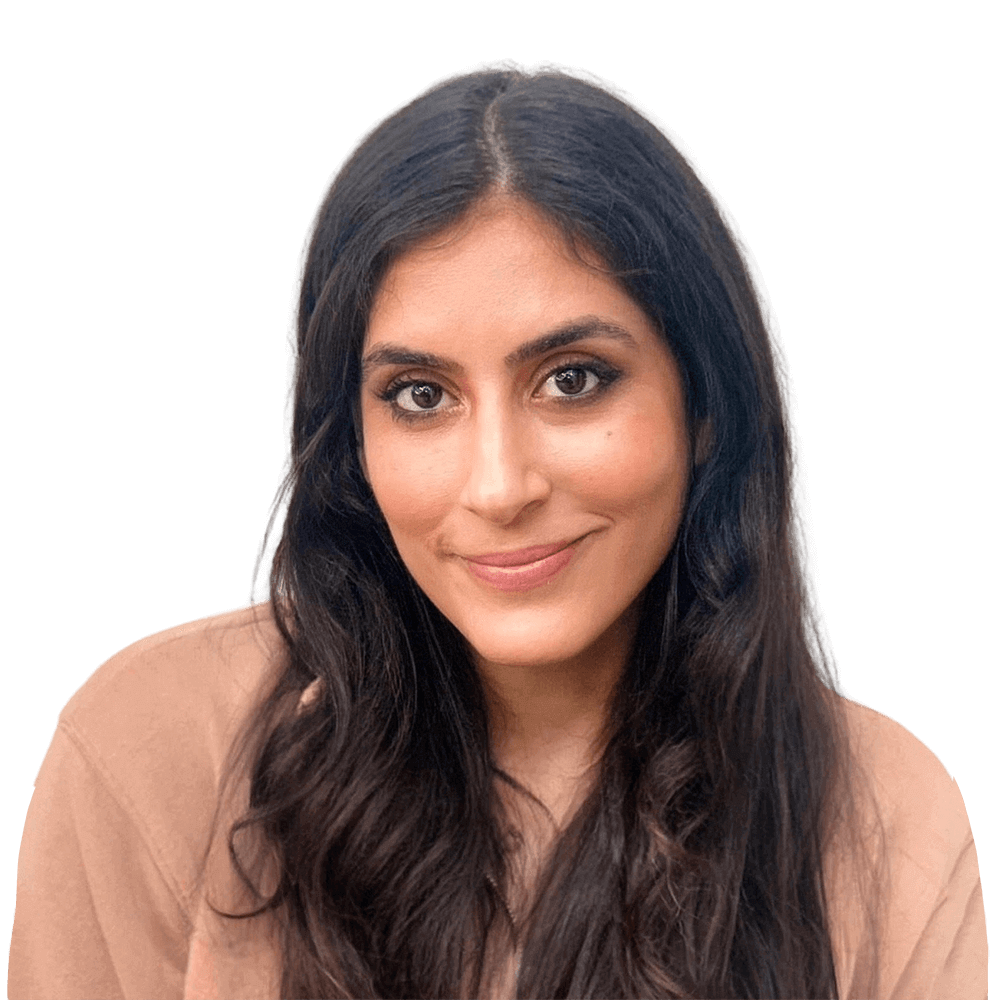
Loud, Intense, and Right
Ask Katia Ameri how her friends describe her and she gives you two words: loud and intense. She doesn't elaborate. She doesn't need to. The biography does the explaining.
She grew up in West Los Angeles, daughter of an Iranian energy entrepreneur and an artist mother, near UCLA in the kind of family where starting something was ordinary. She attended Marlborough School - elite, all-girls, Hancock Park - then headed north to Stanford. Studied Science, Technology, and Society. Learned multiple languages. Graduated in 2014 into a venture capital firm, Pear VC, where she became the first person they ever hired onto the investment team.
That early chapter at Pear is worth pausing on. She wasn't there as a generalist. She built data-driven frameworks for evaluating SaaS companies. She led due diligence. She was meticulous. Then Pear handed her a portfolio company - Script Inc, a social media app - to run temporarily as interim CEO. That's the moment things shifted. She discovered she was an operator. She wanted to build, not just evaluate.
So she left and started Mirra. Not a product. Not a startup in the traditional sense. She started with a newsletter about skincare science, written for women who, like her, had spent years with eczema, acne, and misleading Sephora recommendations. Within a year that newsletter had over 100,000 subscribers. Within two years, 200,000 - with zero paid advertising. The entire audience was built on trust and information.
Then she raised $2.2 million from Pear VC, Sweet Capital, and Global Founders Capital - from the very investors she'd once worked alongside - and launched Mirra Labs. A beauty incubator. Topical skincare. Ingestible supplements. Allergy telehealth. All tested against her community. Content, community, commerce, in that order, every time.
During COVID she created #ZoomBachelorette, which went viral on Clubhouse. She launched GayBurger, a virtual ghost kitchen with an activist edge. She co-founded Rocketship House, an influencer incubator in Hollywood that made the news. Her pattern is consistent: identify a distribution gap, build community around it, see what wants to become a product.
In 2021 Andrew Chen, then building out a16z's LA strategy on the consumer investing team, saw what Katia was doing and made the call. She joined Andreessen Horowitz as a Partner. Her thesis didn't change when she crossed over - it sharpened.
At a16z she runs the Speedrun accelerator for gaming and tech startups, she writes checks from $500K to $40M with a sweet spot around $20M, and she founded Tech Week - the decentralized conference that turned the startup ecosystem's need for connection into the largest tech event series in American cities. New York Tech Week in 2024: 740 events, over 40,000 attendees. LA and SF: 1,100+ events combined. Boston is next, in 2026.
The Google Sheet origin story is real. She built the first LA Tech Week in six weeks from concept to execution. Thirty events to start. It snowballed through FOMO, through a city's tight-knit ecosystem dynamics, through the social media amplification of individual firm voices. Hundreds of millions of impressions in New York alone.
Her thesis is simple and hard to argue with: distribution is not a feature. Distribution is the product. You don't add it later. You design for it from the first day, the way she designed Mirra around an audience she built before there was anything to sell them. The way she designed Tech Week around a community's desire to gather, before there was a venue or a schedule.