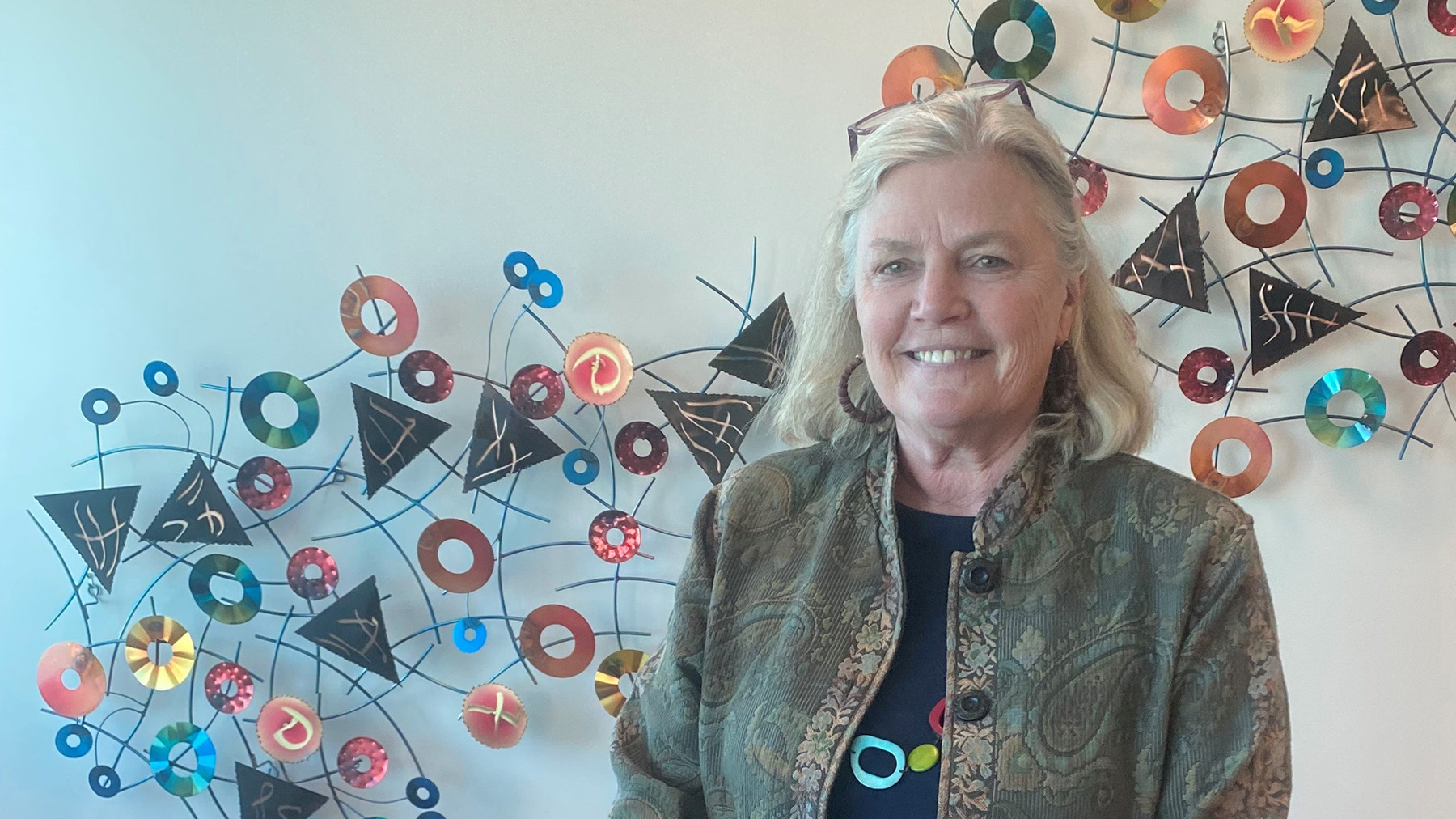
Kathy Tunheim keeps kaleidoscopes above her desk. For someone paid to help organizations make sense of themselves, it is a rather good collection. The pieces remain familiar; a turn changes their relationship. Suddenly there is another picture to consider. The office toy has a fairly demanding management philosophy hidden inside it.
Her career has involved several such turns. She began studying engineering, moved into public policy, became a corporate communications executive and then helped start an independent firm. The work kept returning her to a particular problem: people inside an institution can be thoroughly convinced of what they mean while people outside it hear something else entirely.
She describes the assignment as helping clients “take responsibility for being understood.” The responsibility matters. It gives the listener a place in the process and asks something of the speaker beyond the production of an excellent sentence. A polished message can still leave its audience with a perfectly sensible question that nobody has answered.
An engineer changes the question
The earliest influence was close to home: Minnesota teachers who regarded their community as something they had a duty to improve. Tunheim’s father coached football and became a teachers’ union leader. She describes her mother as a feminist. Attention to the world outside the household was part of growing up.
An internship with Governor Wendell Anderson pulled her toward public affairs. She handled media relations and speechwriting during his years as Minnesota’s governor and in the U.S. Senate. Here was work in which the details of an argument, the people receiving it and the consequences of a decision belonged in the same conversation.
She graduated from the University of Minnesota in 1979 with a political science degree. After work at computer company Comten, she joined Honeywell in 1980. An engineering internship had already made the building familiar. This time, she would be working on how the organization communicated.
Honeywell eventually made her vice president for public relations and internal communications. It was preparation for a career spent crossing the boundary between an organization’s internal decisions and its public life. Employees, customers, policymakers and journalists could all be interested in the same company for quite different reasons. Each needed to be taken seriously.
Five colleagues take the leap
In 1990, Tunheim and four Honeywell colleagues formed Tunheim Santrizos Co. Honeywell became their first client. There is a pleasing practicality to that beginning: leave the building, keep a working relationship with the people inside it. Independence did not require pretending that everything learned there had become obsolete.
The firm’s ownership changed over the years. A sale in 2001 was followed by Tunheim’s repurchase in 2003. She remained its chief executive as the business evolved into the agency bearing her name. Today, its work brings together public relations, public affairs, digital marketing and advice on organizational change.
A CAREER IN FIVE TURNS
- 1979Political science degree
University of Minnesota - 1980Joins Honeywell’s
public relations team - 1990Starts the agency
with four colleagues - 2007The firm joins
the IPREX network - 2023Receives the inaugural
Aluminary Award
A team wider than the payroll
One of Tunheim’s enduring decisions concerns who gets to do the work. The agency calls its approach Collective Best. Employees work alongside independent specialists brought in for particular expertise, giving an assignment access to knowledge beyond the permanent staff. A firm can remain relatively compact without asking every employee to become an expert in everything.
Its account of the model includes a concrete example: an affiliated specialist with major-event experience helped manage work on the bids for the 2018 Super Bowl and 2019 NCAA Men’s Final Four. Both events came to Minnesota. The staffing choice followed the assignment, with the right experience brought into the room.
That arrangement asks something of a founder. Other people will know things she does not. They may have acquired their expertise elsewhere and may leave again when the work is done. A company that welcomes those conditions has made a choice about how much credit, control and knowledge can be shared.
Minnesota comes with the job
In January 2011, Governor Mark Dayton appointed Tunheim his senior adviser for job creation. It was a volunteer post. She served part-time for two years, bringing a corporate and small-business working life back into state government. The geography was familiar; the responsibility had changed.
Her agency’s sporting-event work gave another form to that regional involvement. In 2014, the PGA of America selected Tunheim for strategic marketing and public relations support for the 2016 Ryder Cup at Hazeltine. The agency had also supported MLB All-Star Week and coordinated the winning Super Bowl bid.
Big events make a region explain itself to visitors, organizers and businesses with competing priorities. The stadium or golf course gets the photographs. Long before the photographs, someone has to make the argument for the place and help its institutions work together. That has been part of Tunheim’s business.
Before the statement, the decision
Her public writing shows how early she thinks communication enters a decision. In a 2010 commentary about corporate political activity, she considered the different interests of customers, employees, shareholders, suppliers and neighbors. A corporation could not reasonably assume that those groups shared one political outlook. Its choices would be visible to all of them.
The practical issue was whether the organization understood its own history and could explain how it arrived at a position. The question remains useful even outside politics: whose agreement has been assumed, and who will discover the decision after everyone inside the room has become comfortable with it?
By 2023, her writing on crisis preparedness was pushing the question further upstream. Some crises, she suggested, involve necessary changes arriving at inconvenient moments. Preparing for a difficult scenario can expose decisions that an institution has been putting off. The exercise gives leaders a reason to address risks while they still have choices.
“The power of the status quo.”
Kathy Tunheim, naming a barrier to organizational change
She also distinguishes a true crisis from a bad day. A crisis may require moving resources and decision-making authority to protect something substantial. That distinction puts communications close to management: the words depend on what an organization is prepared to do. The statement cannot carry the entire company on its back, however handsomely it is written.
THE WORK BEFORE THE WORDS
An editorial illustration of her argument for using crisis preparedness to enable organizational change.
She has applied the same attention to working life itself. In a 2021 essay, she reflected on decades of continuous employment and on people choosing to step away from conventional career ladders. Money, purpose and the feeling that work is valued all entered her account. An employer trying to understand those decisions would need to examine more than its own expectations of loyalty. It is a revealing topic for someone who has spent so long running a business: the people who make an organization possible also have lives and ambitions that extend beyond it. Understanding their choices belongs among a leader’s responsibilities.
The play changes at the line
Tunheim has a less corporate way of describing adaptation. Her father coached football; two of her brothers were quarterbacks. In an essay about planning, she turns to the moment after a team breaks its huddle and sees how the opposition has lined up. The rehearsed play may need an audible.
Preparation gives the players something to change together. The leader reads the field, communicates an adjustment and relies on everyone else to understand what follows. An impressive call is of limited use if half the team hears a different instruction.
Her emphasis falls on the trust behind that exchange. People need confidence in the leader and a shared understanding of what the new call means. The metaphor suits a communications adviser who is interested in execution. There comes a point when the meeting ends and people have to move.
A Minnesota address, a wider field of view
Local commitment has coexisted with an international working life. Tunheim joined IPREX in 2007, and she later became its global president. The network connects independently owned communications firms, allowing local experience to travel without requiring every agency to become a branch office of the same company.
In an essay for the International Public Relations Association, she argued for combining global reach with knowledge of particular markets. Migration and technology were changing those markets. Colleagues needed ways to share experience while retaining the understanding that made them useful where they lived. Shared priorities could do work that hierarchy alone could not.
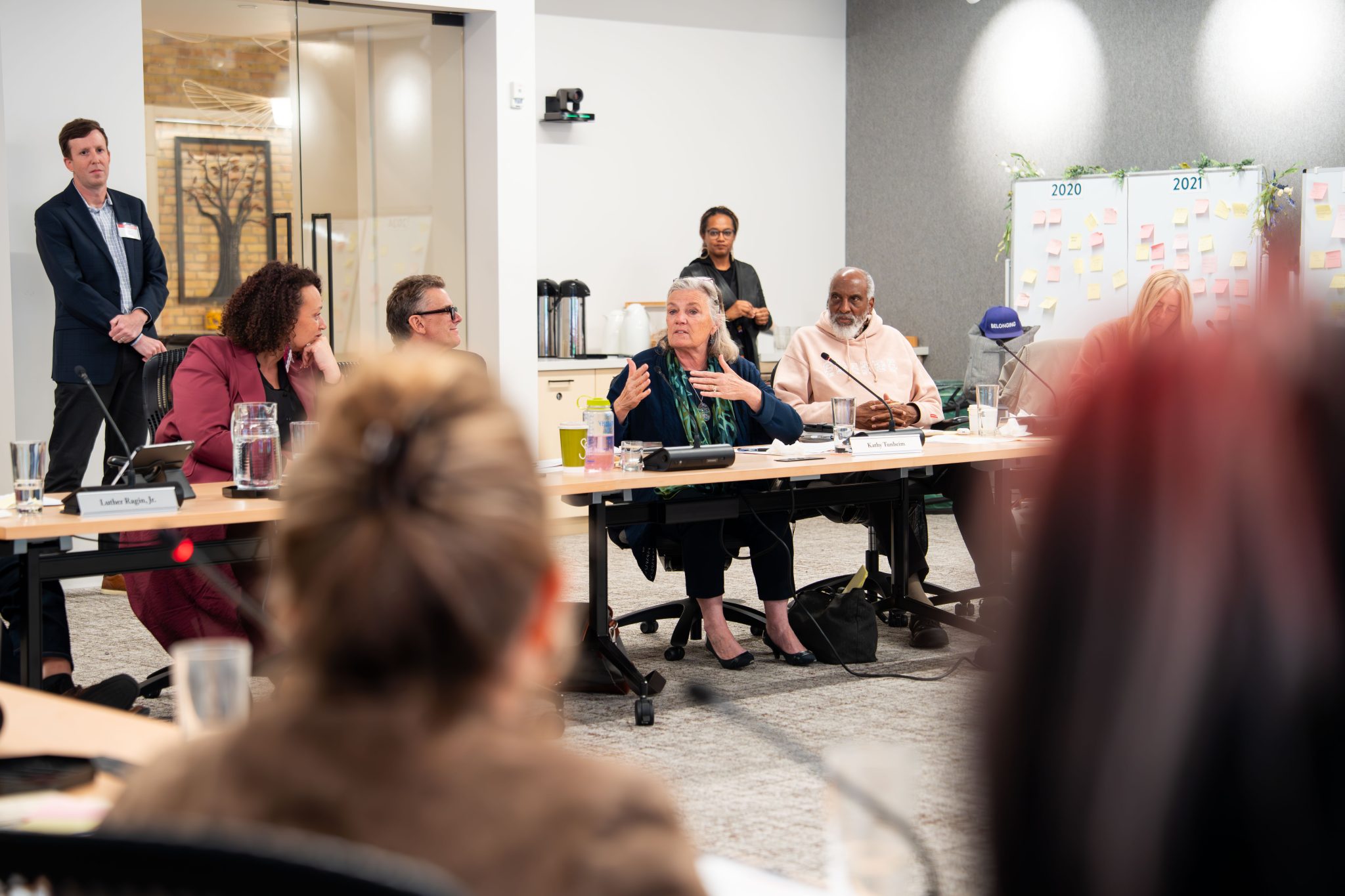
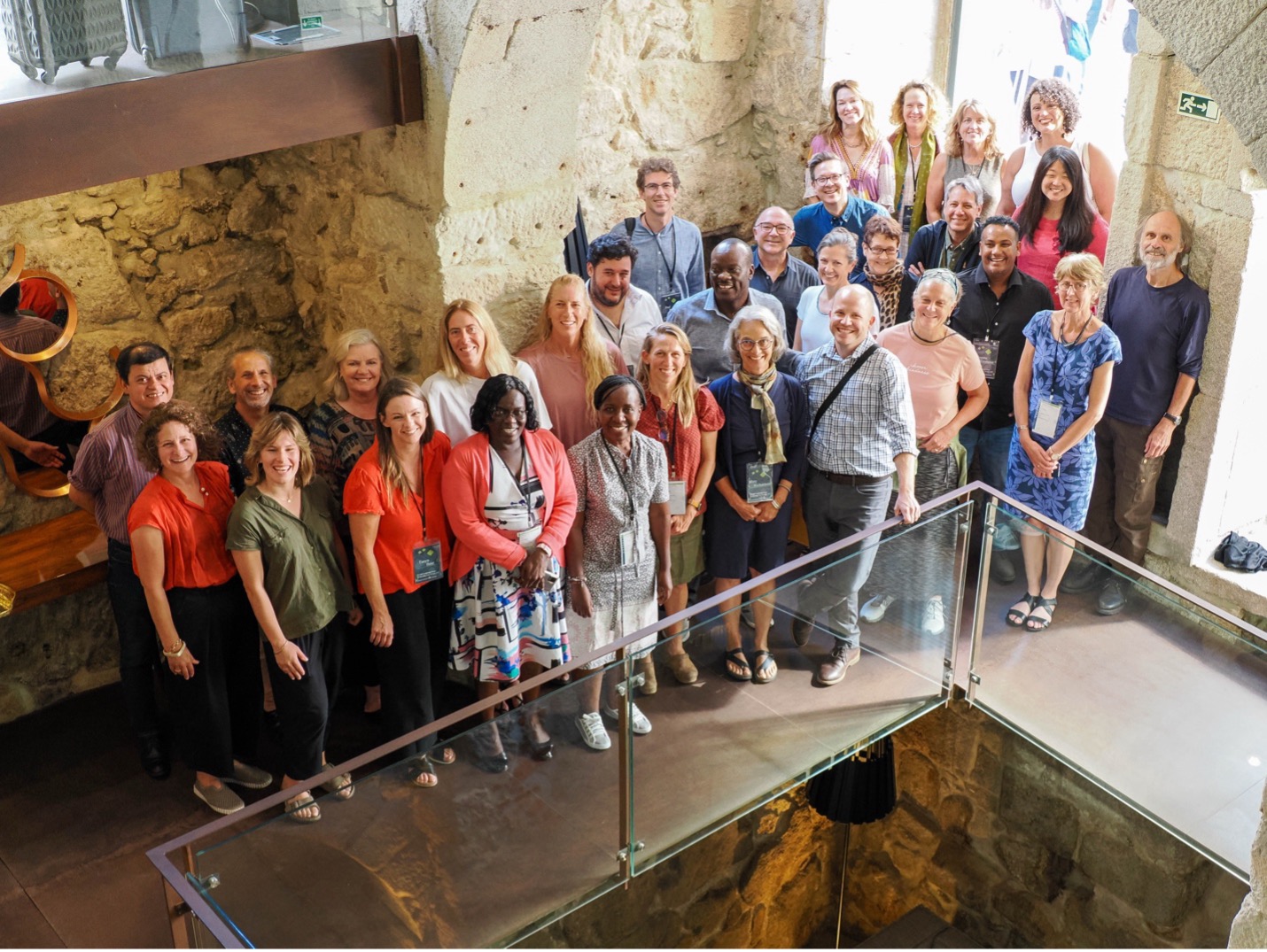
Her nine years on the McKnight Foundation board added another international dimension. She joined in 2016 and completed her tenure in 2025. Her involvement included its Global Collaboration for Resilient Food Systems, with visits and exchanges involving partners in Peru and Portugal.
McKnight colleagues described her contribution in terms of useful questions, professional experience and connections. Her own reflection stressed helping communities feed themselves sustainably. It was another setting in which expertise depended on relationships with people doing the work locally. Minnesota supplied a starting point for the conversation, with plenty to learn beyond it.
Something to pass along
The professional recognition includes induction into the Minnesota Business Hall of Fame in 2020 and the inaugural Aluminary Award from the University of Minnesota’s Hubbard School in 2023. The latter also recognized her support for its strategic communications master’s program, where she had served on the professional advisory board.
Her interest in passing experience along extends beyond professional advice. In 2020, she described afternoons teaching her granddaughter oil painting and playing guitar. She was also considering a memoir. A career accumulates stories; there is pleasure, and some obligation, in finding ways to hand them on.
The kaleidoscopes make a good place to leave her. Their appeal depends on being willing to turn them. A familiar collection of pieces can still produce something worth another look. After decades of helping people explain their decisions, Tunheim has kept a small, colorful reminder of that possibility above her desk.
Keep the conversation going
Her work, her words, and a few conversations worth opening.