Before there were AI agents, there was a house address. In OptiSol’s early history, Karthik Murugian’s home appears as the company’s registered office. Four co-founders, friends from school and college, were getting a business started. Two employees shared office space with another company. It is a pleasingly practical beginning for a technology business: the ambition could travel internationally; the paperwork still needed somewhere to arrive.
Murugian, now the Chennai-based co-founder and CEO of OptiSol Business Solutions, places the emotional beginning further back. He belongs to the 2001 class at Thiagarajar School of Management. When he recalls the origins of the company, he talks about teachers, community life and relationships that continued after campus. The friendships are part of his explanation of how the enterprise came into being.
His phrase is “the community life and our learnings from our teachers on campus”. Around it, he describes an entrepreneurial journey sustained by memories, connections and a continuing appetite to learn. There is something refreshingly unfashionable about that account. The central characters are classmates and teachers. The useful inheritance is the ability to keep learning together.
By 2007, the founding team was building the business that would become OptiSol’s international technology consulting operation. The early scale matters: two employees and shared space make the distance to overseas offices tangible. A registered address at home also gives the story an ordinary human dimension. Companies acquire polished biographies eventually. At the beginning, someone has to provide an address.
A classroom with a factory floor
One of those student connections comes with an unusually concrete setting. Prem Kumar, another OptiSol co-founder, completed his MBA project with Murugian at Sundaram Fasteners in Madurai. They were students looking at manufacturing, walking through the shop floors and trying to understand how the work was done. Long before their company sold digital services, the pair had spent time inside someone else’s operation.
In August 2026, Kumar described returning to the factory as a technology vendor. His team’s Scanflow work there included computer vision for visual inspection and quality control, with a conveyor-based inspection system among the implementations. The return belonged to Kumar; the student project had belonged to both men. That distinction leaves the anecdote intact without turning it into a reunion scene for Murugian.
Kumar’s recollection also places an identifiable customer operation behind the founders’ later vocabulary. Visual inspection has a location, a production line and a task. The factory setting makes the connection between business study and software work unusually easy to see. In this part of the story, digital transformation has a conveyor belt.
The loop is satisfying enough as it stands. A place where the two had learned about manufacturing later became a place where their wider team supplied technology. An MBA project can look like a temporary assignment while you are doing it. Years later, the same factory can make the assignment seem like the opening chapter.
“the community life and our learnings from our teachers on campus”
Karthik Murugian, recalling his TSM years
Learning the business on the other side
Murugian’s working history includes business analysis at Cognizant. A former collaborator, Phillip Stuhlman, remembers him handling client relations between operations at Ingenix and Cognizant. The detail puts him in a role where understanding the business and maintaining communication mattered alongside technical delivery. It is an early glimpse of the client-facing responsibilities that would become central to his career.
Another recollection comes from Yong Lee, whose company began working with OptiSol in 2007. Lee visited its Chennai and Madurai facilities and described a relationship involving web development, software development, testing and outsourcing. What he singled out about Murugian was the effort to understand a client’s organization and needs, together with a collaborative way of working.
These are modest details with considerable explanatory value. A software company’s relationship with a customer contains many jobs besides writing software. Someone must establish what the customer means, how its organization works and whether the proposed work solves the right problem. Lee’s recollection places Murugian close to those questions from the early years.
His later description of co-innovation gives that practice a name. The ambition is to help clients bring emerging technologies into their ongoing innovation work, with suitable skills and ways of working together. It is a view of consulting built around a continuing relationship. The product may change; the need to understand the person paying for it persists.
The offer letter that lasted fourteen years
For Thillainatarajan Pitchai, the story has a timestamp: 23 November 2011, at 8:35 PM. That was when an OptiSol offer letter arrived in his inbox. In a later farewell reflection, he connected the opportunity to Murugian, who had interviewed him, and looked back on a tenure of fourteen years and nine months.
Pitchai remembered both encouragement and correction. Murugian appreciated his work and was also tough when he fell short. The former employee interpreted both responses as part of being pushed to improve and take on responsibility. It is a more textured account of leadership than a list of agreeable adjectives. Appreciation and a difficult conversation can come from the same desk.
Today, that desk sits within a shared leadership structure. Murugian oversees OptiSol’s vision, innovation roadmap and global delivery strategy. Karthic Chandran leads technology, Jayakumar Radhakrishnan operations, Prem Kumar growth, and Rajinikanth D J finance. The distinct responsibilities give the founding story a present-day shape: friends who built a business now manage different parts of it.
The geography gives that delivery role a practical scale. OptiSol lists development centers in Chennai, Madurai and Coimbatore, alongside offices in the United States, the United Kingdom, Australia and the UAE. The organization has to connect customers in those markets with the teams building and maintaining their software. Distance becomes part of the operating work.
For Murugian, the work spans product engineering and offshore delivery, with more than two decades of experience behind it. The company’s emphasis now includes AI services and accelerators. Those offerings still have to move through teams, delivery arrangements and customer expectations. The chief executive’s remit connects the proposed future to the people expected to deliver it.
Kuala Lumpur, and a list of unfinished work
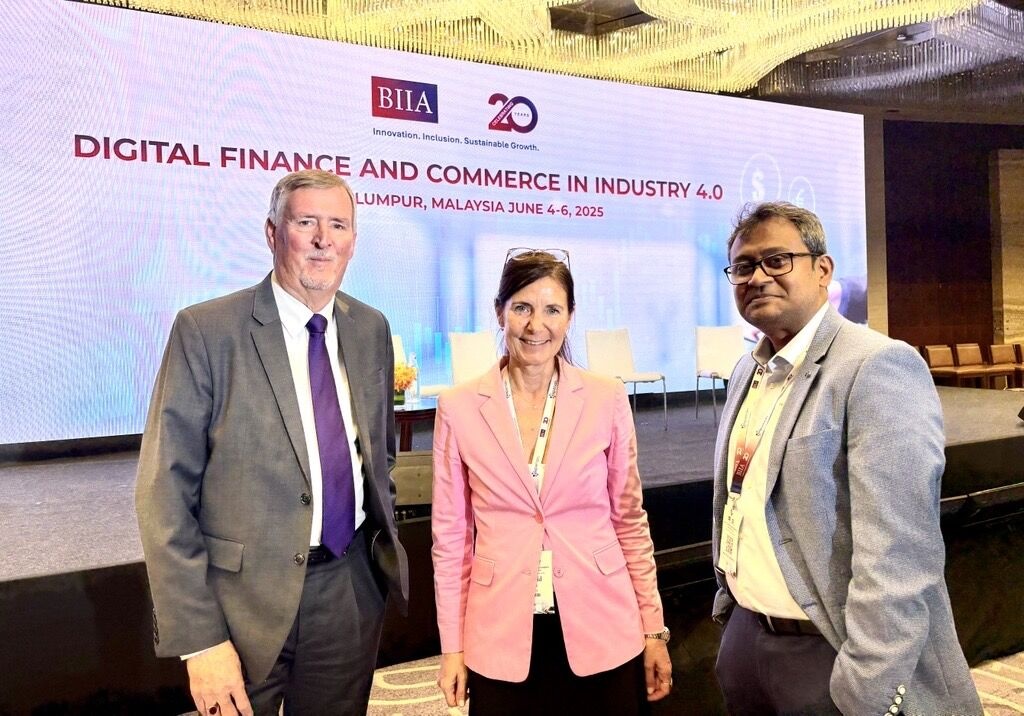
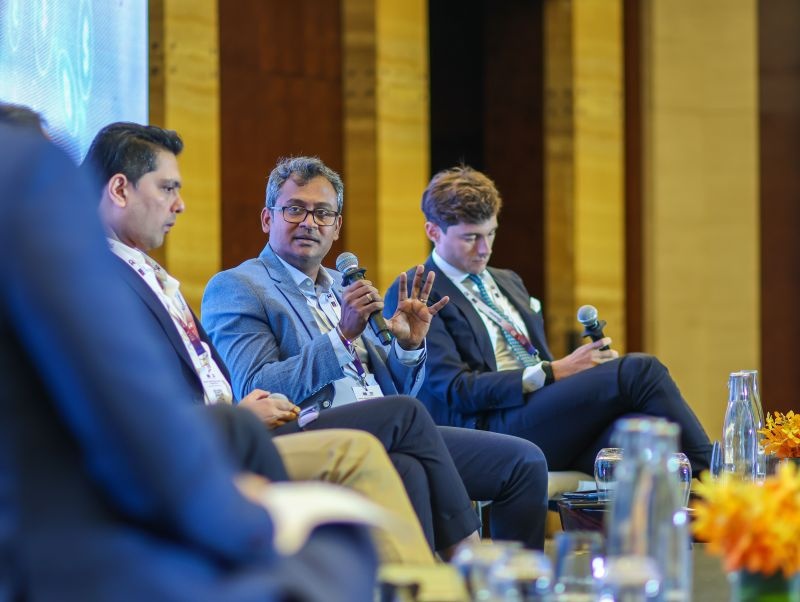
On 6 June 2025, Murugian appeared on the BIIA conference panel on data and analytics in digital commerce at the Grand Hyatt in Kuala Lumpur. Frederic Paquay of Cedar Rose moderated. The other participants represented ADVANCE AI, Korea Credit Bureau, AsiaVerify, CRIF and Centrix. It put OptiSol’s CEO in conversation with organizations working directly with business information, credit and verification.
His reflection afterward lingered on the practical obstacles. Registries across borders operate in different formats and at different speeds. AI governance differs across markets. Customers want faster information and explanations for the decisions software helps them make. A promise of automation has to survive all those particulars. The paperwork has a stubborn habit of retaining its own personality.
Murugian connected the discussion to the team’s ELSAI work and then set out further development priorities. They included clearer explanations and citations, improved handling of fragmented registries, regulatory configuration and event-driven processing. His response was a list of things to build. Satisfaction with existing capabilities was followed by interest in the gaps.
The distinction is revealing. A conference can supply a photograph, a contact list or a reason to congratulate the team. In his account, it also supplied requirements. The discussion continued after the panel through questions about what the software should do next and how people would be able to check its answers.
- 01Explain the answerClearer citations and user journeys
- 02Connect the recordsBetter handling of fragmented registries
- 03Adapt to the marketConfigurable regulatory requirements
- 04Keep information movingEvent-driven processing
An answer that can show its working
The Unicus AI launch announcement in September 2025 put verification and transparency at the center of Murugian’s stated ambition for financial intelligence. Its specialized agents address tasks such as financial data extraction, corporate registries, web research and risk information. The work is specific to business processes in which a plausible answer alone is insufficient.
Consider the everyday logic of verification: a team needs to know where information came from before it can use that information confidently. Traceability therefore becomes part of the product’s usefulness. Murugian’s emphasis on explanations at BIIA and transparency in the launch belongs to the same practical concern. The system must leave people able to examine what it produces.
The current elsai business, which lists him as chief executive, extends that focus to governed enterprise operations. Its stated approach keeps AI within the customer’s infrastructure and emphasizes integration, auditability and human involvement at critical decisions. These are product design commitments. They describe the conditions under which organizations are being asked to adopt the technology.
In the elsai description, procurement is one setting for this approach. Supplier records, contracts and compliance obligations sit inside document-heavy operations. The proposed agents are meant to work across those existing systems while preserving oversight. It brings the AI discussion back to a recognizable workplace, where people must review decisions and account for what happened.
In July 2026, Murugian offered a plainer observation about where the effort goes. Commenting on a colleague’s discussion of enterprise data, he highlighted the work of preparing the data before deriving AI products. He also welcomed the team’s focus on problems shaped by each customer’s context. The remark gives the current ambition a useful grounding: preparation is part of the job.
From a home address to international delivery, the settings have changed considerably. The personal thread remains easy to follow: classmates learning together, students studying a factory, a client whose organization needs understanding, an employee growing into responsibility. Murugian’s AI work now carries that story into data and software. Before an answer can be useful, somebody has to understand the question well enough to build for it.
Follow the work
People, projects and conversations from this story.