STRADVISION FILES FOR KOSDAQ IPO - APRIL 2026 SVNet 3D PERCEPTION NETWORK DEBUTS AT CES 2025 3 MILLION+ VEHICLES RUNNING SVNet WORLDWIDE $331M TOTAL FUNDING - SERIES D CLOSED 2025 2025 AI BREAKTHROUGH AWARD - ALONGSIDE NVIDIA & META INTEL'S FIRST FULL ACQUISITION OF A KOREAN FIRM: OLAWORKS, 2012 ~60% CAGR IN DEPLOYED UNITS - 2023 TO 2025 471 ISSUED PATENTS - 167 ON DEEP NEURAL NETWORKS STRADVISION FILES FOR KOSDAQ IPO - APRIL 2026 SVNet 3D PERCEPTION NETWORK DEBUTS AT CES 2025 3 MILLION+ VEHICLES RUNNING SVNet WORLDWIDE $331M TOTAL FUNDING - SERIES D CLOSED 2025 2025 AI BREAKTHROUGH AWARD - ALONGSIDE NVIDIA & META INTEL'S FIRST FULL ACQUISITION OF A KOREAN FIRM: OLAWORKS, 2012 ~60% CAGR IN DEPLOYED UNITS - 2023 TO 2025 471 ISSUED PATENTS - 167 ON DEEP NEURAL NETWORKS
Profile  /  Founder & Executive

Junhwan
Kim

CEO  ·  STRADVISION  ·  San Jose, CA

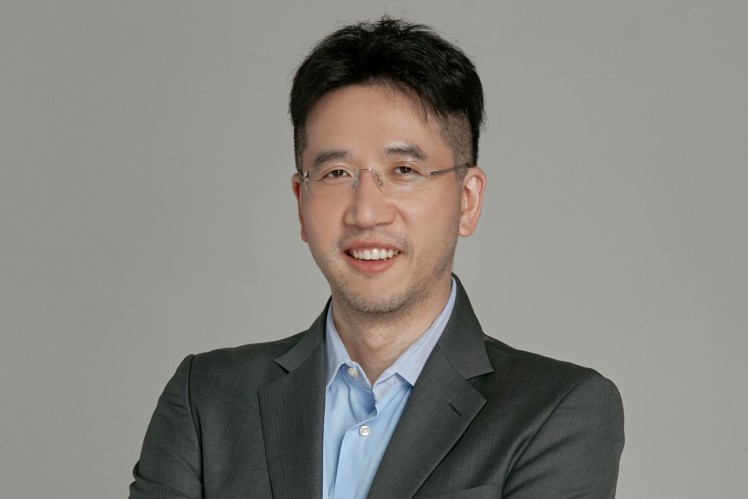
He taught a company how to see - then taught 3 million cars. Junhwan Kim runs STRADVISION, the AI perception firm that slips deep neural networks onto the cheapest chips in your dashboard. Before that, he sold his face-recognition startup to Intel and made a small piece of Korean tech history.

Junhwan Kim, CEO of STRADVISION

Junhwan Kim  ·  Photo: STRADVISION / ZF Press

3M+
Vehicles Running SVNet
$331M
Total Funding Raised
50+
Vehicle Models Deployed
471
Issued Patents
13+
OEM Partners
60%
CAGR (2023-2025)

The man who made Intel blink - twice

In 2012, a Korean startup called Olaworks sold itself to Intel. The deal was notable not for the size - about 35 billion won, roughly $31 million - but for the precedent. It was Intel's first full acquisition of any Korean firm. The company built software that recognized faces. Junhwan Kim was the one who built it.

That kind of exit would be a career capstone for most founders. For Kim, it was a detour. He spent time inside Intel as a Principal Engineer and Engineering Manager, learning how a $200 billion chip company thinks about software. Then he left to do something harder: teach cars to see.

STRADVISION, co-founded in Pohang, South Korea in 2014, was betting that the future of autonomous driving wasn't about who had the best cameras or the most powerful processors - it was about who could write the most efficient vision algorithms. The thesis: if you can get a deep neural network to run on the cheapest, lowest-power chip available, every car in the world becomes a candidate customer. Not just the $80,000 Teslas. The $18,000 Hyundais too.

"For ADAS and Autonomous Vehicles, not only the acquisition of data is important, but also applying and optimizing the data is critical as well. Our job at StradVision is to enable millions of these data to be efficiently processed on the edge device."

- Junhwan Kim, CEO, STRADVISION

SVNet - the flagship product Kim helped shape - does exactly that. It detects pedestrians, lane markings, traffic signals, vehicles, and road obstacles in real time, running on processors so constrained that competitors don't bother trying. STRADVISION is compatible with 30+ different SoC platforms. That portability isn't an accident. It's a moat.

Then came the other trick: data. Rivals were paying armies of human annotators to label training data frame by frame. Kim's team built an auto-labeling tool that automated 97% of that process. The competitive math on that alone is staggering - less labor cost, faster iteration cycles, and a compounding data advantage that gets wider every month.

By 2024, STRADVISION had passed 3 million cumulative production units, deployed across more than 50 vehicle models with 13+ OEM partners. Revenue hit $24.1 million - lean, for a company of its ambition, but with a team of 192 people. Compound annual growth in deployed units between 2023 and 2025 ran close to 60%.

"Whereas automakers and our competitors utilize armies of data labelers to annotate data in order to train their algorithms, StradVision has an auto labeling tool that automates 97% of the process."

- Junhwan Kim, CEO, STRADVISION

At CES 2025, STRADVISION debuted SVNet 3D Perception Network in production-ready form - a significant step from the 2D lane-and-object detection that defined earlier versions of the product. 3D perception is the prerequisite for higher levels of autonomy, and shipping it to production, not just demos, separates the companies that talk about L3 and L4 from the ones actually headed there.

In April 2025, STRADVISION closed a Series D round with $169.36 million - the largest single tranche in the company's history - bringing total funding past $331 million. Investors at this stage included strategic players from across the automotive supply chain: ZF and Aptiv had already come in during the $88 million Series C in 2022, alongside Hyundai Mobis. These aren't financial-only bets. They're suppliers and OEMs embedding themselves in the software stack they're counting on.

Then, in April 2026, STRADVISION received preliminary KOSDAQ IPO approval. The company targets an offering of 7 million shares at KRW 12,400-14,800 per share - implying a total offering of approximately KRW 86.8-103.6 billion. It would be one of the largest Korean tech IPOs in the automotive AI segment.

Kim's read on the future is specific in the way that sharp founders' views tend to be: "We do believe that most human behavior will be able to be predicted in the mid-term in a closed environment/situation such as an in-cabin driver or vehicles on a 4-lane highway." Not the grandiose claim that AI solves everything. A bounded, testable thesis about what sensors and algorithms can reliably learn.

STRADVISION now operates across seven locations: Pohang, Seoul, San Jose, Detroit, Tokyo, Shanghai, and Dusseldorf. It holds 471 issued patents - 167 on deep neural network methods alone - and is ISO 26262 and ISO 9001 certified, meeting the functional safety standards that automotive OEMs require before any software touches a production vehicle.

The awards have followed: 2025 AI Breakthrough Award (alongside NVIDIA, Meta, Microsoft, Qualcomm), Frost & Sullivan 2022 Global Technology Innovation Leadership Award, Gold Awards at AutoSens in consecutive years. Industry recognition has a way of lagging reality in deep tech. In STRADVISION's case, by the time the awards started arriving, the production units were already in the millions.
Funding Timeline

SEED / A
~$13M
SERIES B
2019
$27M
SERIES C
2022
$88M
SERIES D
2025
$169M

Total capital raised: $331M+ across all rounds.

From KAIST to KOSDAQ

~2010
Co-founds Olaworks in South Korea, building automatic face recognition technology for consumer and enterprise applications.
2012
Intel acquires Olaworks for ~35 billion KRW (~$31M) - Intel's first full acquisition of a Korean company. Kim joins Intel as Principal Engineer and Engineering Manager.
2014
Co-founds STRADVISION in Pohang, South Korea. The company targets AI vision perception for ADAS and autonomous vehicles.
2019
STRADVISION closes $27M Series B led by Posco Capital. Total funding reaches $40M.
2022
$88M Series C from ZF and Aptiv - two of the world's largest automotive suppliers take direct equity stakes. Total funding reaches $129M.
2024
STRADVISION surpasses 3 million cumulative production units. Revenue hits $24.1M with 192-person team. SVNet deployed across 50+ vehicle models.
Jan 2025
SVNet 3D Perception Network debuts in production-ready form at CES 2025. Wins 2025 AI Breakthrough Award alongside NVIDIA, Meta, Microsoft.
Apr 2025
Closes Series D round ($169.36M tranche). Total funding surpasses $331M.
Apr 2026
KOSDAQ IPO filing receives preliminary approval. Targets 7 million shares at KRW 12,400-14,800 per share.

The Edge-AI Bet

  • SVNet runs on 30+ different SoC platforms
  • Operates on low-power embedded chips, not dedicated AI accelerators
  • Enables ADAS in budget-tier vehicles, not just premium segments
  • 97% of data annotation automated - vs. manual labeling at competitors
  • Real-time detection of pedestrians, lanes, signs, vehicles, and obstacles

Awards & Milestones

🏆

2025 AI Breakthrough Award

SVNet recognized alongside NVIDIA, Meta, Microsoft, Qualcomm, and UiPath.

🌟

CLEPA Top SME Innovator 2025

European automotive suppliers' association recognizes STRADVISION for Breakthrough AI 3D Perception technology.

📊

Frost & Sullivan Innovation Leadership 2022

Global Technology Innovation Leadership Award for AI-based vision perception.

🥇

AutoSens Gold Award (x2)

Best-in-Class Software for Perception Systems, awarded in both 2021 and 2022.

🚗

ACES Award 2020

Autonomous Vehicle Technology award in the Autonomy (Software) category.

📜

Korea Patent Excellence Grand Prize

Grand Prize in the Electric/Electronic category at the 14th Korea Patent Excellence Awards.

What Junhwan Kim Says

"We do believe that most human behavior will be able to be predicted in the mid-term in a closed environment/situation such as an in-cabin driver or vehicles on a 4-lane highway."

"Not only the acquisition of data is important, but also applying and optimizing the data is critical as well. Our job at StradVision is to enable millions of these data to be efficiently processed on the edge device."

"Whereas automakers and our competitors utilize armies of data labelers to annotate data in order to train their algorithms, StradVision has an auto labeling tool that automates 97% of the process."

"To ensure active, autonomous safety, we both streamline our software development processes and follow strict functional safety requirements always mandated by the automotive industry."

The SVNet Ecosystem

STRADVISION's core product line centers on SVNet - a family of deep learning perception algorithms designed to run on resource-constrained automotive chips. The 2025 expansion to 3D perception marks the transition from L2/L3 lane-keeping and collision avoidance toward the spatial awareness required by higher automation levels.

The product suite includes FrontVision (forward-facing camera perception), SurroundVision (360-degree parking and blind-spot detection), and MultiVision (multi-camera fusion for complete scene understanding). All three feed into an architecture designed to be SoC-agnostic - compatible with chips from Qualcomm, NVIDIA, Texas Instruments, AMD, Arm, and Horizon Robotics.

The underlying differentiator is efficiency. Competing perception stacks often require dedicated AI processors. SVNet's algorithms are optimized to run on the MCUs and low-tier SoCs already in mass-market vehicles - which is precisely why 13+ OEM manufacturers have signed on.

◆ TECH STACK ◆
Deep Neural Networks PyTorch ONNX NVIDIA TensorRT SentenceTransformers C/C++ Python CMake Edge AI Sensor Fusion Knowledge Distillation Meta-Learning HD-Mapless Navigation ISO 26262 ASPICE Over-the-Air Updates Git GitHub Actions Codebeamer

Find STRADVISION