In the family restaurant in Bogotá, the future did not look futuristic. It looked like a paper invoice. Someone picked it up, found the relevant numbers and typed them into an ERP. Then another invoice arrived. The ritual was ordinary enough to be invisible, which is often how expensive problems survive. Juan Pisco noticed. He had already built a consumer AI product that attracted millions of people. Now he was watching skilled workers spend their attention moving facts from one place to another, as if software had somehow agreed to stop at the accounting department's door.
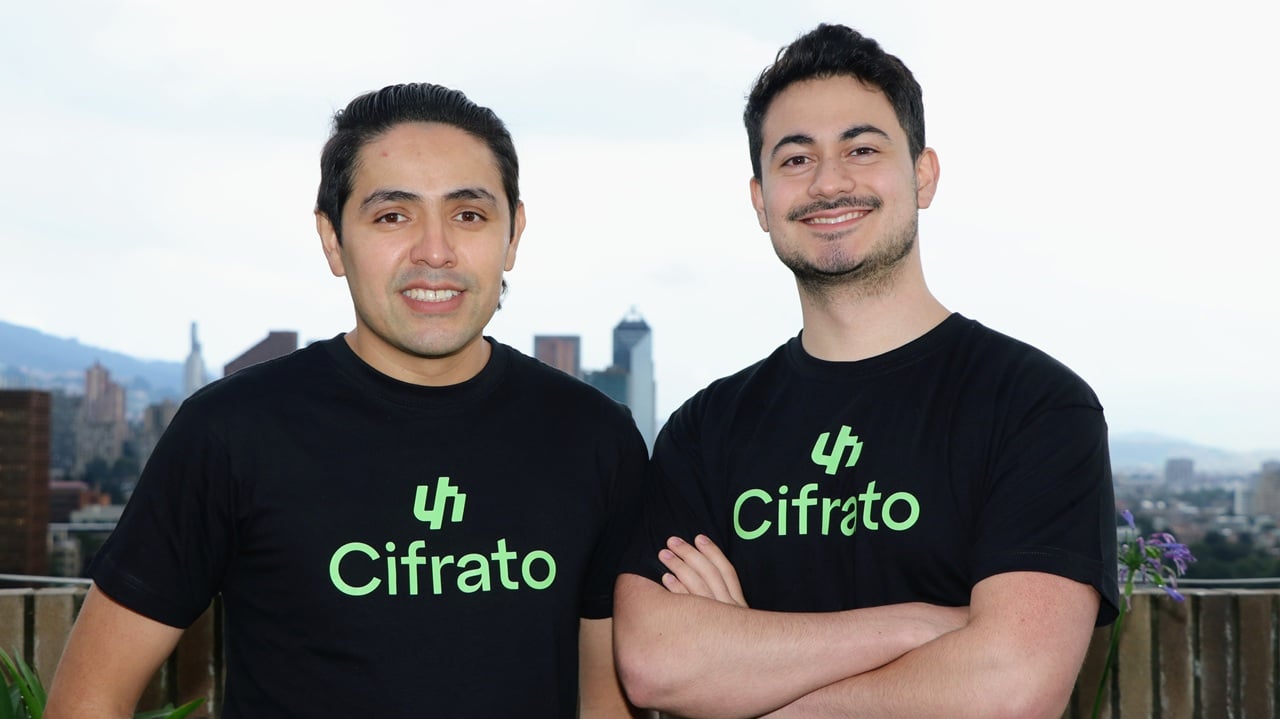
Pisco describes those processes as operating as though it were 1995. His answer became Cifrato, an AI accounting company he cofounded with Yerson Cacua. The software pulls invoices from tax systems and email, classifies them against accounts and taxes, reconciles the entries and sends the finished work into the systems a company already uses. Humans keep the approvals and exceptions. The machine gets the repetition.
This is an unusually tidy origin story for a company concerned with untidy back offices. It is also the second act of a founder whose first act taught him something less tidy: enormous attention can conceal a blurry customer.
The seduction of everybody
Pisco began programming at 14. By 16, he was writing machine-learning algorithms for a San Francisco biotechnology startup. He did not take the university route. The work itself moved faster. Before turning 20, he had founded Trip Planner AI, an itinerary product that would reach more than 3 million users in more than 100 countries.
It was the kind of consumer product that makes a dashboard feel like a map of possibility. People arrived from everywhere. The problem was that "everywhere" is not a customer segment. Young travelers hunting for places they had seen on TikTok wanted one thing. Families managing logistics wanted another. Digital nomads wanted plans that changed as quickly as they did. The product could serve all of them a little, which made it difficult to matter deeply to any of them.
Pisco later called the premise of planning travel with AI his favorite mistake. His diagnosis was blunt: too much audience, no single person. Curiosity could pull users in, but curiosity alone did not give them a sharp reason to return. A feature can impress without becoming a habit. A chart can rise without a business becoming necessary.
Trip Planner AI was not a failure. Pisco sold it to travel startup Layla after roughly a year and a half. It gave him an exit at 19 and a rather expensive education in focus. The lesson he carried out was that the real problems often look boring. Reconciliation, invoice processing and daily routes do not decorate a pitch with glamour. They do, however, hurt on schedule.
A narrower door
Cifrato chose accounting firms and the businesses they serve, beginning in Colombia. That meant learning the language of invoices, inventory, tax treatments, electronic billing and the legacy systems nobody can simply wish away. The company joined Y Combinator's Winter 2025 batch. Its founders were not selling AI as a decorative layer. They were volunteering to touch the books, where errors acquire consequences.
By March 2026, Cifrato said it had processed more than a million invoices, reached more than 270 direct clients and served another 3,500 businesses through those relationships. It reported $1 million in annual recurring revenue and closed a seed round of more than $1 million, backed by Y Combinator, Fen Ventures, Decelera Ventures and Kuiper. The team was 13 people when the round was reported. Y Combinator now lists 17.
The numbers are useful, but Pisco pays special attention to a more revealing question: how disappointed would customers be if Cifrato disappeared? He has said more than 75 percent would be very disappointed. It is a metric built around absence. Instead of asking whether people admire the demo, it asks whether the work becomes worse when the product is gone.
The useful AI loop
That depth requires a different kind of cofounding pair. Cacua came to Cifrato after senior technical roles at Rappi and after cofounding Sumer. Pisco has said there is nothing more important than working with a cofounder who has already built a company. Cacua brought experience scaling software and organizations. Pisco brought the scar tissue of a consumer product that had been broad by design and broad in its complications.
The model is not the moat
Pisco's technology strategy accepts an awkward truth of the AI era: a startup is unlikely to outspend the companies building frontier models. Tuning a model can feel like ownership until a lab spends another fortune and releases something better. Cifrato instead builds infrastructure around the strongest available models. If the model improves tomorrow, the system around it should improve too.
The durable work sits elsewhere: connections to tax authorities, integrations with ERPs and point-of-sale systems, audit trails, exception handling and knowledge of how a particular supplier invoices a particular kind of restaurant. Every customer adds context. Context improves the workflow. The value is not merely in reading an invoice. It is in knowing what happens next and proving what happened before.
This also explains why Cifrato insists on a human approval layer. Accountants are not ornamental safeguards waiting to be removed. They hold the judgment. The agent handles volume, presents the exceptions and learns from corrections. Pisco's stated ambition is not to erase the profession but to move it toward analysis and strategy. His argument is practical: if software takes the typing, people can spend more of the day on decisions.
The company has begun taking that thesis beyond Colombia. In 2026, Cifrato opened a launch program in Mexico, recruiting companies that use Siigo Aspel and process hundreds of invoices each month. The product must now learn another country's tax vocabulary and operational habits. Regional expansion here is not a matter of changing a flag in the settings. Every border arrives with forms.
The CD in the drawer
For all the metrics and infrastructure, the anecdote that best reveals Pisco's temperament concerns an obsolete object. At his father's house, he found a CD labeled “Domicilios.com.” It held his father's 1998 systems-engineering project: a way to order food online. The idea resembled what major delivery companies would later build, but it stayed a project.
Pisco published the discovery as a lesson about execution. Ideas arrive; belief and daily work are harder. The post prompted a fair correction from readers who noted that Colombia in 1998 had different infrastructure, capital and internet access. Timing is not a character flaw. Context can smother a good idea before effort gets a vote. Still, the CD became a private warning made public: storing a project is also a decision.
There is affection beneath the founder slogan. Pisco wrote that his father might have become a celebrated delivery entrepreneur, but he was grateful that he had simply been his father. The line rescues the story from business-school neatness. A life is not a missed startup. Sometimes the unbuilt company helps raise the person who builds the next one.
Pisco's eye for products can also shrink to the size of a sticky note. After running out of Post-its, he bought four competing brands and catalogued their failures: packaging, weak paper, blocks that split and, most importantly, notes that would not stay stuck. He turned the experiment into a B2B SaaS lesson about completing the customer's job and then adding a detail worth remembering. It is an earnest amount of analysis for a square of paper. That is precisely why it is revealing.
Work worthy of attention
In August 2026, Forbes Colombia placed Pisco on its 30 Under 30 list in Business and Finance. The recognition arrives at an age when most careers are still assembling their first coherent paragraph. His already contains machine learning, a startup sale, Y Combinator, a seed round and enough invoices to make a filing cabinet weep.
Yet the more useful story is not speed alone. It is the turn from breadth toward consequence. Trip Planner AI showed that Pisco could make something millions of people would try. Cifrato is testing whether he can make something a smaller group of businesses will rely on. One achievement creates reach. The other asks for trust.
His aspiration is explicitly regional. Cifrato wants to lead an accounting transformation from Latin America and eventually serve the financial operations of companies everywhere. That ambition will be measured in unromantic details: integrations that do not break, taxes applied correctly, exceptions surfaced in time and customers who close the month without a heroic weekend.
The line is a fine description of Cifrato and a useful correction to the theater around AI. The most consequential automation may not chat charmingly. It may fetch the invoice, classify the entry and ask a human one good question. Then it may do the same thing tomorrow, without complaint, while the accountant works on something deserving a mind.