In the beginning there was one keyboard and a phrase no sensible marketer would volunteer to sell: dark fiber. It was 2005. Jaymie Scotto Cutaia had left Telx, the colocation and interconnection company where clients and partners had patiently taught the former journalist the layers of the internet. She had discovered an invisible world of cross-connects, carrier hotels, subsea routes and network capacity. To everyone inside it, the work was essential. To everyone outside it, the work was almost aggressively difficult to picture.
That gap became Jaymie Scotto & Associates, or JSA. The Las Vegas-headquartered company now describes itself as a global marketing, public relations and events agency for digital infrastructure. Its clients operate data centers, fiber networks, cloud platforms and the energy, power and cooling systems that keep them alive. JSA's actual product is more precise: it turns technical infrastructure into language that a buyer, reporter, investor or neighbor might care about.
The original obstacle was not a clever competitor. It was indifference. Cutaia has recalled how difficult it once was to interest a national newsroom in colocation or dark fiber. The machinery worked in the background, which made its success nearly invisible. This was the first thing that failed: the ordinary pitch. A press release could announce a route, a facility or a cross-connect. It could not make an uninitiated reader understand why any of those nouns mattered.
“As a former journalist, I felt like I was uncovering an entirely new world - the ‘plumbing’ that allows the world to communicate.”Jaymie Scotto Cutaia, founder and CEO
The niche that kept getting wider
JSA's answer was specialization. This sounds less daring than it is. A general agency can replace an awkward category with a familiar analogy and move on. A specialist must learn the awkward category. Cutaia's team grew around people who had been journalists, chief marketing officers, analysts, designers, event producers and digital leads. The company says its 75-plus employees hold more than 250 marketing certifications.
The niche did not stay put. Telecom led naturally to data centers; data centers led to cloud; cloud and AI led to energy, power and cooling. The agency followed the dependencies rather than wandering into unrelated consumer work. That distinction matters. JSA widened the map without changing the language on it.
The customer list makes the boundary visible: American Tower, Applied Digital, Fujitsu, KIO Data Centers, Megaport, Precision OT, Rehlko, Schneider Electric, Telehouse and Zayo appear among current or past relationships and testimonials. These are not companies looking for a viral dance. They need a coherent story for a new facility, a technical launch, an industry event, a search campaign, a community meeting or a sales pipeline.

An agency that owns the microphone
In 2012, JSA launched JSA TV. That move changed the geometry of the business. Most agencies rent somebody else's audience. They pitch a newsroom, buy an ad or borrow a conference stage. JSA still does those things, but it also interviews executives on its own channel, streams from conference floors, publishes podcasts, sends newsletters and convenes roundtables. Its founder's current biography puts JSA TV above 200,000 subscribers and 4 million views.
The resulting loop is tidy. Client work generates access to experts and news. Useful interviews attract a concentrated industry audience. That audience makes the agency more useful to the next client. The media operation is not a side hobby; it is distribution built into the service. On a trade-show floor, JSA can be the strategist arranging the message, the producer recording it and the publisher carrying it outward.
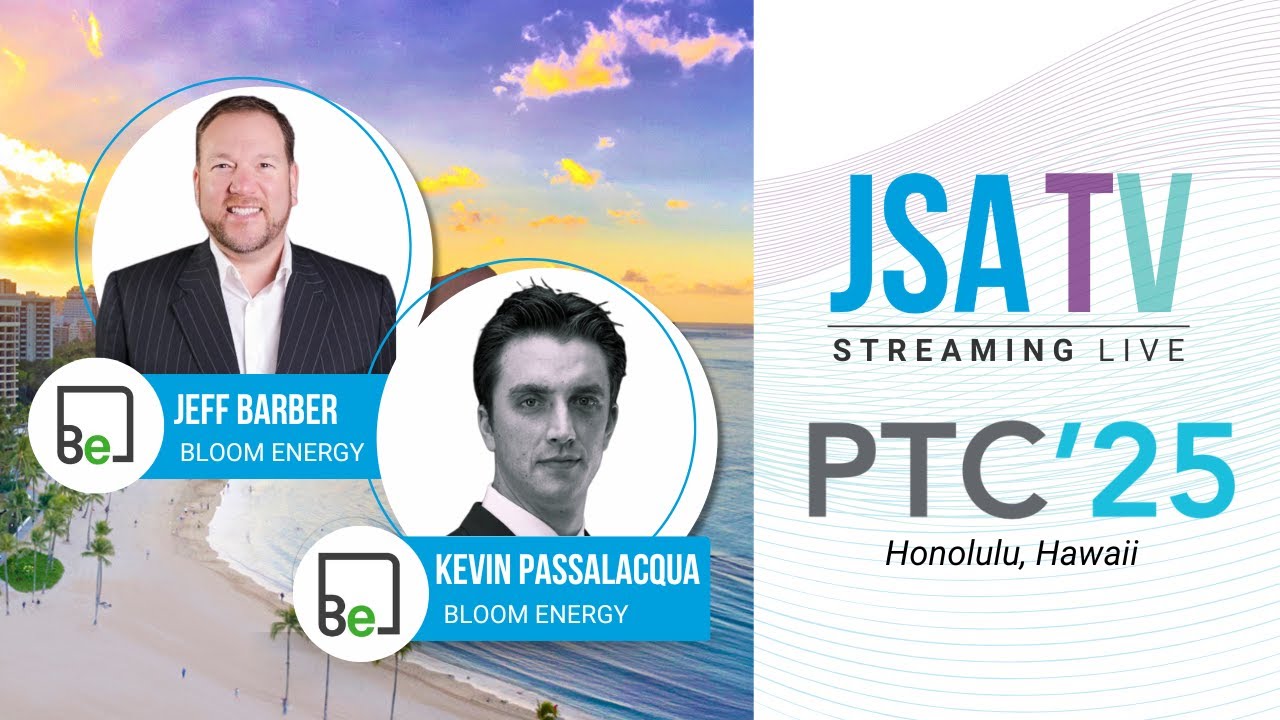
This model is copyable in outline: pick a category, answer its recurring questions, put practitioners on camera and keep publishing. The expensive part is not the camera. It is the accumulated permission to call a chief executive before a conference and get a yes.
The price of fluency
JSA is unusually direct about cost. Its current monthly retainers start at $9,900 for 35 hours and rise through $14,500, $18,900 and $23,500 for larger teams and hour pools. Annual commitments lower those monthly figures. Project estimates range from $3,500 for a PR campaign to $10,000 for thought leadership or a promotional video, $25,000 for a website and $30,000 for lead generation or brand development.
Public monthly retainers / team hours
The mechanism is a blended rate. A client can use the contracted hours for strategy and writing one quarter, then shift toward digital advertising or nurturing the next. Depending on the package, two to six people may work on an account. JSA also provides access to marketing technology, dashboards and its media relationships. In plain language, the firm sells a fractional department that arrives already knowing the acronyms.
That last point is the competitive claim. The alternative is an in-house team or a general B2B agency that must climb the learning curve while the meter is running. JSA says it can begin closer to the problem. Precision OT credits the agency with rapidly expanding its content library; Rehlko says JSA helped increase demand generation and media opportunities; KIO Data Centers points to sector knowledge and international PR.
The statistic that changed the agenda
A narrow agency can become too comfortable telling a client's version of the world. Cutaia has described a moment when an energy-consumption statistic disturbed that comfort. Reading about the share of global energy used by data centers and networks, she felt responsible for more than promotion. JSA's response was Greener Data, a collaborative sustainability project rather than a single-company campaign.
The first book arrived on Earth Day 2022 with 24 authors from 20 companies. A second volume followed in 2024 with 52 authors and nearly 600 pages. The third, released in 2026, brought together 75 voices to discuss AI infrastructure, power, cooling and implementation. Around the books grew a directory, virtual sessions, live conversations and editorial resources. The agency used the network it had built for marketing to host an argument about the industry's costs.
One keyboard, one founder and a bet on telecom specialization.
JSA TV gives the agency an industry channel of its own.
Greener Data turns sustainability into a collaborative publishing project.
JSA acquires Forward Vision's assets and adds 13 client brands.
Twenty years in business and a fifth consecutive Inc. 5000 appearance.
Community engagement joins the brief as AI infrastructure meets local scrutiny.
What the next customer is actually buying
Today, the communications problem has moved closer to the town hall. AI facilities need enormous quantities of land, electricity, water and cooling. A data center operator may need to explain not only uptime and capacity to customers, but taxes, construction, jobs, noise and resource use to a community. JSA now offers sentiment monitoring, public education, local media relations and event support alongside the familiar PR and marketing work.
The agency's focus also creates an awkward fact: it can represent competitors. JSA's public answer is operational. Employees and clients sign nondisclosure agreements; account files sit behind team-specific access; competing clients receive different account directors. The safeguards matter because deep specialization concentrates both expertise and conflicts in the same room.
The parts worth stealing
- Choose a hard category. Expertise is more defensible where outsiders find the vocabulary tedious.
- Publish before the pitch. A useful channel compounds credibility and lowers dependence on rented attention.
- Show the price architecture. JSA's public tiers let buyers qualify themselves before a sales call.
- Follow dependencies, not trends. Telecom expanded into cloud, AI, energy and cooling because the systems connect.
- Build walls early. A tight niche eventually produces client conflicts; access controls cannot be an afterthought.
The play is less useful in a market with no recurring expert community, no conferences and no appetite for specialist media. It also weakens when a buyer needs mass-consumer culture rather than industry credibility. An owned channel without genuinely useful reporting becomes a brochure with episodes. A narrow agency without strong confidentiality becomes a rumor mill.
JSA's more durable insight is that boring is often a failure of translation. The cables, chillers and carrier hotels were never boring to the people building them. They were merely hidden from everyone else. Twenty-one years after that first keyboard, the agency still makes its living pulling the machinery into view - one careful explanation, one camera and one oddly compelling piece of internet plumbing at a time.