Joshua Wang chose a difficult place to make software look easy. In clinical-trial biometrics, an answer is only the beginning. Someone must be able to trace that answer backward through the data, the rules, the code, and the changes that produced it. A confident machine with a hazy memory is no help here. The work eventually reaches people who ask for receipts.
Wang is the co-founder and CEO of Astraea, a company in Y Combinator's Spring 2026 batch. Its software is designed to take the debris field of a clinical study - protocols, raw datasets, specifications, forms, amendments - and produce the structured datasets, statistical programs, tables, checks, and documents required for regulatory review. The company's promise is compression: work measured in months becomes work measured in days. Its more interesting promise is legibility.
That distinction gives Wang's young career a useful shape. He studied computer science and mathematics at Stanford, qualified for the USAMO, reached USACO Platinum, and worked as the first intern at enterprise AI company Salient during its Winter 2023 period. Competitive mathematics rewards the right answer. Competitive programming adds the clock. Regulated software introduces a sterner judge: the answer must be right, timely, reproducible, and reviewable by someone whose signature carries consequences.
The boring middle is where the time goes
Drug development is usually narrated at its visible edges: discovery at the beginning, a decision at the end. Between them sits a vast administrative and statistical factory. After a study gathers data, specialists clean it, reconcile inconsistencies, map it into common standards, derive analysis-ready datasets, write statistical programs, generate tables and figures, perform quality control, and package the work for review.
Astraea's launch materials count seven major workstreams in that factory. The exact names - SDTM, ADaM, TFLs, Define-XML - are fluent to a narrow group and nearly invisible to everyone else. Their obscurity does not make them optional. One protocol amendment can send changes running through mapping specifications, derivation logic, validation rules, and documentation. The whole process can resemble a relay race in which every runner also has to notarize the baton.
Wang found his opening in the handoffs. Astraea does not sell a friendly text box perched beside the old workflow. It is trying to coordinate the workflow itself. The system ingests study materials, performs a first pass across standards mapping and analysis preparation, runs checks, and records how it reached each output. Statistical programmers and biostatisticians remain reviewers and decision-makers. The repetitive construction shifts toward software.
“AI in clinical trials is not about replacing statisticians. It is about letting them do statistics instead of data entry.”Joshua Wang, writing on LinkedIn
The line is more than positioning. It defines where Wang draws the product boundary. The valuable expert is not removed from the system; the expert is moved to the place where expertise is valuable. That sounds obvious until one notices how much enterprise software has been built around making highly trained people re-enter, reformat, and recheck information.
Two Stanford paths meet in a regulated maze
Wang built Astraea with Sanmay Sarada, the company's CTO. Their backgrounds meet neatly at the problem. Wang brought mathematics, computer science, multi-agent systems, and experience building production AI for enterprise customers. Sarada studied computer science and biology at Stanford and worked on clinical and hospital data infrastructure at Baylor College of Medicine. One side knew how agents could coordinate work. The other knew why real clinical data refuses to behave like a demo.
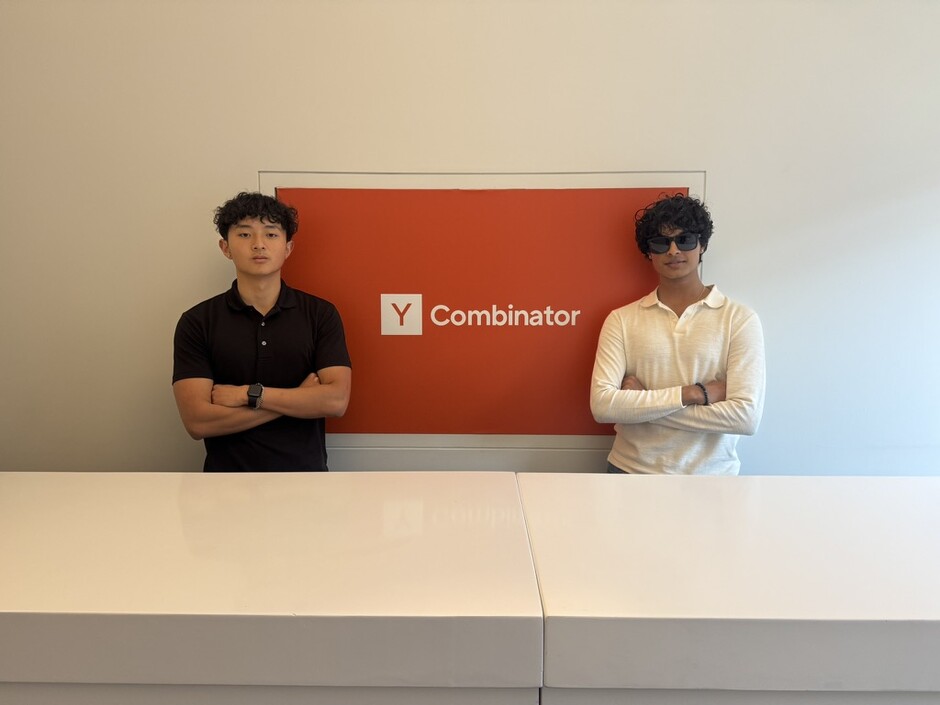
The pair say the company began with a repeated complaint from people close to them in pharma: clinical-trial analysis was too manual, too slow, and too dependent on fragmented workflows. A founder can do worse than hear the same grievance from several directions. Repetition turns annoyance into evidence.
Wang's public writing keeps returning to conversations rather than grand forecasts. In one, a statistical programmer with 12 years of experience told him that repetitive mappings had crowded out the work she once enjoyed. In another, a head of biostatistics described a 15-person programming team managing 12 active submissions, with protocol changes creating cascades of updates. These are founder anecdotes, not independent measurements, but they reveal what Wang listens for: expert time spent below the level of expert judgment.
Wang's recurring product question
Which part of a specialist's day is required, repetitive, expensive, and still waiting for software that respects every exception?
That question also explains Astraea's starting market. A generic assistant can be sold with breadth. A regulated workflow product must earn depth, abbreviation by abbreviation. It needs to understand not only what a document says but how that document affects the next artifact, who reviews the change, and what must be preserved for inspection. Every unglamorous edge case is part of the product.
A pipeline with a memory
From study inputs to reviewable evidence
Astraea describes this as a multi-agent architecture. The label matters less than the choreography. Different components handle annotation, standards mapping, compliance, evidence synthesis, and statistical execution, while the system logs and versions their actions. The aim is not a single oracle. It is an organized office in software, where every desk leaves a paper trail.
Deployment is part of that design. Astraea says the software runs inside a sponsor's own environment, keeping study data within the customer's security boundary. This is architecture serving trust. In consumer software, installation friction is something to erase. In regulated enterprise work, the right boundary can be a selling point. It tells the buyer where the data goes, who can see it, and how the system can be governed.
“Every decision needs an audit trail that a statistical programmer can review.”Joshua Wang
Wang has emphasized that point after encountering skepticism from pharma executives who had seen earlier waves of clinical AI. His response was to make the system show its work: mappings connected to source forms, derivations accompanied by audit trails, and metadata aligned with what a reviewer would inspect. Trust, in this view, is not an atmosphere created by a reassuring sales deck. It is a set of product behaviors.
The compression Astraea is pursuing
The speed claim attracts attention, but the audit trail is the more durable idea. Models improve. Interfaces change. A system that captures why a decision was made, what input supported it, who reviewed it, and what changed afterward remains useful even as the machinery underneath evolves.
Build for the five people who cannot shrug
Two months into Y Combinator, Wang wrote that a strong signal came from customers. His priority was to stay close to the roughly five people inside each company who lived the workflow and build something they would rely on. It is an old startup instruction, sharpened by the stakes: build something a few people desperately need.
The phrase “operating system” is used liberally in software, sometimes to mean “we have several tabs.” Astraea earns the metaphor only if it becomes the layer through which the work moves: inputs arrive, standards are applied, dependencies are tracked, humans review, revisions propagate, and outputs leave with their history intact. The challenge is less about generating one impressive answer than surviving the hundredth amendment without losing the plot.
That is also where Wang's competition background stops being a tidy origin story and becomes a contrast. An olympiad problem is designed to have an elegant solution. Enterprise data is not designed at all. It accumulates. Dates go missing. units disagree. forms change. conventions collide. The cleverness required is not merely solving the pristine problem. It is building a system that remains calm when the problem arrives wearing muddy shoes.
Astraea is still early. It was founded in 2026, joined YC that spring, and is hiring founding engineers. Its accuracy and timeline figures are the company's own. The public evidence is enough to explain the bet, not to declare the race finished. Wang appears to understand the gap. His writing asks what it would take for a team to trust AI with clinical-data work. The question invites doubt into the room, where useful products are often made.
The aspiration is expansive: a trusted automation layer behind clinical development, stretching from protocol intent to reviewable evidence. The practical strategy is narrow: start with the tedious middle, preserve expert judgment, and make the machine leave notes. If Astraea works, its defining achievement may also be hard to photograph. A specialist opens a completed first pass, checks the trail, fixes the exceptions, and goes home having used more of what she knows.